One Drone, One Ground Stop: The Reagan National Incident and the Firmware Question Behind It
An unauthorized drone briefly halted flights at Reagan National. Behind that headline sits a quieter fight over foreign firmware, Remote ID, and who can identify a rogue aircraft.
Drone Ready Editorial·UAS policy·September 20, 2026·5 min read
Share
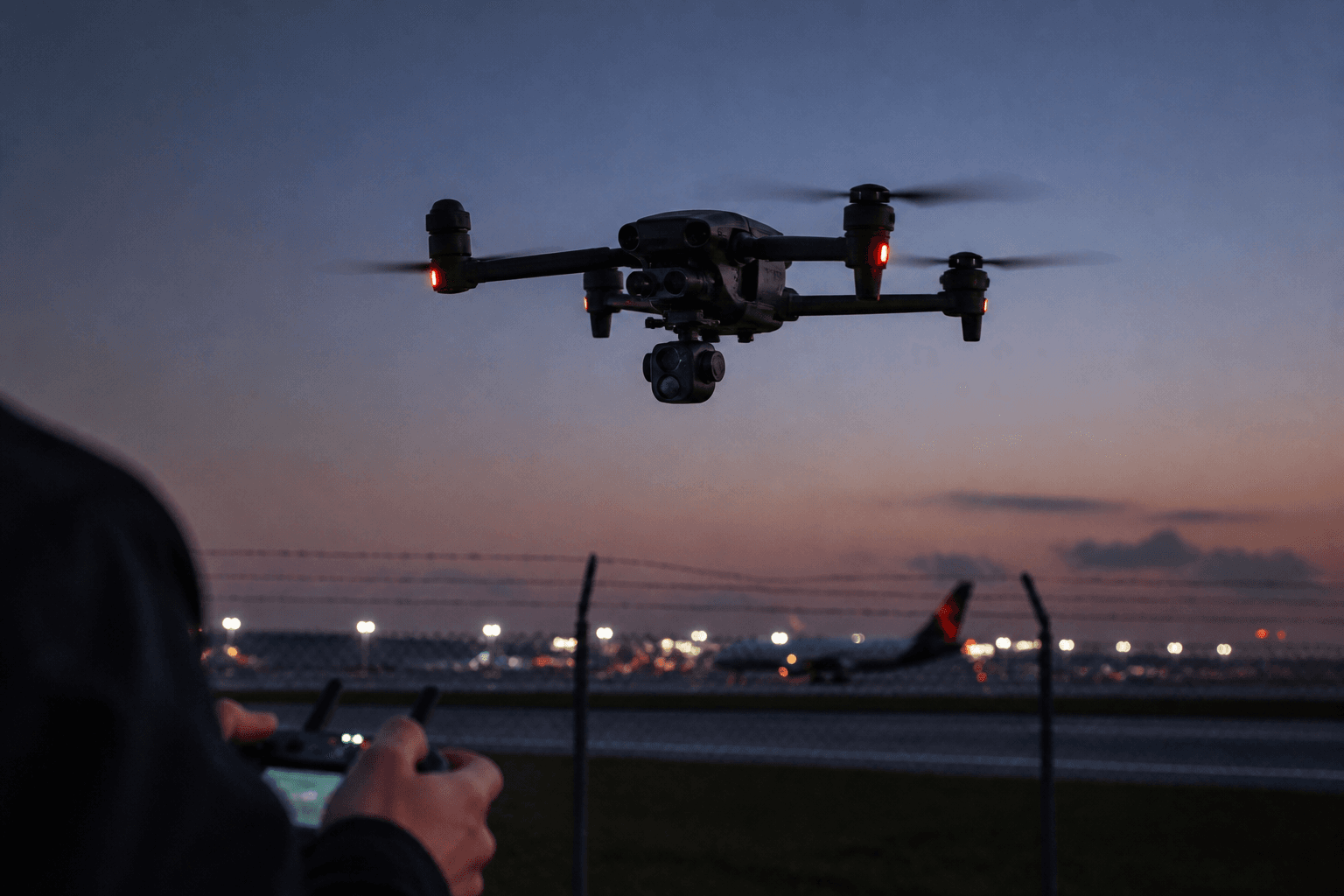
On September 17, an unauthorized drone flying near Ronald Reagan Washington National Airport was enough to briefly pause flights at one of the busiest and most tightly restricted airfields in the country, as WJLA reported. No collision, no injury, no arrest reported at the time — just a single aircraft in the wrong airspace, and a halt to operations serving the nation's capital.
For remote pilots, the incident is less a one-off scare than a compact illustration of a problem the industry has been circling for years: the airspace is filling with drones faster than the systems meant to identify and manage them are maturing. The same weeks that produced the Reagan scare also produced regulatory moves — on foreign firmware, on Remote ID infrastructure, on major-event airspace lockdowns — that are all, in different ways, attempts to answer one question. When a drone shows up where it shouldn't, can anyone tell whose it is?
DCA
Airport where flights were paused by a single drone
2029
New expiration of the FCC foreign firmware waiver
2026
Year FAA locked down World Cup airspace
A Single Drone, an Outsized Effect
Reagan National sits inside some of the most restricted airspace in the United States — the Washington, D.C. Special Flight Rules Area and Flight Restricted Zone. There is no ambiguity here for Part 107 operators: this is not airspace you fly in without specific, hard-to-get authorization, and most recreational flight is flatly prohibited. That a drone reached the point of pausing operations, as WJLA noted, tells you the deterrent value of the rules only works on pilots who know and follow them.
What the reporting does not yet tell us is who the operator was, whether the flight was careless or deliberate, or whether the aircraft was ever identified. That gap is the whole story. A ground stop is a decisive, expensive response to an aircraft nobody can immediately name.
The rules are clear. The problem is enforcing them against an aircraft you can't identify in real time.
For compliant pilots, the operational takeaway is blunt: incidents like this raise the political temperature on all of us. Every unexplained sighting near a major airport strengthens the case for tighter restrictions, more detection hardware, and more aggressive enforcement — measures that fall on the professionals who file, plan, and fly by the book as much as on the ones who don't.
The Identification Problem Runs Deeper Than One Flight
Remote ID was supposed to be the answer to exactly this scenario — a digital license plate broadcasting a drone's identity and location so authorities can distinguish a permitted operation from a rogue one. The infrastructure to actually receive and use those broadcasts, though, is still being built out. DroneXL reported that Pierce Aerospace is constructing a Remote ID network for NASA, a signal that the detection-and-identification layer remains a work in progress rather than a finished, nationwide capability.
That matters at a place like Reagan National. Remote ID only helps if a drone is broadcasting and if someone on the ground is equipped to hear it. A pilot intent on breaking the rules is unlikely to volunteer a clean signal, and the receiving networks are not yet everywhere they'd need to be to close the gap.
Layered on top is the firmware question. Per DroneXL, the FCC extended its waiver on foreign drone firmware to 2029 — a decision that keeps a large installed base of foreign-made drones operating under existing software rather than forcing a near-term overhaul. For the fleet, that's continuity. For the identification debate, it's a reminder that the hardware and software underpinning most drones in American skies are entangled with national-security and supply-chain politics that pilots don't control but absolutely feel.
Big Events Get the Lockdown Treatment
The contrast between what regulators can do for a planned event versus a random Tuesday is instructive. DroneXL reported that the FAA locked down airspace for the World Cup — the kind of comprehensive, temporary restriction that comes with advance notice, dedicated detection assets, and clear enforcement authority.
Those lockdowns work because they're bounded in time and space and heavily resourced. Everyday airspace around fixed critical infrastructure like DCA doesn't get that treatment continuously. The Reagan incident is what the gap between those two postures looks like in practice.
And this is not only a U.S. conversation. The Bangkok Post reported that Thai authorities sought public feedback on new drone rules — a reminder that regulators worldwide are wrestling with the same tension between access and control. If you fly internationally, or plan to, expect the identification-and-authorization framework you navigate at home to have unfamiliar cousins abroad.
What Compliant Pilots Should Actually Do
None of this changes the fundamentals of flying legally — but it should sharpen how seriously you treat them.
Know your restricted airspace cold. The D.C. FRZ is the extreme case, but temporary flight restrictions for major events are increasingly common. Check before every flight, not just once. A refresher on airspace classes and TFRs never hurts — that's core Part 107 practice-exam territory.
Confirm your Remote ID is actually broadcasting. As detection networks expand, a silent or misconfigured drone near sensitive airspace is a liability, not a defense.
Assume scrutiny is rising. Each high-profile incident feeds pressure for tighter rules and detection tech. Documented, authorized operations are your protection.
Watch the firmware and hardware debate. The FCC's 2029 waiver buys time, but the regulatory direction on foreign-made drones remains a live issue for anyone building a commercial fleet.
Key takeaways
A single unidentified drone paused flights at Reagan National — proof that enforcement depends on identification, which is still incomplete.
Remote ID and detection networks are being built out (NASA via Pierce Aerospace), but coverage is not yet universal.
The FCC's foreign-firmware waiver now runs to 2029, keeping the current fleet stable while the security debate continues.
Compliant pilots should expect tighter restrictions and rising scrutiny — and treat airspace checks and working Remote ID as non-negotiable.
Study the exact material this article covers — narrated lessons and unlimited practice exams. Your $19/mo membership also includes preflight checks, fleet & currency tracking, and 20 drone maps a month.