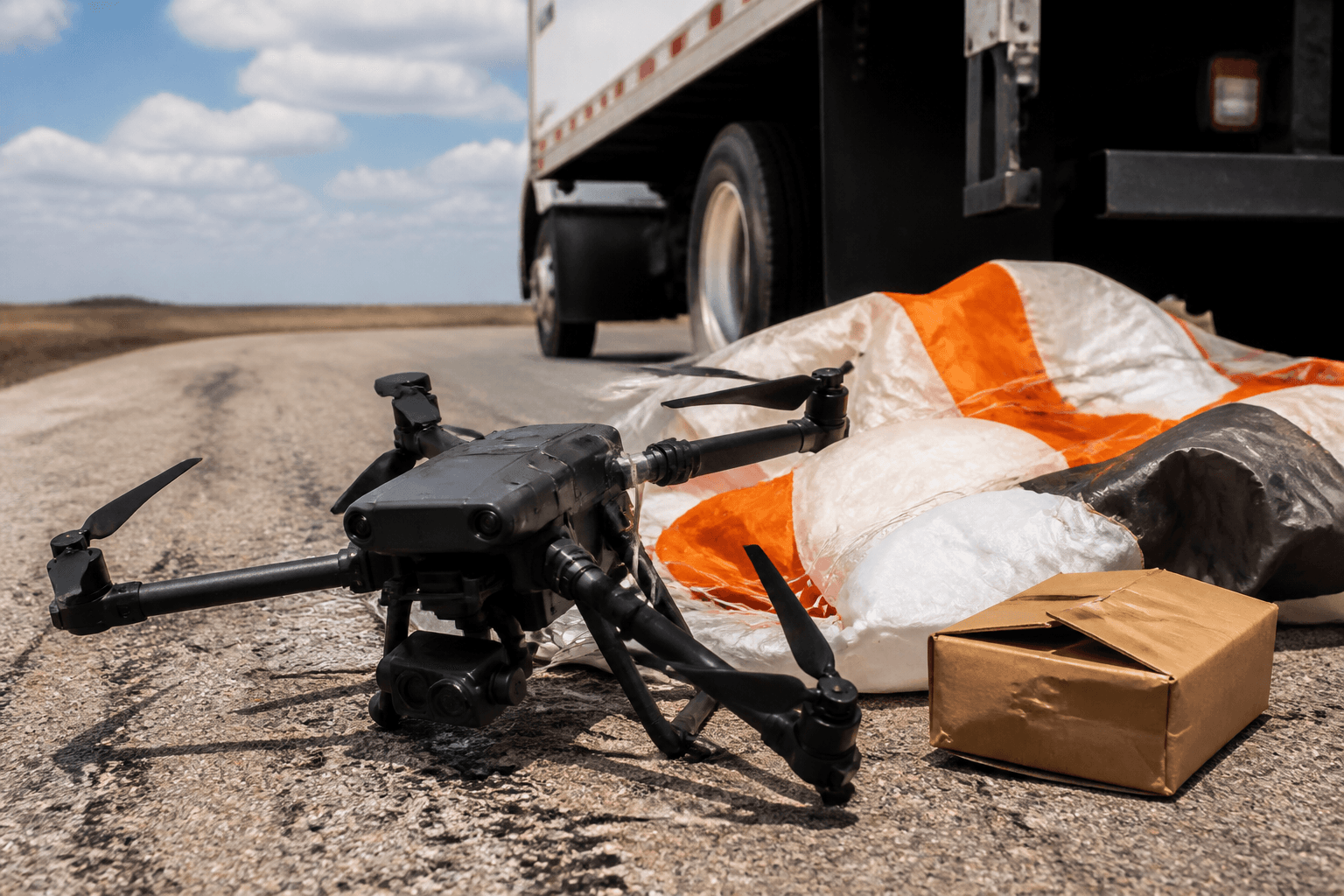
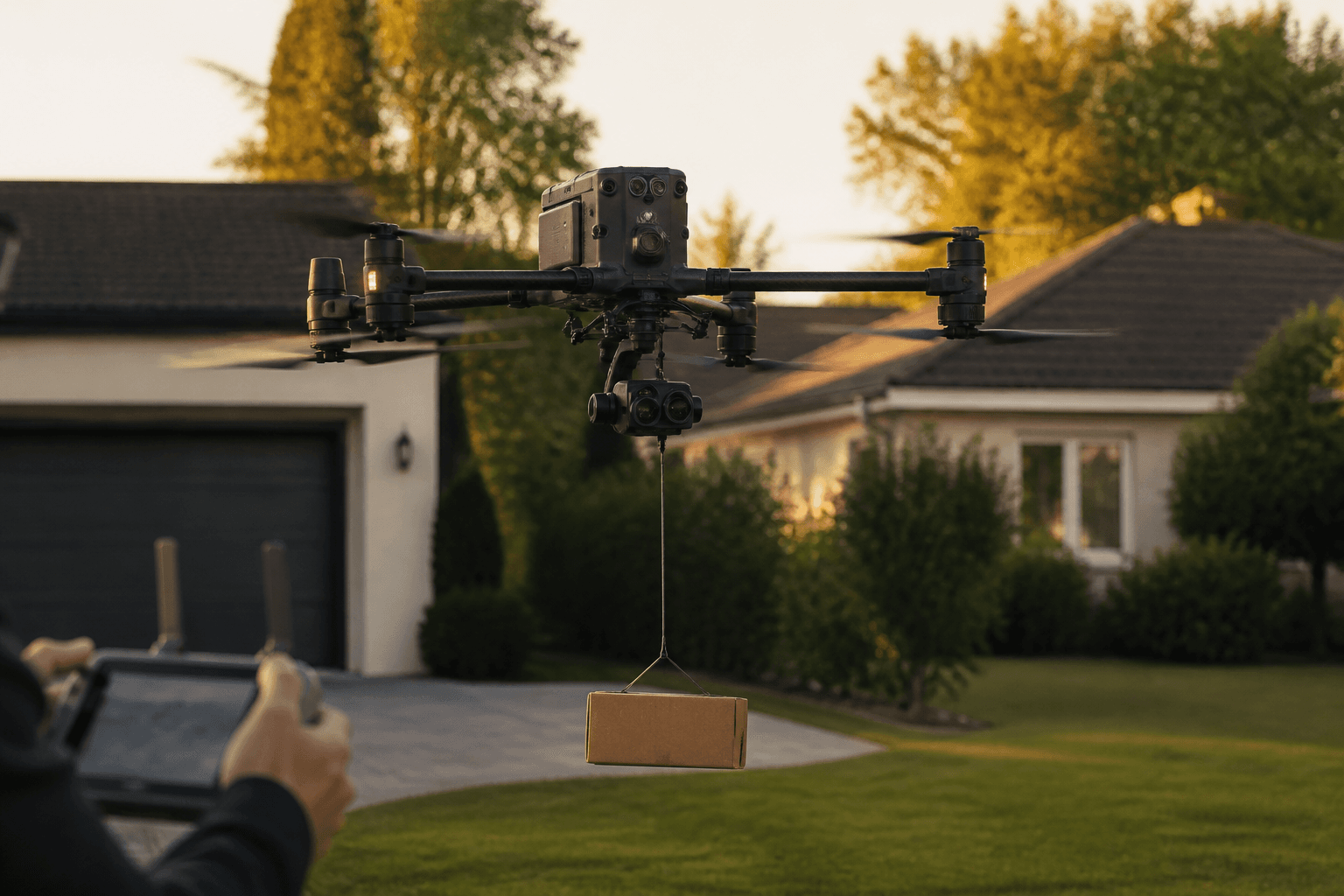
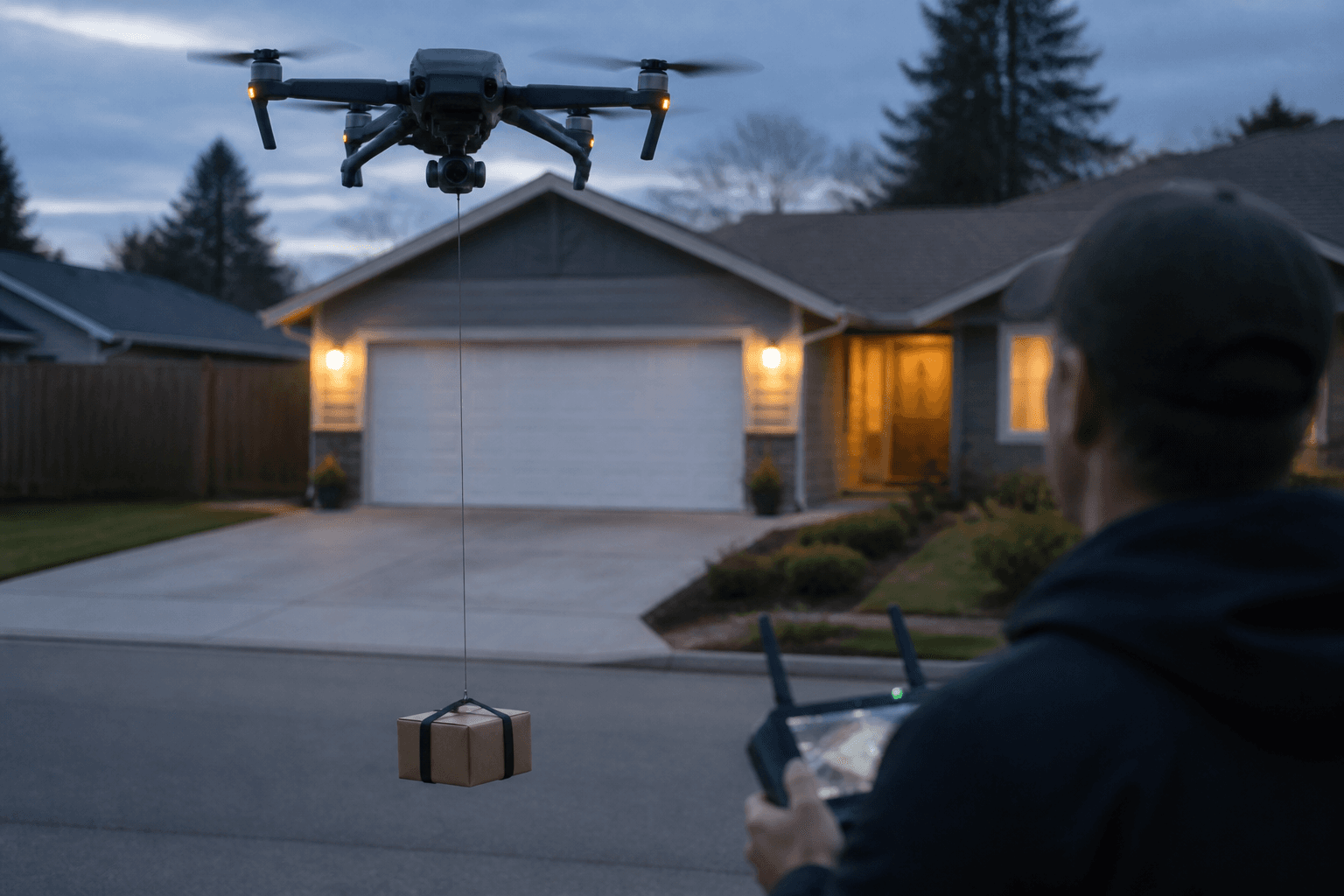
A Zipline drone operating for Walmart parachuted a package onto a residential street in Greenville, Texas, coming to rest only feet from a parked pickup truck, according to DroneXL. In the same stretch of days, Amazon's newly launched delivery service in Baton Rouge landed "with a few bumps," as WAFB reported. Neither incident produced injuries or headlines beyond the local level. But together they mark a subtle turning point for commercial operators: the delivery buildout is now big enough, and public enough, that its imperfections are being documented in the daily news cycle.
For entrepreneurs building delivery-adjacent businesses, the story here isn't "drones fail." It's that the industry has moved past proof-of-concept and into the messier phase where reliability, community trust, and edge-case handling determine who survives.
$250B+
Projected drones-as-a-service growth
Feet
Distance Zipline drop landed from a parked truck
2
Major delivery launches hitting local snags in one week
What the two incidents actually tell us
The details matter. The Greenville event, as DroneXL described it, involved a parachute-delivered package coming down close to a parked vehicle on a street. Zipline's fixed-wing platform relies on a droid-and-parachute drop rather than a hovering lower-and-release. That design is fast and quiet, but it introduces a variable that hover-based systems partly control: where exactly the package ends up once it leaves the aircraft.
The Baton Rouge launch, per WAFB, is a different flavor of friction — the ordinary operational bumps of standing up a new service in a new market. Weather, address mapping, delivery-zone suitability, and customer expectations all have to be reconciled on the ground.
The delivery race is no longer about whether the aircraft can fly. It's about whether the last hundred feet behave predictably, every single time, in front of neighbors who didn't sign up for the pilot program.
For operators, the lesson is that the last hundred feet is where reputations are made or lost. A single video of a package near a truck travels further than a thousand clean deliveries.
The scale-up context: money and momentum are real
None of this suggests the sector is stalling. Quite the opposite. A market analysis circulated via TradingView pegs drones-as-a-service growth at more than $250 billion, framing adoption as reaching "critical mass." Treat that figure with the skepticism any sweeping market projection deserves — but the direction is consistent with what's visible on the ground.
The expansion isn't limited to delivery, either:
- Municipal approvals are advancing. In Illinois, a Glen Carbon committee is set to discuss a Walmart drone delivery proposal, The Edwardsville Intelligencer reported — a reminder that local government sign-off is now a routine gate in the delivery pipeline.
- New verticals are opening. Packaging Digest examined how pharmacy drone delivery could reduce cold-chain packaging needs, pointing to a healthcare logistics use case with real margin implications.
- Heavy-lift and ag are growing. Dronelife reported Powerus is expanding U.S.-made heavy-lift drones into agriculture, while Commercial UAV News covered a webinar on the state of drone use in European agriculture.
- Capital keeps flowing. ubn.news reported that former Google CEO Eric Schmidt is investing in Ukrainian drone makers, one signal among many that money is moving into the broader ecosystem.
The throughline: demand and investment are outpacing the operational maturity of any single deployment. That gap is exactly where the two rough drops live.
The regulatory and enablement layer is catching up
The more interesting development for scaling operators may be quieter. MundoGEO reported that Dronedesk launched what it describes as the first fully automated SORA implementation — SORA being the Specific Operations Risk Assessment framework that underpins many BVLOS approvals. Automating that risk-assessment paperwork is a genuine enabler, because the bottleneck for most delivery and long-range operations has never been the hardware. It's the approval process.
If risk assessment becomes faster and more repeatable, more operators can pursue beyond-visual-line-of-sight authorizations without a dedicated compliance team. That democratization is good for smaller entrants — but it also raises the stakes on operational discipline, because the regulators watching these programs will judge the whole category by its worst public moments.
Commercial UAV News's industry roundup also flagged the broader spread of drone applications, including license-plate-reading drones and land-conservation work — a reminder that public perception of the technology is being shaped across many fronts at once, not just delivery.
What operators should do now
If you're building or bidding into this space, the two incidents are a cheap lesson paid for by someone else:
- 1Treat the drop zone as a product feature, not an afterthought. Whether you parachute or hover-lower, define and verify safe landing zones per address. Document exclusions.
- 2Plan your public-incident response before you need it. A calm, factual explanation of what happened and what changed is worth more than silence.
- 3Use the enablement wave, but don't skip fundamentals. Automated SORA tooling speeds approvals; it doesn't replace crew training, weather minimums, or maintenance logs. Keep your Part 107 fundamentals sharp as you add complexity.
- 4Watch the local politics. Glen Carbon shows that municipal committees are now gatekeepers. Engage early.
Key takeaways
- Delivery has scaled far enough that ordinary operational bumps now play out in public.
- The last hundred feet — drop accuracy and landing zones — is the make-or-break variable.
- Automated SORA tools lower the barrier to BVLOS but raise the bar on operational discipline.
- Local committee approvals are now a standard, non-optional step in the delivery pipeline.
Ready to get Part 107 certified?
Study the exact material this article covers — narrated lessons and unlimited practice exams. Your $19/mo membership also includes preflight checks, fleet & currency tracking, and 20 drone maps a month.