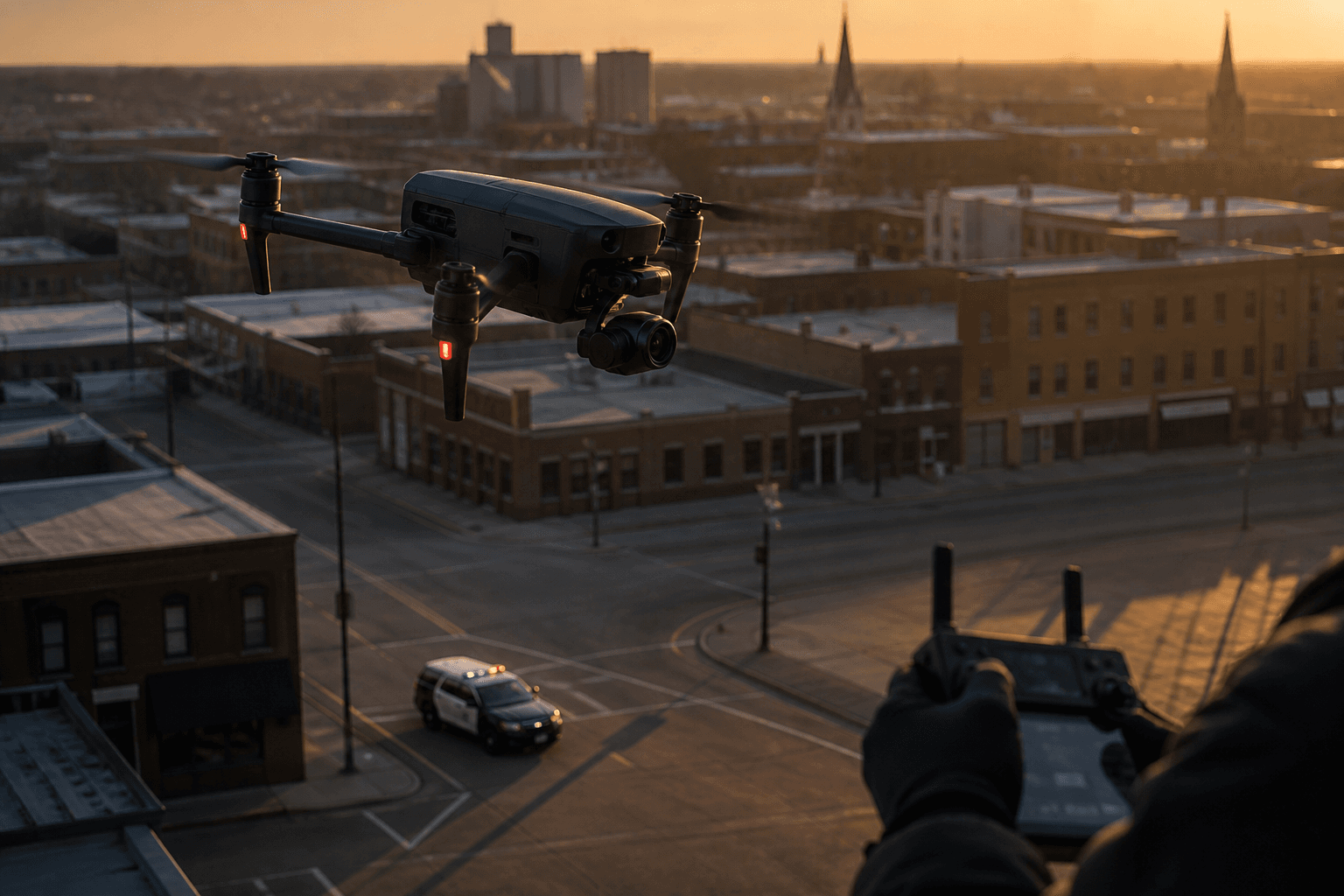
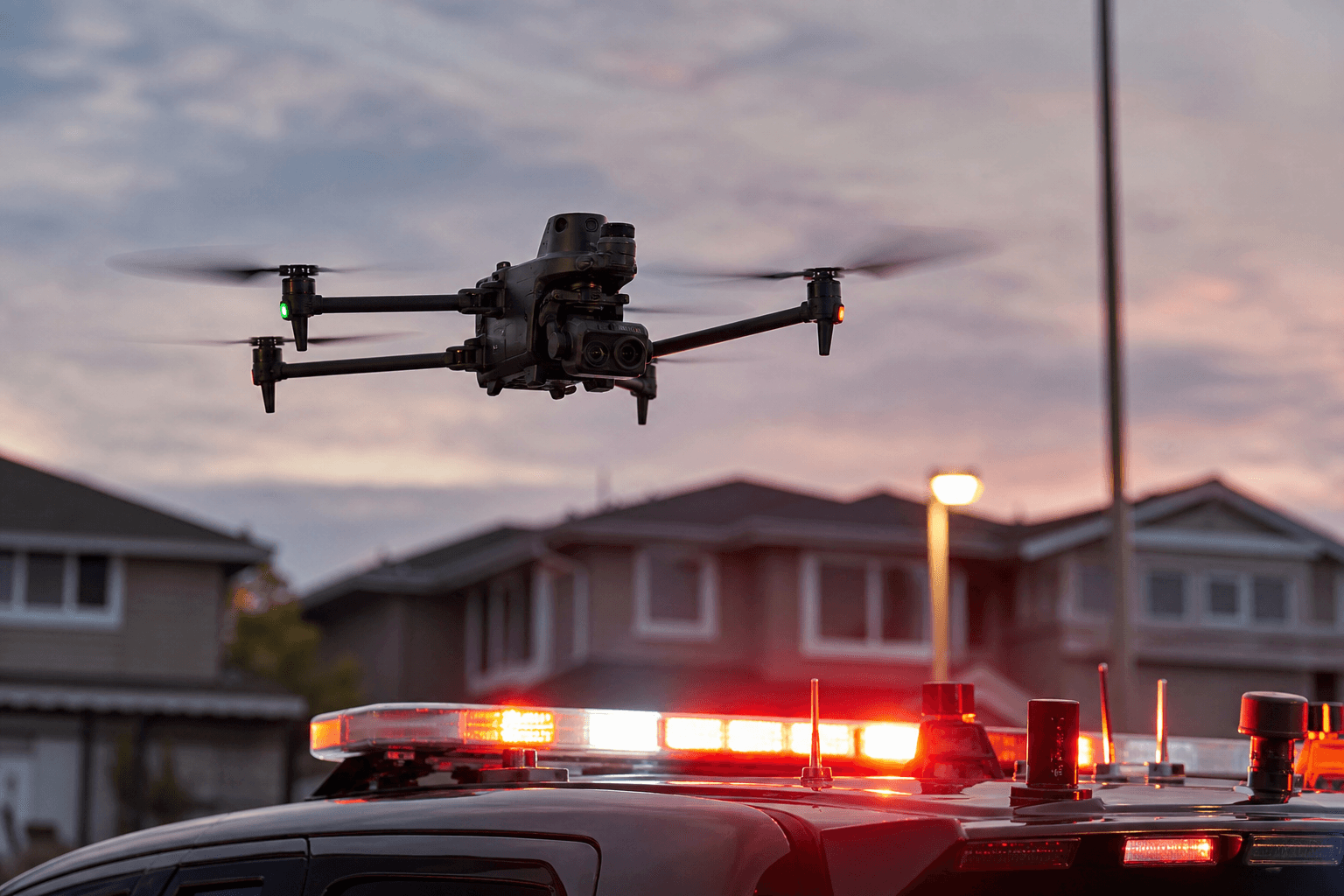
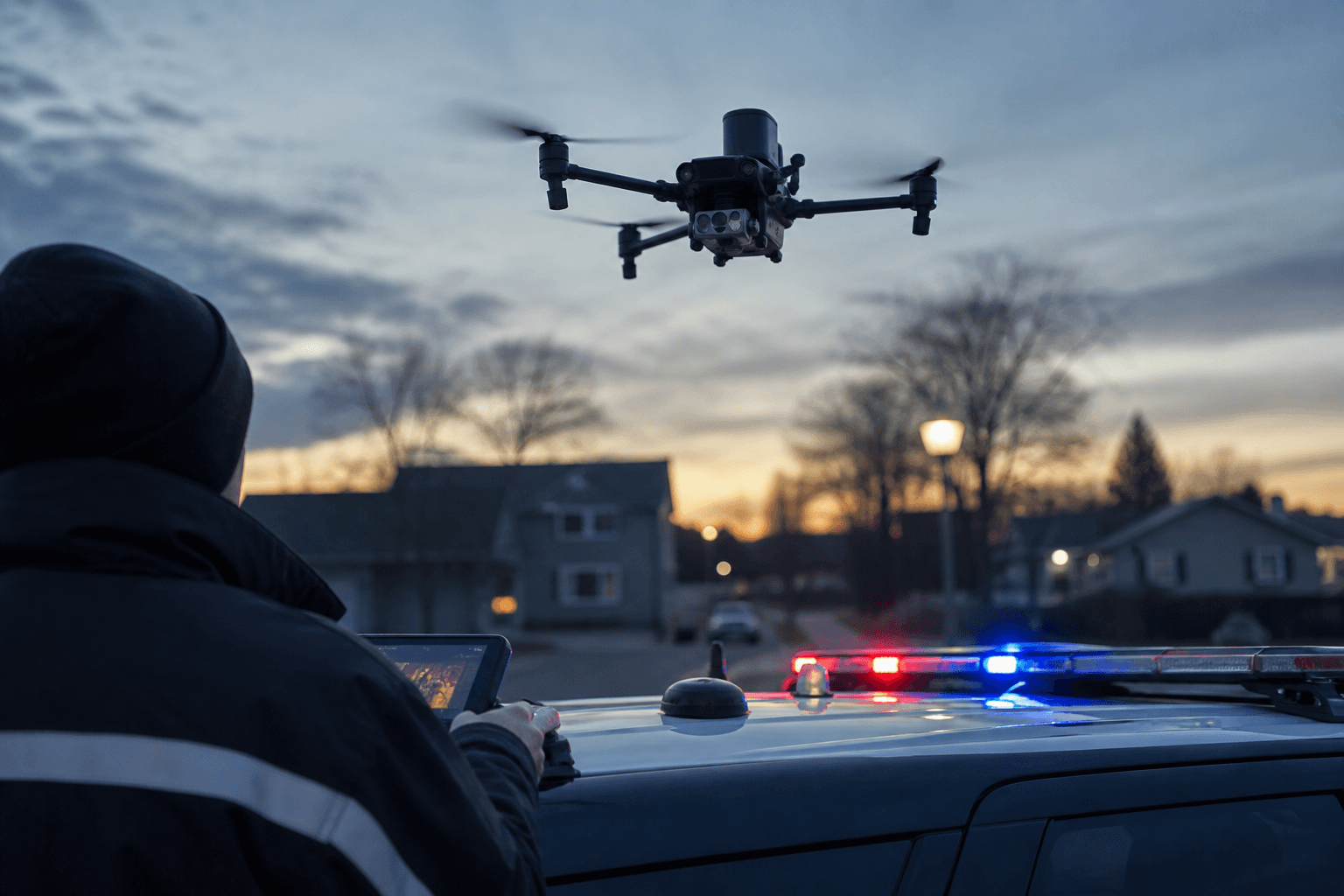
Spokane, Washington, ran 400 drone flights in its first three weeks — a pace DroneXL reported would have been unthinkable for a mid-sized department just a couple of years ago. In the same late-July stretch, LaGrange, Georgia, and Jacksonville, Florida, announced their own launches, Seattle Fire proposed adding drones to its emergency fleet, and the Electronic Frontier Foundation warned that hundreds of Drone as First Responder (DFR) programs could soon go live nationwide. The story is no longer whether agencies adopt DFR. It's how fast smaller departments are catching up to the marquee programs — and whether governance is keeping pace with hardware.
400
Spokane flights in first three weeks
2x
LAPD's planned drone fleet expansion
100s
New DFR programs EFF expects nationwide
The pace is the story
What stands out about the past week isn't any single deployment. It's the cadence. Spokane's Skydio drones hit 400 flights in 21 days, per DroneXL — a volume that implies the department has moved past pilot-project caution into routine operational use. That's the inflection point most DFR programs aim for and few reach quickly.
Meanwhile, the LaGrange Police Department launched its DFR program in a wave of local coverage from WRBL, WTVM, and others, framing drones as a force multiplier for a department that, like most, is not swimming in personnel. The Jacksonville Sheriff's Office launched its own program to improve emergency response times, according to First Coast News. And LAPD's chief told the New York Post he plans to double the department's drone fleet to tackle homicides, kidnappings, and burglaries amid a cop shortage.
That last phrase — "amid a cop shortage" — is the quiet through-line. Staffing pressure is doing as much to drive DFR adoption as any technology curve. When a department can't fill patrol shifts, a drone that reaches a scene before an officer becomes an easier budget line to defend.
Small departments are closing the gap
For years the DFR conversation orbited large agencies with deep budgets and dedicated aviation units. The past week complicates that picture. LaGrange is not a big city. Spokane is mid-sized. Both are now running programs that look operationally serious, not experimental.
Why the compression? A few factors:
- Turnkey platforms. Docked drones from vendors like Skydio have lowered the barrier to launching without building an aviation unit from scratch.
- Regulatory tailwinds. BVLOS waiver pathways and the broader Part 108 momentum have made routine beyond-visual-line-of-sight operations more attainable than they were even two years ago.
- Peer proof. Recognition matters. Homeland Security Today reported that Fairfax County's police drone program won national recognition — the kind of validation that gives a city council in a smaller jurisdiction cover to approve funding.
For program managers, the takeaway is competitive as much as operational: your peer departments are moving, and "we're still evaluating" is a harder position to hold in front of elected officials this year than last.
The DFR question has shifted from "should we?" to "how do we launch responsibly before the political window closes?"
The oversight gap the EFF is flagging
The Electronic Frontier Foundation's warning that hundreds of DFR programs could soon launch is not a technology story — it's a civil-liberties one. EFF's concern, consistent with its long-running position, is that DFR programs scale faster than the policies governing when drones fly, what they record, how long footage is retained, and who can access it.
That tension is real and worth taking seriously rather than dismissing. A program that launches 400 flights in three weeks is generating a large, fast-growing pool of aerial video over public and private spaces. If your retention policy, redaction workflow, and public-transparency posture aren't nailed down before you scale, you're building a records and trust problem you'll have to unwind later — often under a critical spotlight.
The agencies that fare best in the coming wave will treat governance as a launch requirement, not a follow-up project. That means:
- 1Published, specific launch criteria — what call types trigger a drone, and what don't.
- 2Data retention and access rules written before the first flight, not after a public-records request.
- 3Community-facing transparency — flight logs, deployment stats, and a clear point of contact.
- 4Trained, credentialed pilots operating under documented authority, whether via waiver or the emerging Part 108 framework.
What program managers should do now
The practical reality: the funding, the vendors, and the peer momentum are all pointing the same direction. If you're standing up or scaling a program, the differentiator won't be the airframe — it'll be how defensible your operation is when reporters, councils, and residents ask hard questions.
Make sure your remote pilots are current on regulations and your team understands the airspace and BVLOS pathways your program depends on. Our public safety resources and Part 107 practice exams are built for exactly this crew. And watch the Fairfax and Spokane models — not because their hardware is unique, but because their operational discipline is what earned the flight volume and the recognition.
Key takeaways
- DFR adoption has hit a pace where smaller departments (LaGrange, Spokane) now move as fast as big ones — expect peer pressure on your council.
- Staffing shortages, not just technology, are driving the surge; LAPD is doubling its fleet explicitly to offset a cop shortage.
- The EFF's warning about hundreds of new programs is a governance signal: lock down flight criteria, data retention, and transparency before you scale, not after.
- Credentialed, current pilots and documented flight authority are what make a program defensible when scrutiny arrives.
Standing up a drone program?
Train and certify your team, track every pilot's Part 107 currency, manage the fleet, and keep audit-ready records — one platform built for public safety and DFR.