The Same Week a Drone Got Shot, Two More Agencies Signed Multimillion-Dollar Deals
As a new wave of police and fire agencies stand up drone programs, an armed standoff and a highway crash lawsuit show the operational and liability risks arriving alongside the wins.
Drone Ready Editorial·Public safety UAS·September 4, 2026·5 min read
Share
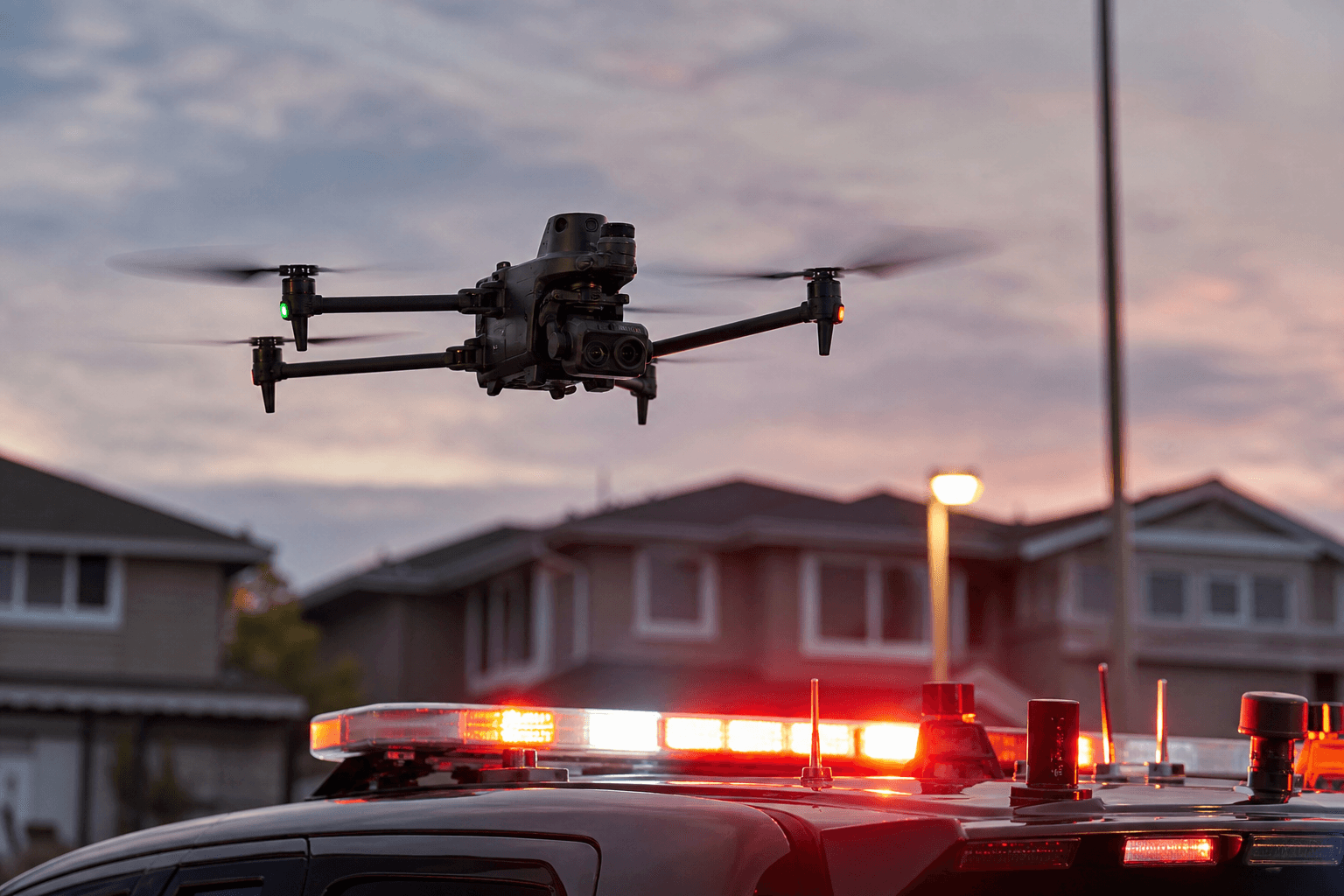
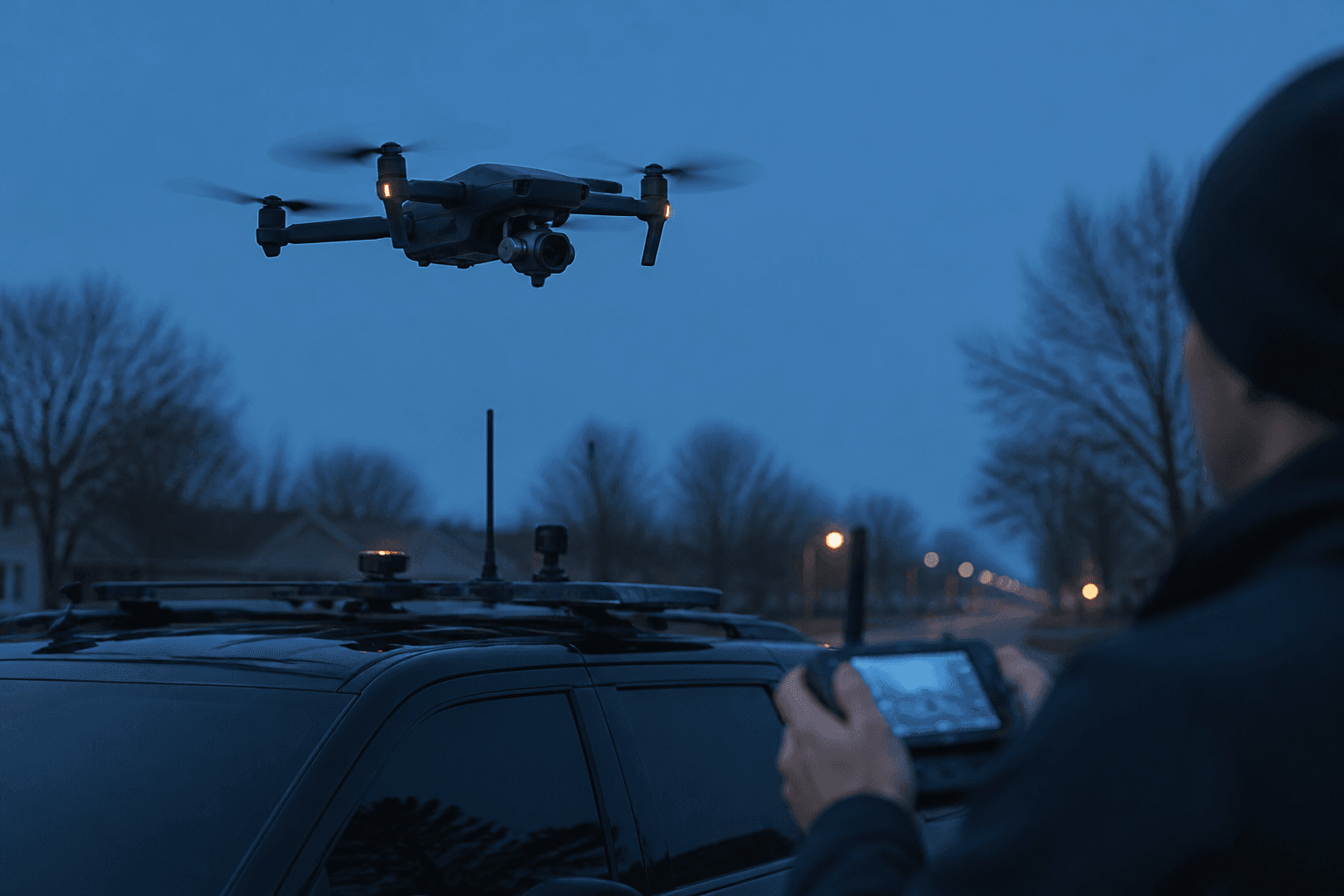
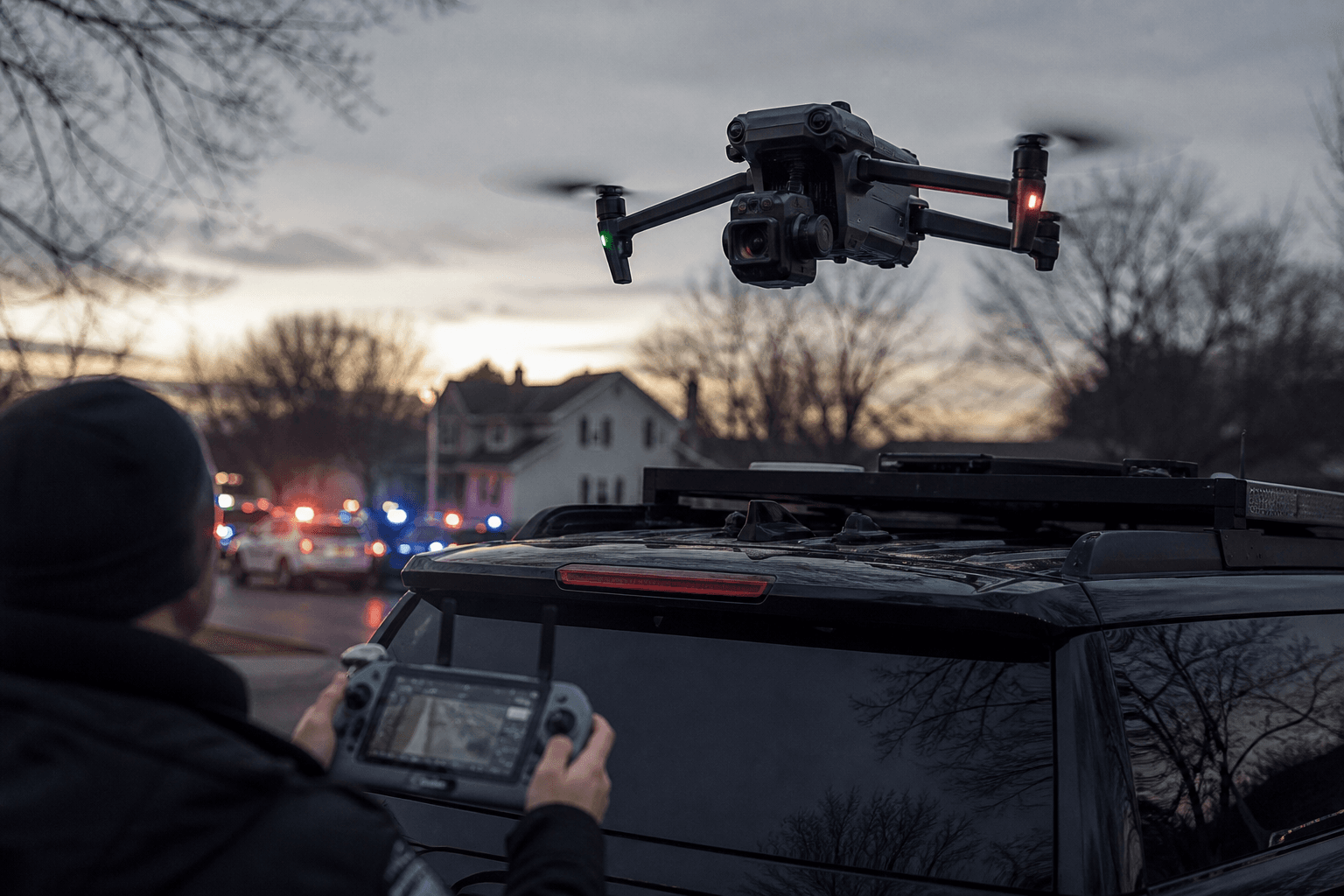
In a single week in early September 2026, the public-safety drone story split down the middle. In Oregon City, a man barricaded during a SWAT standoff opened fire on a police drone sent to surveil him — an incident captured on video and reported by KGW, NBC News, and Central Oregon Daily. In the same news cycle, Ventura County supervisors approved a nearly $12 million police drone program, New Orleans leaned on drones to fill gaps left by an officer shortage, and departments from Waukegan, Illinois to Waterville, Iowa put new aircraft into rotation. The wins and the warnings are now arriving together, and every program manager needs to read them as one story.
$12M
Ventura County police drone program approved
1
Trucker planning to sue over police-drone crash
2
Oregon standoffs where suspects fired on drones
The adoption curve is steepening — and diversifying
What stands out across this week's reporting is how many different kinds of agencies are moving at once. Ojai Valley News reported that Ventura County supervisors signed off on a program approaching $12 million, a scale that puts drones squarely in the capital-budget conversation rather than the grant-experiment category. The Chicago Tribune's Law & Order column noted that Waukegan police are still in a testing phase — deliberately kicking the tires before committing. And fox8live.com framed New Orleans' drone push explicitly as a response to an officer shortage, positioning uncrewed aircraft as a force multiplier when headcount can't keep up.
Fire and EMS are on the same trajectory. The Waukon Standard reported that the Waterville Fire Department's drone, purchased only earlier this spring, has already proven its value on real calls — a reminder that the public-safety drone story isn't just Drone as First Responder in big cities. Internationally, Fire and Rescue NSW deployed aviation search-and-rescue specialists to Nepal's flood zone, underscoring how drone-equipped rescue teams now travel across borders for disaster response.
The common thread: programs at wildly different budget levels and maturity stages are all standing up capability in the same window. That's good news for the field, but it also means a lot of agencies are learning the hard lessons at the same time.
When the drone becomes the target
The Oregon City standoff is the week's most vivid reminder that a drone downrange is not a risk-free asset. According to NBC News and KGW, a man who allegedly opened fire on workers then shot at the police drone deployed during the standoff, with video showing the aircraft under fire. It's at least the second Oregon incident of its kind, and it lands a familiar point for anyone running tactical operations:
A drone taking the bullet instead of an officer is, in one sense, exactly the outcome you want. But an aircraft shot out of the sky is also lost eyes, lost evidence, and a lost asset in the middle of a live incident.
For program managers, the takeaway isn't to keep drones out of hostile situations — it's to plan for attrition. That means redundancy in your fleet, clear replacement budgeting, and tactics that assume an aircraft can go down mid-mission. It also means treating the drone as a genuine de-escalation tool: if a suspect is shooting at a machine instead of at people, the deployment is doing its job.
The liability side no one budgets for
The less dramatic but equally instructive item comes from CDLLife, which reported that a trucker is planning to sue after a crash involving a police drone sent him to the hospital. Details in the reporting are thin, and the legal claims will have to be tested, but the signal is clear: as drones operate in and around traffic and public spaces, agencies are going to face bodily-injury and property-damage claims that most program budgets never anticipated.
This is where the operational story meets the compliance story. Every agency celebrating a new deployment needs to be asking:
1Who carries the liability when a drone is involved in an injury or crash, and is that coverage explicitly written into the program?
2Are our pilots current and certificated for the operations we're actually running, not just the ones we planned?
3Do our records — flight logs, maintenance, and pilot certification — survive a subpoena?
A lawsuit is a records-discovery event. The agencies that treat pilot training and documentation as a compliance foundation, not an afterthought, are the ones that will fare best when the claims arrive.
Trust is being negotiated in real time
The adoption wave is also running straight into governance. InsideNoVa reported that Prince William County supervisors approved memoranda of understanding for Flock cameras and police drone usage while emphasizing "a lot of guardrails" — language that tells you exactly where the political conversation is. Elected officials are approving these programs and demanding constraints in the same motion.
That's the environment every new program now enters. The Ventura County dollar figure will draw scrutiny precisely because it's large. New Orleans' shortage-driven rationale will invite questions about surveillance creep. The smartest programs are getting ahead of it: publishing policies, defining data-retention rules, and documenting the guardrails before a council or a plaintiff's attorney asks for them.
The week's lesson is that scaling a drone program and defending it are now the same job. The deployments are real, the value is real — and so are the bullets, the lawsuits, and the guardrail votes.
Key takeaways
Budget for drone attrition: aircraft will be shot at, crashed, and lost mid-mission — plan fleet redundancy and replacement costs accordingly.
Treat pilot certification and flight documentation as legal infrastructure; a single injury lawsuit turns your records into evidence.
Write liability coverage and data-retention policy into the program from day one, before councils or plaintiffs force the question.
Adoption is diversifying fast across police, fire, and EMS at every budget level — governance guardrails are now a condition of approval, not a nicety.
Train and certify your team, track every pilot's Part 107 currency, manage the fleet, and keep audit-ready records — one platform built for public safety and DFR.