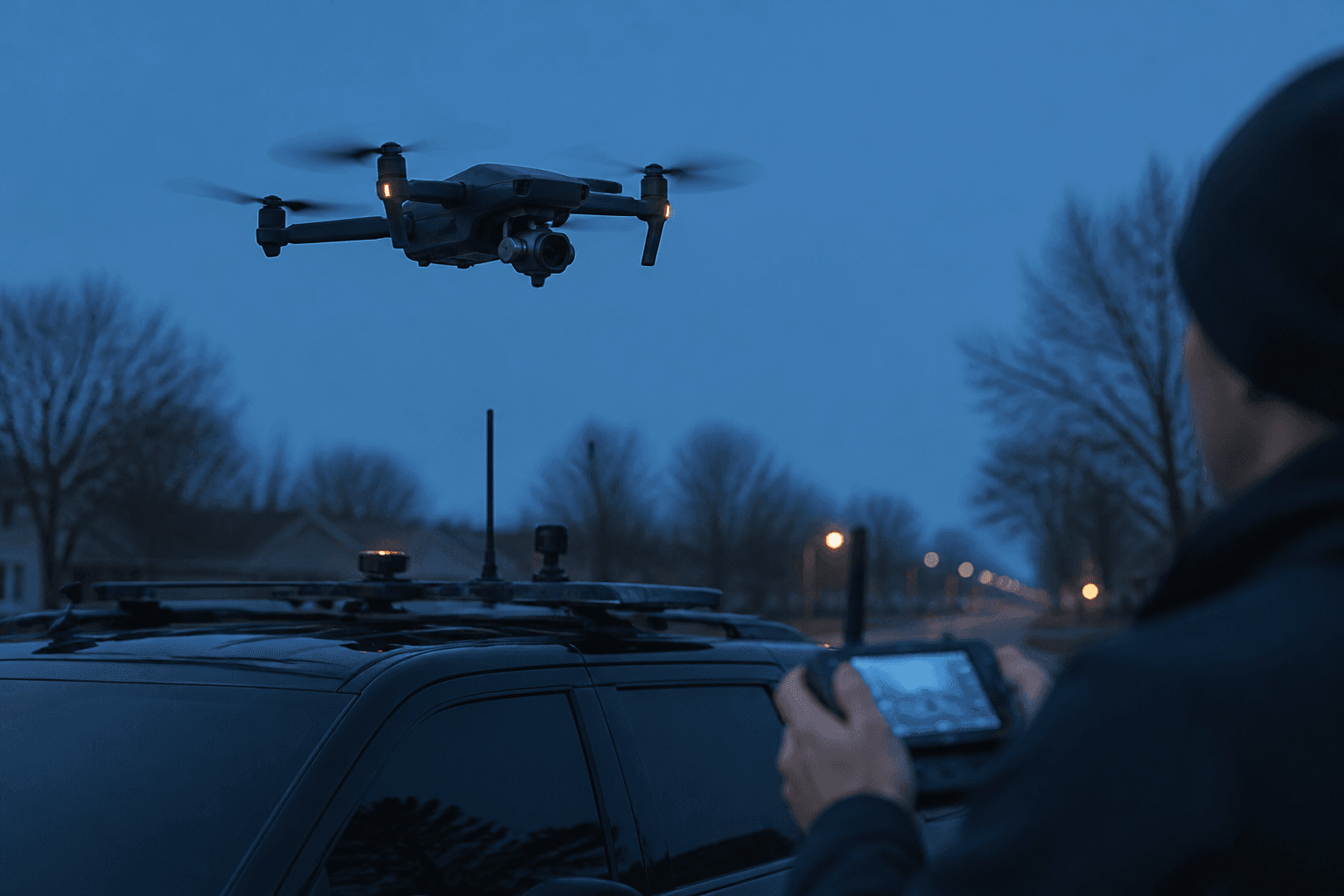
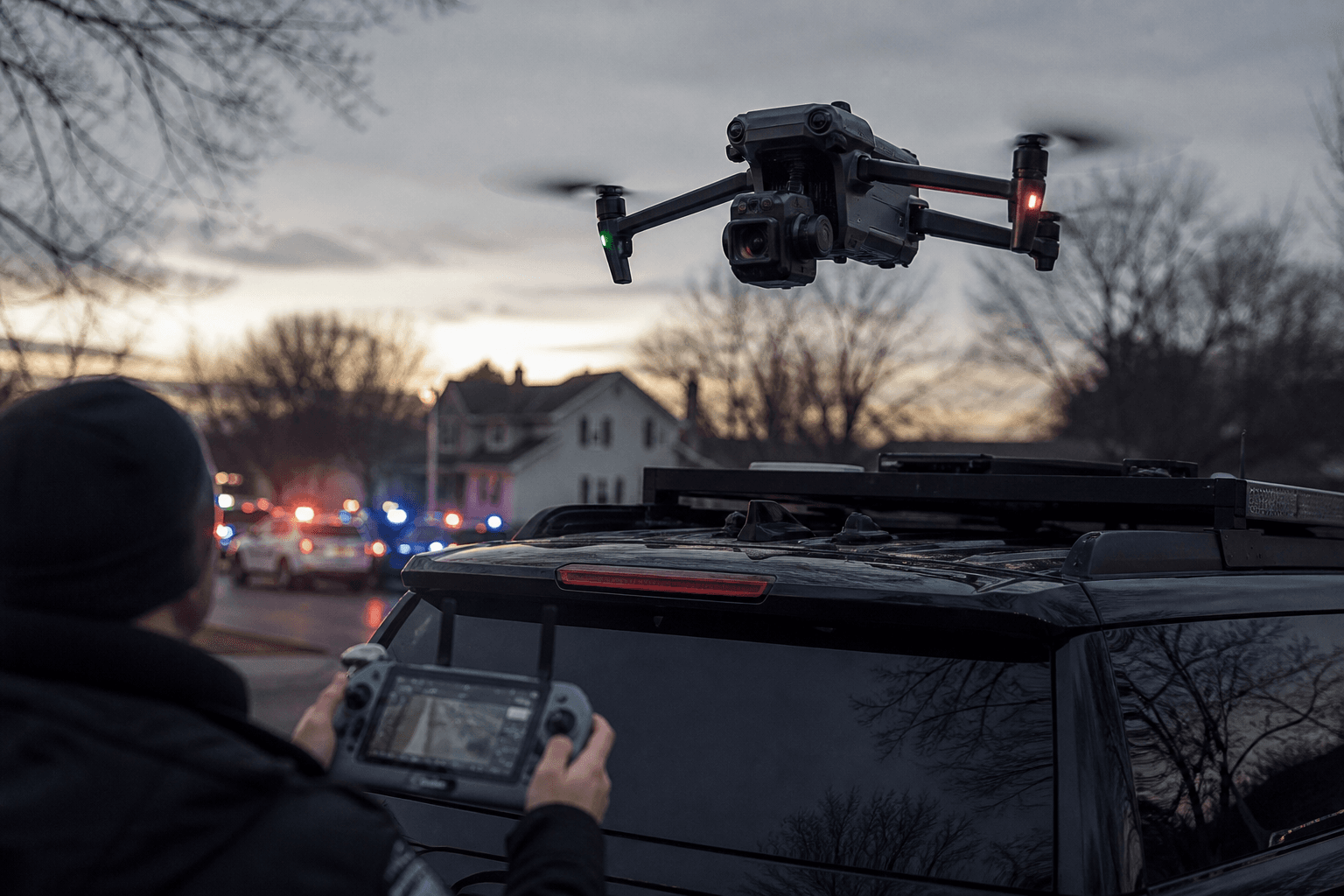
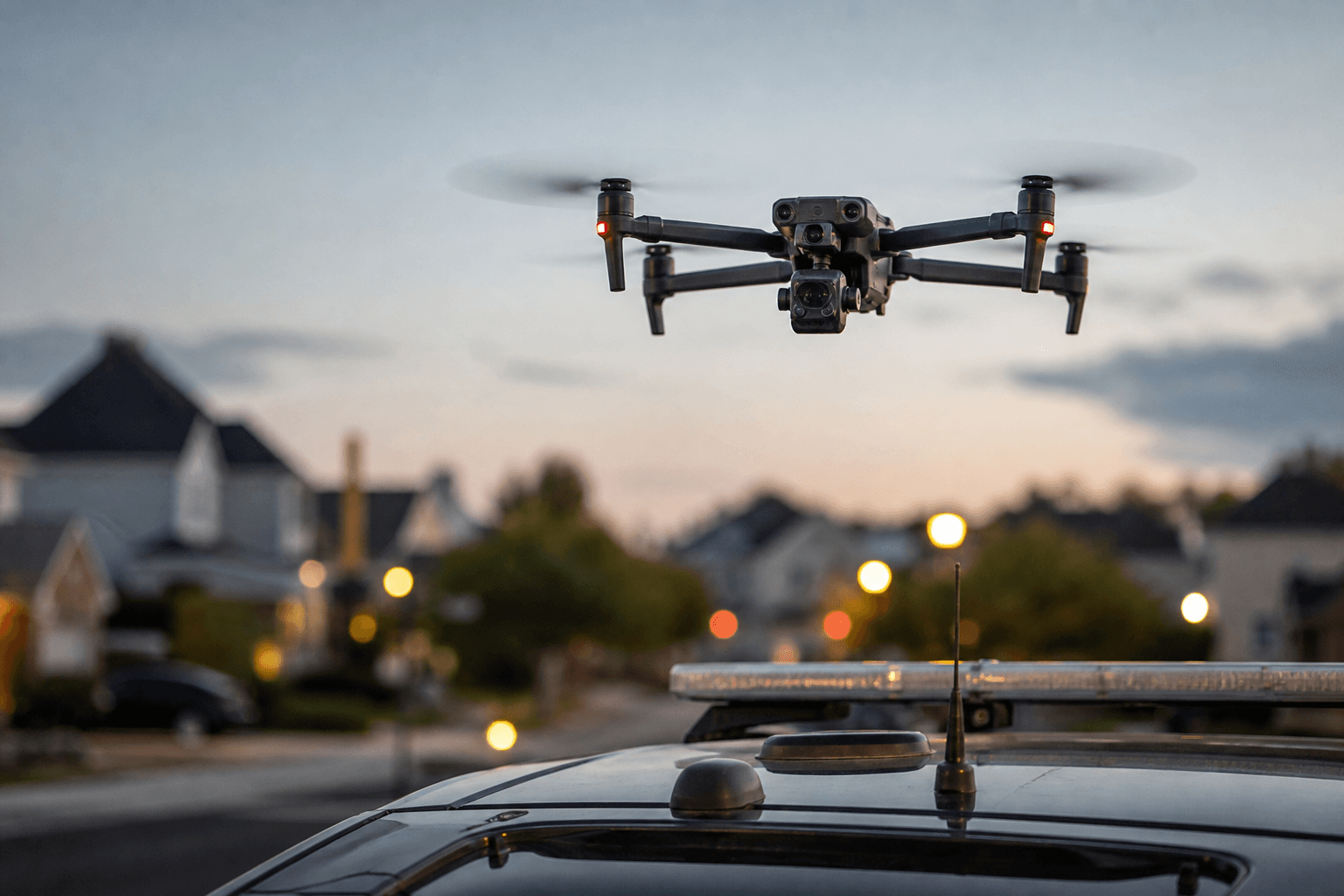
Within a single mid-October week, the Drone as First Responder story split into two tracks that every program manager needs to watch at once. In Prince William County, Virginia, police launched a new DFR pilot program, as WJLA reported. In San Diego, the police chief publicly pushed to adopt DFR, according to 10News. And in San Francisco, the city was weighing new limits on police drone use even as vendor Flock doubled down on the market, per DroneXL. The same technology, the same week — and three very different political outcomes.
For agencies building or defending a program, that contrast is the real lesson. Capability is no longer the hard part. Consent is.
1,400+
US public safety UAS programs (industry estimate)
<90 sec
Typical DFR drone-on-scene time
2
New DFR pilots announced in one week (Prince William, San Diego)
Expansion Is Broad — and It's Not Just Big Cities
The week's reporting shows how far the model has spread beyond the marquee departments that pioneered it. The reach now runs from large metros to small sheriff's offices:
- Prince William County, Va. stood up a formal DFR pilot, as WJLA noted — a structured launch rather than ad-hoc drone use.
- San Diego's police chief made the public case for DFR, 10News reported, signaling intent at the top of a major department.
- Edinburg, Texas is running patrol drones that the chief credits with improving officer safety, per ValleyCentral — "eyes in the sky" framed around personnel protection.
- Chattanooga, Tenn. is now resolving some calls for service with drones and no responding officer at all, GovTech reported — arguably the most consequential operational shift here.
- Kerrville, Texas got a new sheriff's office drone funded by the local Rotary Club, per KABB — a reminder that civic and philanthropic money is seeding programs in smaller jurisdictions.
- Commerce City, Colo. released drone footage of a teen suspect allegedly breaking into vehicles (KDVR) and used drones in an I-76 crash response, per tech-insider.org — concrete, publishable evidence of value.
The Chattanooga datapoint deserves emphasis. A drone closing out a call without dispatching an officer changes the staffing math for understaffed agencies — and it changes the public conversation from "camera in the sky" to "automated response." That is exactly the shift civil-liberties advocates are watching.
The Pushback Is Organizing Around the Same Fault Lines
San Francisco weighing drone limits isn't an isolated event. It rhymes with the St. Paul rally against a police drone contract that CBS News covered the same week, where protesters turned out against the deal directly.
These fights tend to converge on a predictable set of concerns:
- 1Vendor entanglement. DroneXL's framing — Flock betting on police drones while a city weighs limits — captures the tension. When a single surveillance vendor supplies the hardware, the data pipeline, and the analytics, communities ask who actually controls the footage and the retention.
- 2Mission creep. A program sold on locating missing persons or speeding to active emergencies can quietly expand into routine patrol and proactive monitoring, as Edinburg's "patrol drones" language hints.
- 3Response without a human. Chattanooga-style call resolution raises the question of what gets decided by a camera feed and who is accountable for that decision.
The capability gap between agencies has nearly closed. The legitimacy gap — whether your community believes the program is accountable — is now the variable that decides which pilots survive.
What Program Managers Should Do Now
The split-screen week offers a usable playbook. The agencies likely to keep their programs are the ones that treat public trust as an operational requirement, not a press-release afterthought.
- Publish your use-case list before launch. Prince William County framed its rollout as a defined pilot. Define it narrowly and in writing — missing persons, in-progress violent crime, crash scenes — and say what drones will not do.
- Pre-empt the vendor question. Document data ownership, retention windows, and who can access footage. If a company like Flock supplies the platform, be explicit about where its access stops.
- Release the wins — carefully. Commerce City's footage shows the value of transparency, but publishing video also sets precedent on privacy. Build a review process before, not after, the first viral clip.
- Separate "drone assist" from "drone resolves the call." If you're heading toward Chattanooga-style no-officer dispositions, write the policy and brief your oversight body first.
- Invest in certified, accountable pilots. Credible programs are staffed by trained Part 107 operators who understand airspace and documentation. Our public safety resources and practice exams are built for teams standing up or expanding operations.
The technology debate is effectively over — drones work, and agencies from San Diego to Kerrville are proving it. The open question is governance. San Francisco and St. Paul are showing what happens when communities feel the program outran the conversation. The agencies that launch with transparency baked in are the ones that will still be flying a year from now.
Key takeaways
- DFR capability is now mainstream across agency sizes; political legitimacy, not technology, is the limiting factor.
- Expect organized pushback on vendor control, mission creep, and no-officer call resolution — address all three in writing before launch.
- Publish a narrow use-case list, define data ownership and retention, and staff with certified, accountable pilots.
Standing up a drone program?
Train and certify your team, track every pilot's Part 107 currency, manage the fleet, and keep audit-ready records — one platform built for public safety and DFR.