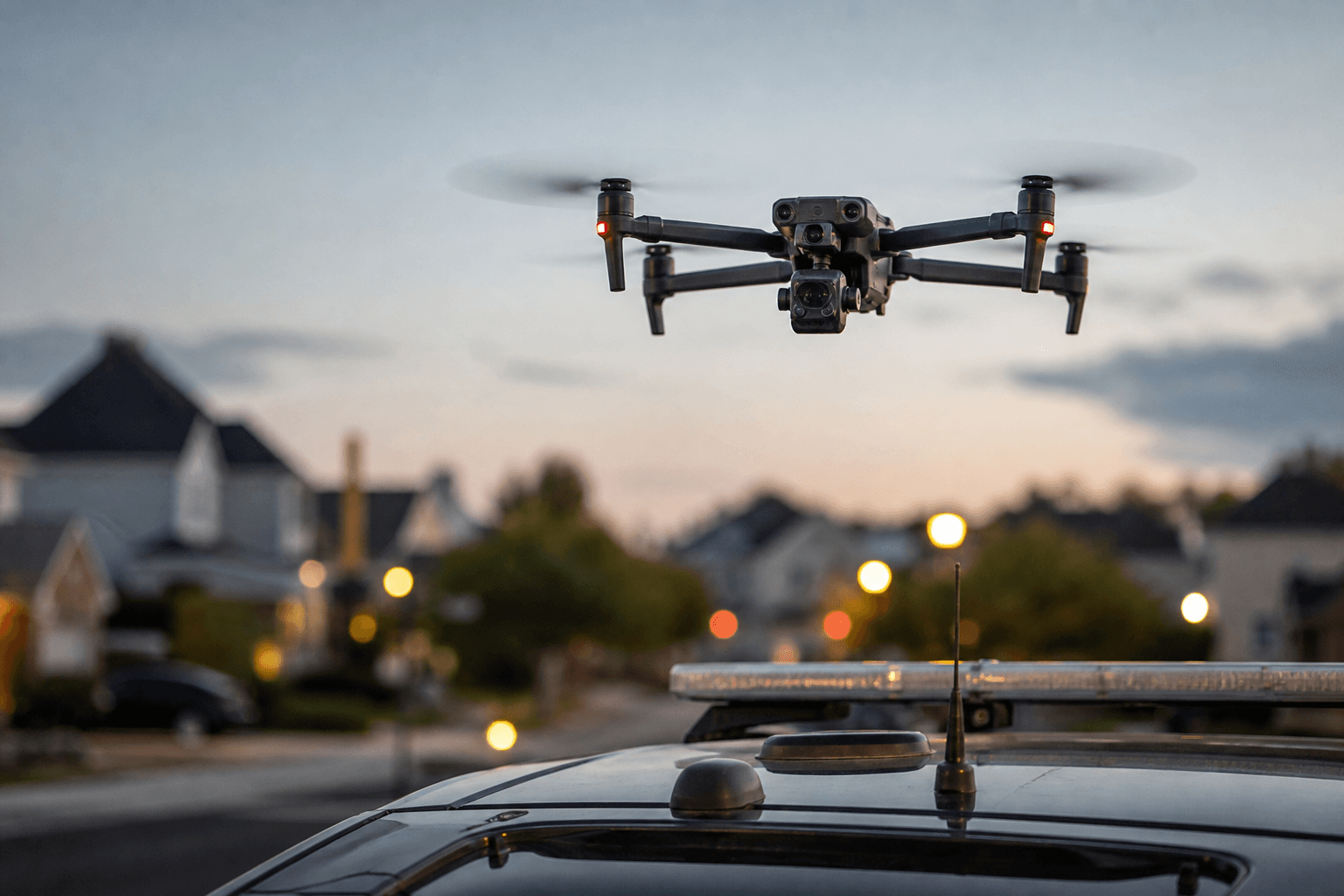
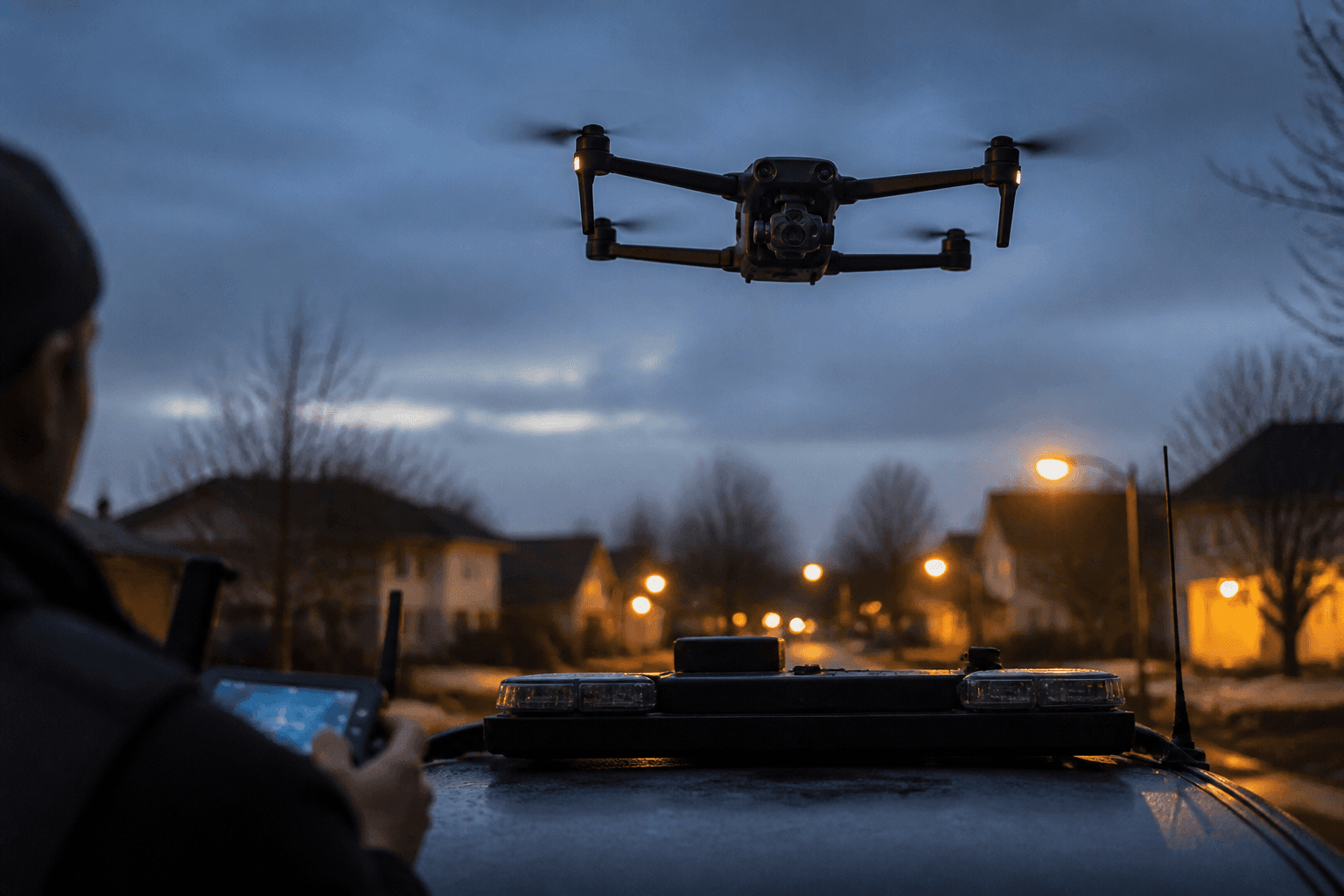
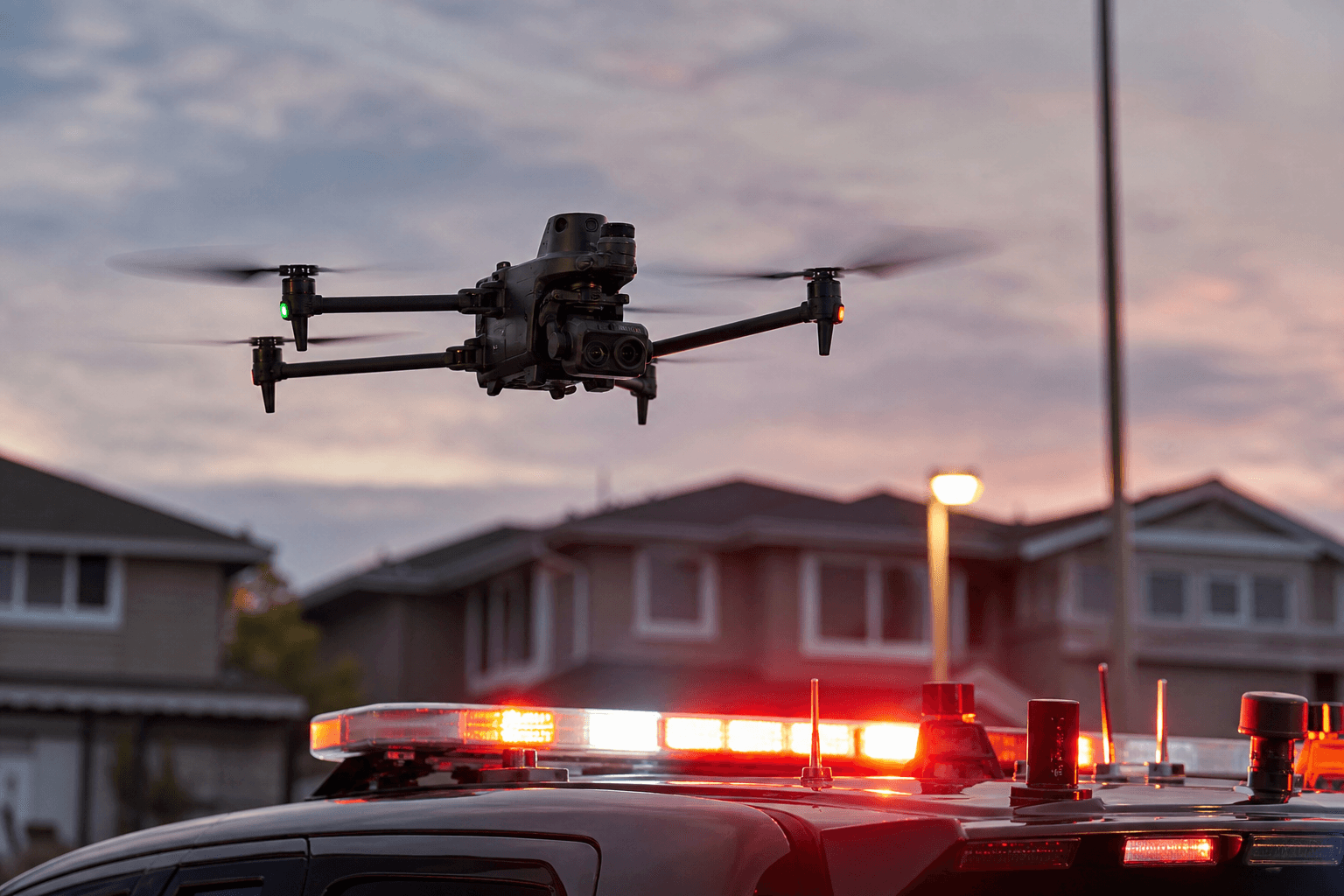
In the span of a single week in late September 2026, the two faces of public-safety drone work showed up side by side. In Santa Fe, police officially launched a Drone as First Responder program. In Auburn, Washington, an already-running DFR system helped officers locate a suspect after a reported road-rage gun threat. And in Ohio, a new state law preparing to take effect the following month put fresh limits on how police may fly at all. Same technology, same week — opposite direction of travel.
For program managers, that split is the real story. The operational case for DFR keeps getting stronger and easier to document. The legal and political envelope around it is getting more crowded and more specific. Those two curves are no longer moving in the same direction, and the agencies that thrive in 2027 will be the ones that plan for both.
The wins keep landing
The Auburn cases are textbook DFR value. As the Auburn Reporter and Auburn Examiner both documented, a drone launched as first responder helped officers catch a suspect and, in a separate incident, locate a person after a reported gun threat during a road-rage call. These are exactly the outcomes that justify a program to a city council: a fast aerial asset overhead, eyes on a scene before officers arrive, and a resolution that didn't require a foot pursuit or a blind approach.
Santa Fe's official launch, reported by KRQE, adds another mid-sized department to the growing roster of agencies moving from pilot to permanent. And the momentum isn't only about flight operations — it's about infrastructure and funding:
- In Bloomington, Illinois, the local Water Reclamation District approved letting police station drone docking stations at its wastewater treatment plants, per WGLT. That's a quietly important development: docked drones at distributed sites shrink response distances and expand coverage without new hangars.
- In Moody, Alabama, WBMA reported that the city landed a Norfolk Southern grant to expand its public-safety drone team — an example of railroads and private industry helping underwrite the buildout.
The throughline: agencies are locking in physical footprint (docks, launch sites) and outside money (grants) that make DFR harder to reverse once it's operational.
The rules are catching up — unevenly
While capability expands, the legal terrain is fragmenting. The Springfield News-Sun reported that a new Ohio law limiting police drone use takes effect the following month. The specifics of that statute matter enormously to Ohio agencies, and the broader signal matters to everyone: states are now writing their own guardrails around police UAS, independent of what the FAA allows in the airspace.
That creates a familiar but sharpening problem. The FAA governs whether you can fly. A growing patchwork of state laws governs how you may use what you collect, when you may deploy, and what you must disclose. A perfectly legal flight under federal rules can still put an agency crosswise with a new state statute.
The FAA decides whether your drone is allowed in the air. Your state legislature increasingly decides whether your program survives the next public-records request.
The evidence trail is part of this. WIVB News 4 examined police drone video and radio audio in the aftermath of two deadly West Seneca police chases 19 days apart — a reminder that DFR footage doesn't just help resolve calls, it becomes discoverable record in the hardest cases. When incidents turn deadly, the drone's video and the accompanying radio traffic become public-accountability material, subject to media requests and scrutiny. That's not a reason to fly less. It's a reason to treat retention, redaction, and release policy as core program design, not an afterthought.
What this means for your program
The Fayetteville Observer framed the local conversation as a city preparing for "policing's drone future" — the recognition that this is arriving whether or not the policy scaffolding is ready. For managers, the practical takeaways cluster around one idea: build the program to survive scrutiny, not just to fly.
- 1Track your own state's legislation as a standing task. Ohio's new law won't be the last. Assign someone to monitor state-level bills and adjust SOPs before enactment, not after.
- 2Write your data policy before you expand your fleet. The West Seneca coverage shows footage will be requested in critical incidents. Decide retention windows, redaction workflows, and release standards now.
- 3Lock in infrastructure and funding deliberately. Bloomington's docking sites and Moody's grant show how programs become durable. Pursue distributed launch points and outside dollars — but document the public-safety justification for each.
- 4Keep the certification and currency baseline solid. Every one of these wins depends on qualified remote pilots. If your roster needs to grow, our Part 107 course library and practice exams are built for exactly that onboarding pipeline.
- 5Bank your success stories with specifics. Auburn's road-rage and suspect-location cases are the kind of concrete outcomes that win council votes and survive skeptical op-eds. Capture them.
The agencies expanding fastest right now are also the ones generating the most records, the most public attention, and — inevitably — the most legislative interest. That's not a contradiction. It's the maturation of the field. DFR is no longer a novelty to defend; it's an operational system to govern well. For more on building defensible programs, see our public safety resources.
Key takeaways
- DFR's operational case is strengthening fast, but state-level legal limits (like Ohio's new law) are arriving on a separate track — plan for both.
- Treat drone video and radio audio as discoverable public record: set retention, redaction, and release policy before your next critical incident.
- Durable programs lock in infrastructure (docking sites) and outside funding (grants) while documenting the public-safety justification for each expansion.
Standing up a drone program?
Train and certify your team, track every pilot's Part 107 currency, manage the fleet, and keep audit-ready records — one platform built for public safety and DFR.