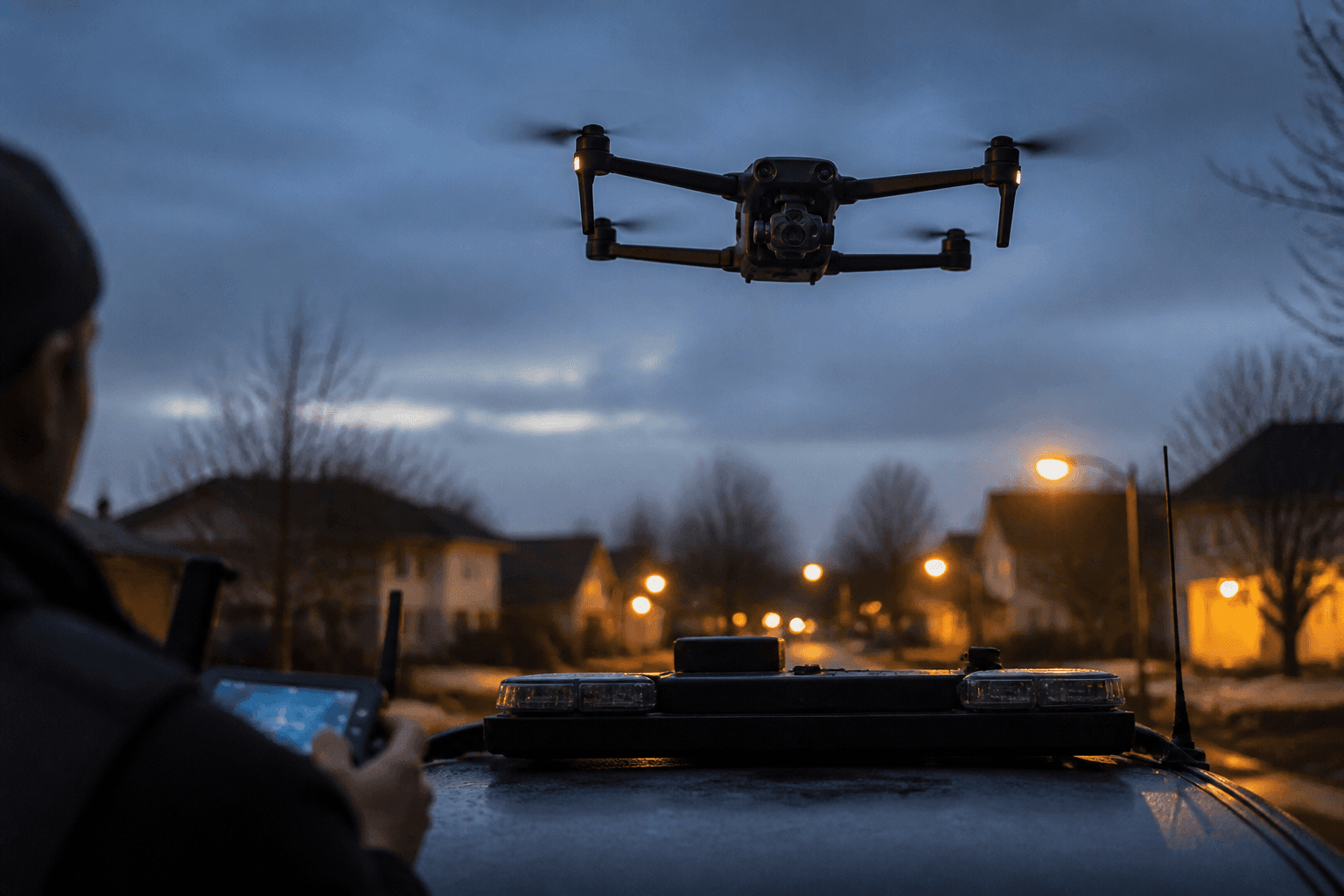
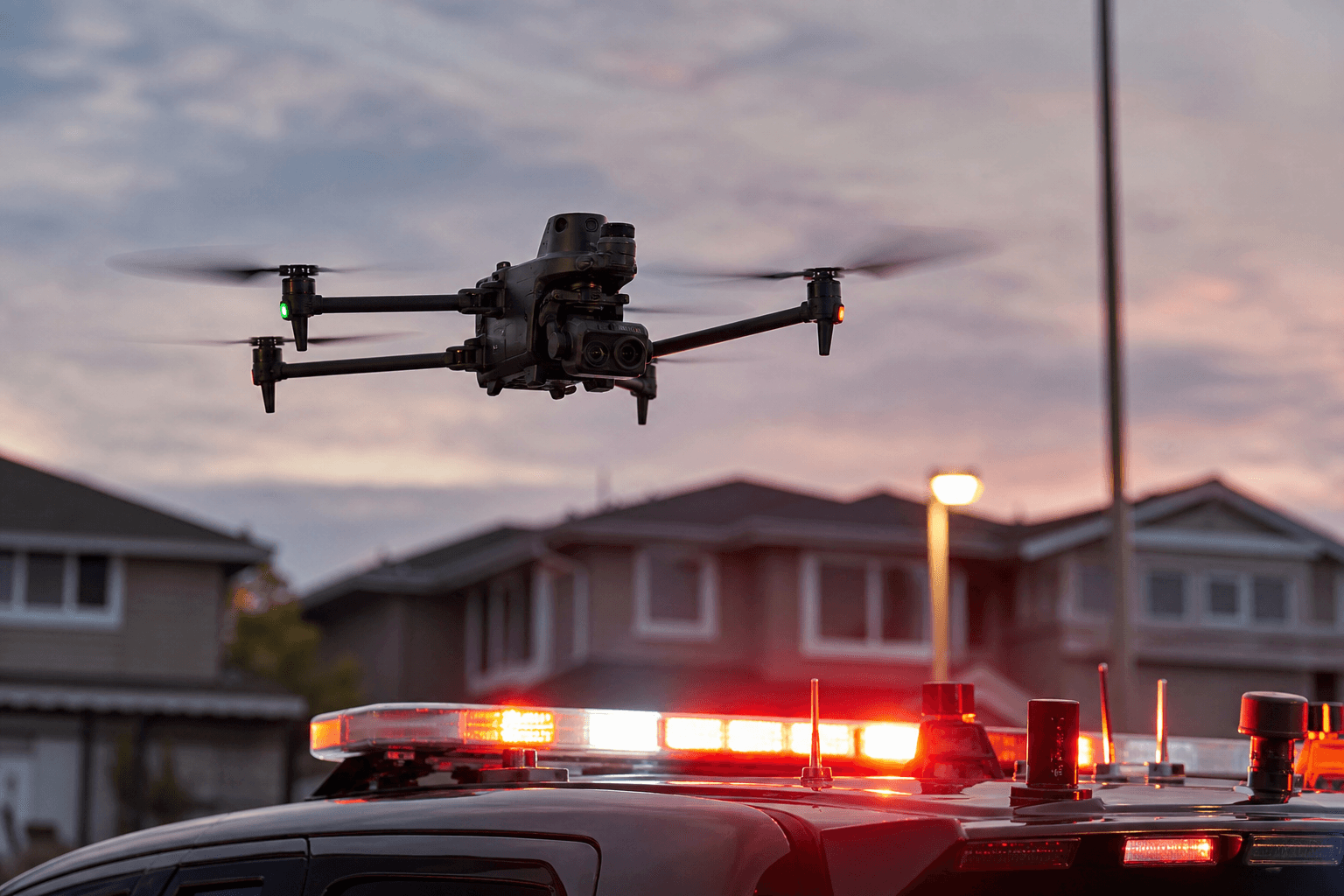
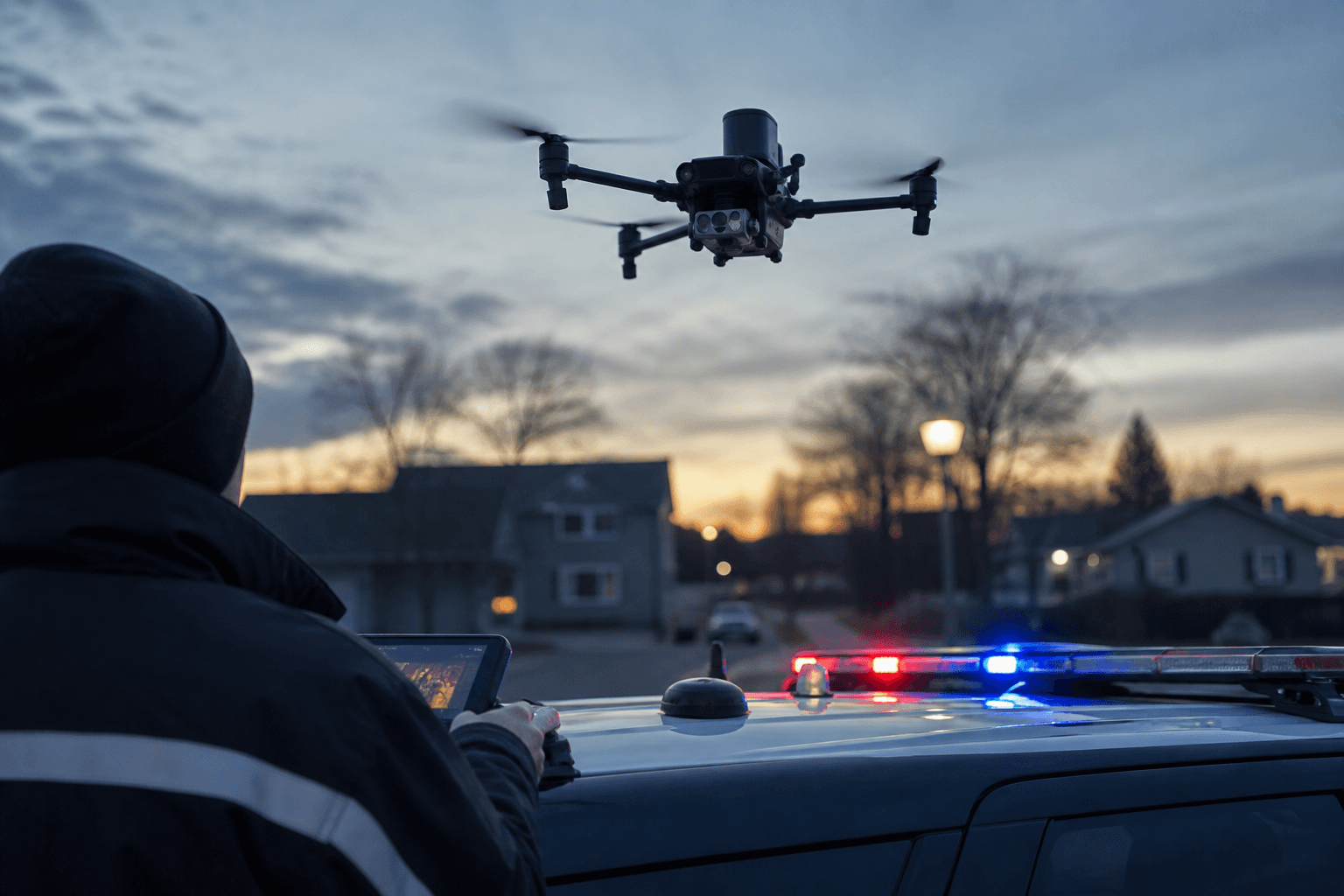
On the same September week that departments from Providence to rural Alabama were standing up or funding first-responder drone programs, the St. Paul City Council did something less common: it pulled the brakes. In a single stretch of days in mid-September 2026, the national Drone as First Responder (DFR) story split cleanly into two paths — expansion in some cities, a hard pause in another — and the dividing line was not technology or cost. It was public trust.
For program managers, this is the more useful version of the DFR story. The wins are everywhere. The question is what separates the agencies that keep flying from the one that got told to stand down.
1,400+
US public safety UAS programs (industry estimate)
<90 sec
Typical DFR drone-on-scene target
1
Council that halted expansion this week
The expansion side of the ledger
The growth is real and it is broad-based. As The Providence Journal reported, Providence police have put first-responder drones into service to give officers "eyes in the sky" ahead of ground units — the classic DFR value proposition of getting visual information to responders before they arrive. In suburban Philadelphia, Lower Merion police have requested funding for their own first-responder drone, according to the Inquirer, and the paper framed the request against a backdrop of rising national anxiety about surveillance. And in Alabama, al.com described how a railroad corporation grant helped a rural community afford a new police drone at all — a reminder that for smaller departments, the barrier is often the check, not the concept.
That trio tells you the market has matured past big-city pilots. DFR and general public-safety UAS are now:
- Reaching suburbs and rural towns, not just metros with dedicated air-support units.
- Funded creatively, through grants and corporate partnerships when local budgets can't stretch.
- Marketed on speed and situational awareness, the on-scene-first pitch that resonates with chiefs and city managers alike.
If you run a program, none of this is surprising. What should get your attention is happening 40 miles up I-35 from Minneapolis.
Why St. Paul pulled the plug
St. Paul's City Council declined to expand the city's police drone program, and multiple outlets — GovTech, MPR News, Officer.com, and KSTP among them — converged on the same account. As MPR News and KSTP reported, the council withdrew a grant request tied to the expansion. As the Minneapolis-area coverage put it, the halt will hold until privacy and surveillance questions are addressed.
Read that carefully. The council did not conclude the technology doesn't work. It did not cite crashes, airspace violations, or FAA problems. It stopped an expansion — of an existing program — because the governance questions hadn't been answered to the council's satisfaction. The funding mechanism itself became the pressure point: a grant request the council could simply decline.
The agencies losing ground right now aren't failing in the air. They're failing to answer, in public, what the drone sees, who keeps the footage, and for how long.
Duluth, also in Minnesota, shows the same tension one step earlier in the cycle. Northern News Now reported that Duluth's police drone program is drawing surveillance questions even as its use grows. The pattern is consistent: usage expands, public scrutiny follows, and if the policy paperwork hasn't kept pace, an elected body eventually asks the uncomfortable question.
The pattern program managers should read
Put the week together and a clear operational lesson emerges. Providence, Lower Merion, and the Alabama department advanced. St. Paul stalled. The difference wasn't capability — it was the strength of the trust-and-governance case each brought to its decision-makers.
A few observations worth acting on:
- 1Grant funding is a double-edged sword. It gets rural and suburban programs off the ground, as al.com's Alabama story shows. But when expansion depends on a grant request a council must approve, as in St. Paul, you've handed elected officials a natural veto point. Plan for that vote, don't stumble into it.
- 2"Anxiety about surveillance" is now part of the procurement conversation. The Inquirer put that phrase in a headline about a routine funding request. Expect every DFR ask to be read through that lens, regardless of your actual use case.
- 3Existing programs are not safe from reversal. St. Paul already had drones. The council still stopped the next step. Momentum is not a policy.
The practical takeaway is that a defensible governance package — clear data-retention limits, published deployment criteria, redress mechanisms, and audit trails — is now as load-bearing as your flight ops. It's the part of the program that survives contact with a skeptical council. Training and certification standards matter here too, because "our pilots are FAA-certificated and trained to a written standard" is a sentence that reassures oversight bodies. If your team is still building that foundation, our Part 107 course library and practice exams are a starting point, and our ongoing public safety coverage tracks how these fights are resolving city by city.
None of this diminishes the case for DFR. The on-scene-first value is genuine, and this week added three more agencies making that bet. But St. Paul is the more instructive data point precisely because it interrupts the winning streak. The programs that endure will be the ones that arrive at the council meeting with the privacy answers already written down.
Key takeaways
- DFR expansion is now reaching suburbs and rural towns, often via grants and corporate partnerships — but grant approvals give councils an easy veto point.
- St. Paul halted expansion over privacy and surveillance questions, not technical failure; governance, not capability, is the current chokepoint.
- Even established programs can be reversed. Bring published retention limits, deployment criteria, and training standards to every oversight conversation before you're asked.
Standing up a drone program?
Train and certify your team, track every pilot's Part 107 currency, manage the fleet, and keep audit-ready records — one platform built for public safety and DFR.