Faster Airport Clearance for Police Drones — and a Shootdown That Shows the Risk
The FAA is speeding airspace approvals for public safety drones near airports — the same week the military shot down a CBP drone near El Paso. The two stories together map the airspace-coordination problem.
Drone Ready Editorial·Public safety UAS·October 10, 2026·5 min read
Share
Two developments landed within a day of each other this month, and read side by side they tell a single story about the hardest problem in public safety drone work: coordinating airspace. On October 10, DroneDJ reported that police drones operating near airports can now move through FAA clearance faster. One day earlier, on October 9, ABC News reported that the Department of Defense shot down a Customs and Border Protection drone near El Paso. One item is about making agency drone access smoother. The other is about what happens when agency aircraft and other authorities don't deconflict in time.
For remote pilots in the public safety space — and for anyone whose operations brush up against controlled airspace — these aren't two unrelated headlines. They're the two ends of the same coordination challenge.
Oct 10, 2026
FAA faster-clearance report (DroneDJ)
Oct 9, 2026
CBP drone shootdown near El Paso (ABC News)
1 day
Between the two developments
What the faster clearance actually changes
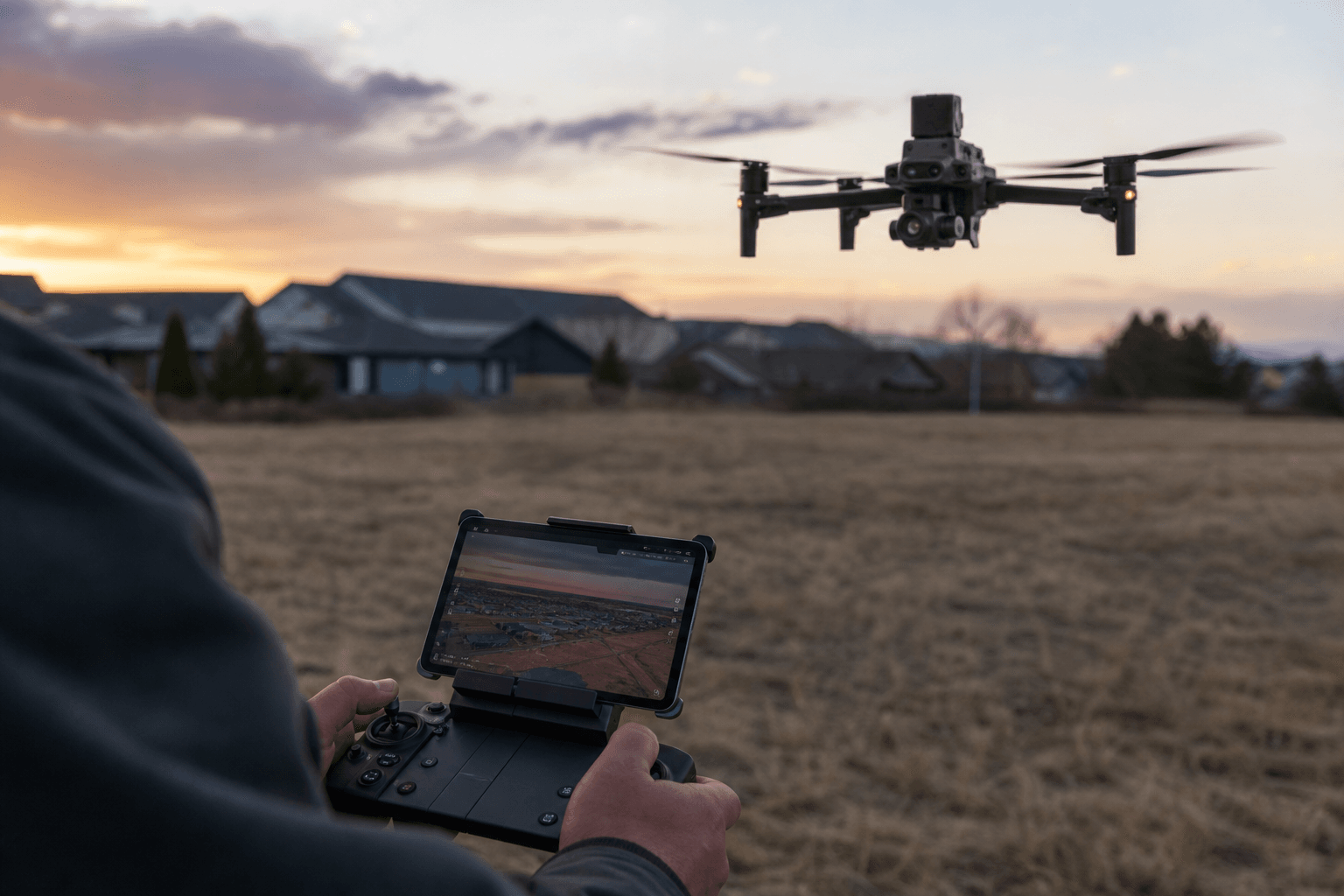
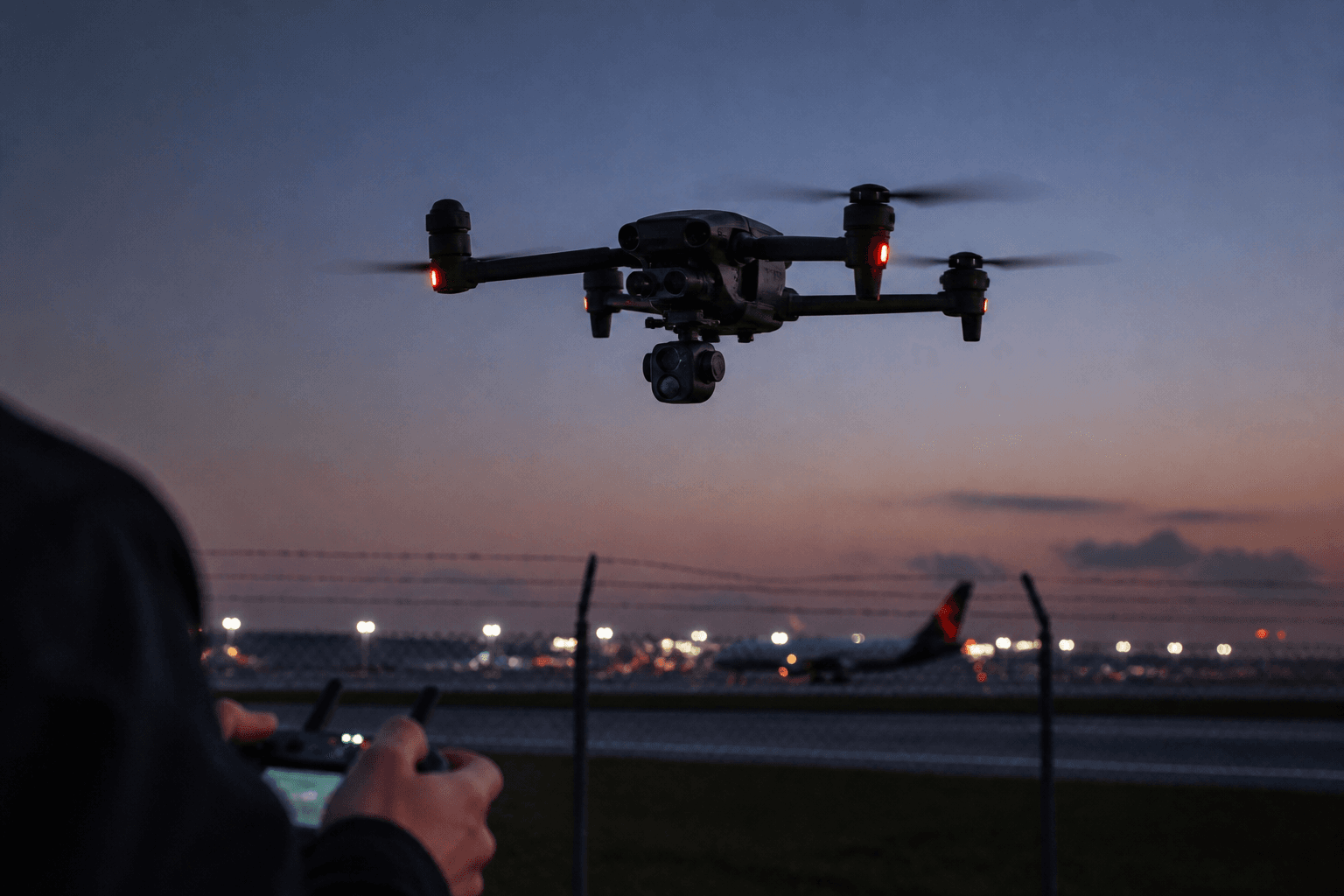
According to DroneDJ, police drones operating near airports can now obtain FAA clearance more quickly. That matters because airspace near airports is exactly where public safety response and aviation safety collide most directly. A pursuit, a missing-person search, or a traffic-incident scene doesn't politely stay clear of controlled airspace. When a call comes in inside a surface area or under an approach corridor, the time it takes to get authorization can be the difference between a drone being a useful tool and being useless.
The operational promise here is straightforward: cut the authorization lag so that a legitimate public safety flight can get into the air closer to when it's actually needed. For agencies building Drone as First Responder programs, approval latency near airports has been a real constraint. Faster clearance is a direct answer to it.
But faster access is not the same as safer access. Speeding up the paperwork doesn't by itself speed up the part that actually keeps aircraft apart — knowing, in real time, who else is flying in the same block of sky. That's the gap the El Paso incident exposes.
The shootdown that frames the risk
ABC News reported that the Department of Defense shot down a CBP drone near El Paso, citing officials. Set aside the dramatic framing for a moment and look at what it represents: two federal entities operating aircraft in the same border airspace, where one did not correctly identify the other as friendly before acting.
The details available are thin, and it would be irresponsible to speculate beyond what officials have confirmed. What's clear is this: this was not a hobbyist flying over a stadium. This was a government agency's drone, presumably operating with authorization, taken down in a shared-use environment. That's a coordination failure, not a rogue-operator problem.
The lesson for pilots isn't that drones are dangerous. It's that authorization to fly and awareness of who else is flying are two different things — and only one of them keeps you out of a conflict.
If agencies with federal clearance and sophisticated systems can experience a deconfliction breakdown, that should recalibrate how line pilots think about their own situational awareness. Clearance gets you into the airspace. It doesn't tell you who's sharing it with you.
Why both stories matter to your operation
The tension between these two items is the thing to sit with. The regulatory direction is toward faster, broader access for public safety drones near sensitive airspace. The El Paso event is a reminder of what can go wrong when more aircraft operate in complex, shared environments and coordination doesn't keep pace.
For remote pilots, a few practical implications follow:
Faster clearance raises the bar on your own airmanship. If approvals near airports get easier, more drones will be flying in that airspace more often. Your margin for sloppy position reporting, altitude discipline, or comms shrinks accordingly.
Know exactly whose airspace you're sharing. Public safety operations increasingly overlap with other agencies, manned aircraft, and — near the border or near military installations — defense assets. Authorization from one authority does not mean every other authority knows you're there.
Document and communicate, even when you don't have to. Over-communicating your intentions, altitude, and duration to ATC and to other local operators is cheap insurance against a deconfliction gap.
Treat remote ID and real-time tracking as safety tools, not just compliance boxes. The thing that prevents a repeat of the El Paso scenario is reliable identification of who's flying — and that's exactly what remote ID is supposed to enable.
Pilots moving into agency work, or commercial operators who contract with public safety clients, should pay particular attention. The airspace you'll be working in is getting busier and the approval process is getting faster, but the coordination infrastructure is still catching up to both.
What remains unclear
We don't yet know the specific breakdown behind the El Paso shootdown — whether it was an identification failure, a communication gap, or something else — and officials have released limited detail. We also don't know the precise scope of the faster-clearance process DroneDJ described: which airports, which program types, and what verification it still requires. Both deserve follow-up. What's already clear is the direction of travel, and the responsibility that comes with it.
Key takeaways
Faster FAA clearance near airports expands public safety access — but access and deconfliction are not the same thing.
The CBP shootdown near El Paso shows coordination failures can happen even between well-resourced federal agencies.
As shared airspace gets busier, pilot-side situational awareness, comms discipline, and reliable remote ID matter more, not less.
Train and certify your team, track every pilot's Part 107 currency, manage the fleet, and keep audit-ready records — one platform built for public safety and DFR.