
A drone operator lifting a deer carcass. The same aircraft hauling a sled. It sounds like a stunt reel, but according to DroneXL's October 15 reporting, those external-load flights are what led nuWay Ag's Yoder to accept an FAA suspension of his drone operating privileges. For anyone studying for the Part 107 exam — or already holding the certificate and flying commercially — it's a reminder that the rules you memorize for the test don't stop mattering the moment you pass. They are the rules you live under every time you power up.
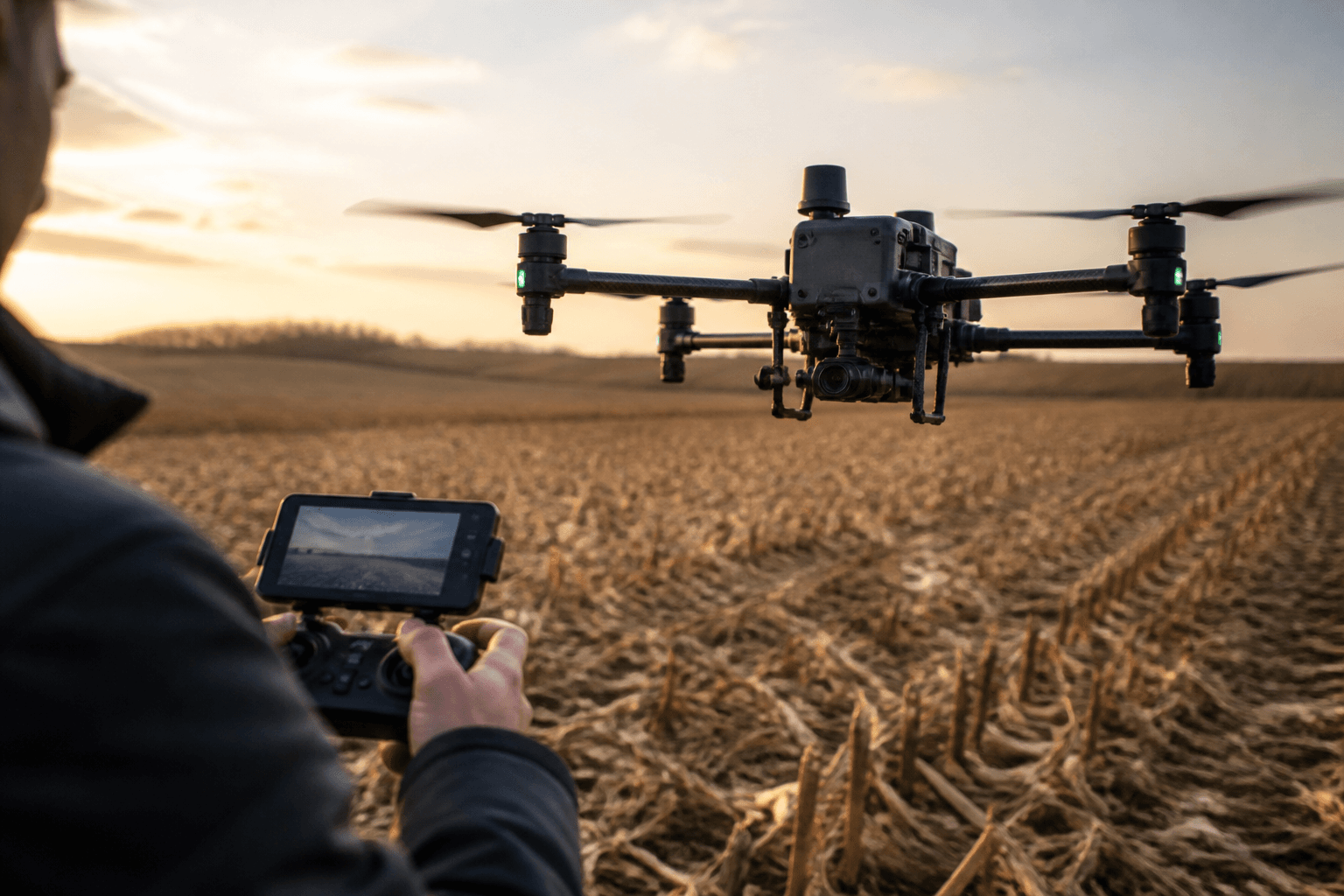
What Actually Happened
The short version, per DroneXL: an agricultural drone operator used his aircraft to lift external loads — reportedly including a deer and a sled — and the FAA responded with a suspension of his operating privileges, which he accepted.
Ag drones are a fast-growing corner of the commercial space, and the big spray platforms are built to carry serious weight. That capability is exactly where pilots can talk themselves into trouble. A drone that can legally haul a tank of liquid for crop application is not automatically cleared to sling any load, in any manner, for any purpose. The physical ability to lift something and the regulatory authority to do it are two different things — and the gap between them is where enforcement lives.
What remains unclear from the reporting is the full regulatory basis for the action and the precise terms of the suspension. But the headline fact is instructive on its own: external-load and transport operations carry requirements beyond a standard Part 107 certificate, and the FAA is willing to act when operators freelance past them.
Why This Is a Part 107 Story, Not Just an Ag Story
If you're preparing for the knowledge test, external-load rules may feel like someone else's problem. They aren't. The exam is built to confirm you understand the boundaries of what your certificate authorizes — and, just as importantly, what it doesn't.
Part 107 governs small unmanned aircraft operations, but it does not hand you blanket permission to do everything a drone is physically capable of. Carrying property for compensation, operating heavier aircraft, and conducting certain transport operations can trigger additional requirements, waivers, or exemptions. The certificate is a floor, not a ceiling.
The physical ability to lift something and the regulatory authority to do it are two different things — and the gap between them is where enforcement lives.
That's the mindset the test is trying to build. Every question about operating limitations, waivable sections, and who-may-authorize-what is really asking: do you know where your authority ends? The nuWay Ag case is that abstract question turned into a real-world consequence.
The Test Itself Is Also Moving
This enforcement news lands at a moment when the knowledge exam is a moving target. As DroneXL reported on October 9, the FAA added chart questions to the Part 107 test effective October 26 — questions drawn from material that isn't in the testing supplement. The Drone Girl, writing September 1, noted the test has effectively changed twice, and laid out what candidates actually need to study now rather than what older prep material assumes.
The practical takeaways for anyone sitting the exam soon:
- Don't assume every chart or scenario on test day will be answerable straight from the supplement. Build genuine sectional-chart reading skill, not just supplement-lookup habits.
- Treat any prep material published before late 2025 as potentially stale on specifics. Confirm it reflects the October 26 changes.
- Expect the airspace and chart-reading portions to carry real weight. Those are the same competencies that keep working pilots inside their legal envelope.
If you want structured practice against the current question pool, our practice exams and course library are built around the updated material.
Where New Pilots Are Coming From
The pipeline into this certificate keeps widening. The Crescent-News reported October 10 on a Paulding High School drone class giving students hands-on flight time and Part 107 test prep — certification arriving before a diploma. And VA News reported October 6 on Vets to Drones, a program helping veterans move toward drone careers.
That growth is good news for the industry and for anyone hiring. It also raises the stakes on exactly the lesson the nuWay Ag case teaches. A wave of newly certificated pilots entering commercial work — in agriculture, inspection, mapping, and more — means a wave of people who need to understand not just how to pass, but how to stay compliant under pressure, on a real job, when a shortcut looks easy and the aircraft can clearly handle it.
The certificate opens the door. Knowing its limits is what keeps you on the right side of it.
Key takeaways
- Your Part 107 certificate authorizes a defined scope — carrying external loads and transporting property can require more than the base rating.
- The FAA suspended an ag operator over external-load flights; enforcement is real, not theoretical.
- The test changed October 26 with chart questions not in the supplement — study current material and build real chart-reading skill.
- The compliance habits you learn for the exam are the same ones that protect your operating privileges on the job.
Sources
- nuWay Ag's Yoder Takes FAA Drone Suspension Over Deer and Sled Lifts — DroneXL
- PHS drone class offers students hands-on experience, prep for Part 107 FFA test — The Crescent-News
- FAA Part 107 Test Adds Chart Questions Oct. 26 Not in the Supplement — DroneXL
- Vets to Drones helps Veterans take the next step toward drone careers — VA News (.gov)
- The Part 107 test changed twice. Here’s what you actually need to study now — The Drone Girl
- How to Get a Drone Pilot Certificate — FLYING Magazine
Ready to get Part 107 certified?
Study the exact material this article covers — narrated lessons and unlimited practice exams. Your $19/mo membership also includes preflight checks, fleet & currency tracking, and 20 drone maps a month.

Don't miss the next one
Part 107 rule changes and study guidance, straight to your inbox.