Ten years ago this month, the FAA switched on a rule that turned flying a drone for money from a legal gray zone into a licensed profession. The Small UAS Rule — Part 107 — took effect in August 2016, and as both UAV Coach and Commercial UAV News marked the anniversary this week, the retrospectives agree on the headline: Part 107 didn't just regulate the U.S. drone industry, it created it. What's easy to miss in the milestone coverage is where the certificate has landed a decade later. It's no longer just a credential for working pilots. It's becoming a fixture in high schools, community colleges, and university extension programs — the front door to the field rather than a checkpoint along the way.
10 years
Part 107 in effect since August 2016
5
FAA-certified pilots produced by one high school ROTC program
15
Additional safety certifications earned in the same cohort
From a Legal Fix to an Industry Foundation
Before Part 107, commercial drone work in the U.S. depended on case-by-case exemptions — a slow, uncertain process that kept most would-be operators grounded. As Commercial UAV News frames it, the rule's real achievement was standardization: a single knowledge test, a repeatable path to a remote pilot certificate, and a clear set of operating limits that businesses could actually plan around. That predictability is what let mapping firms, inspection contractors, real estate photographers, and public safety agencies build durable operations on top of drones.
UAV Coach's ten-year look-back tracks how far that foundation has carried the field, from a small community of early adopters to a mature commercial ecosystem. But maturity has a downstream effect worth naming for anyone studying today: the certificate is no longer novel. It's expected. The interesting question for new pilots isn't whether Part 107 matters — it's how the rule is being taught, and by whom.
The Certificate Moves Into the Classroom
That's where the newer reporting gets specific. Across the past year, the same credential has been threaded into structured education programs at every level:
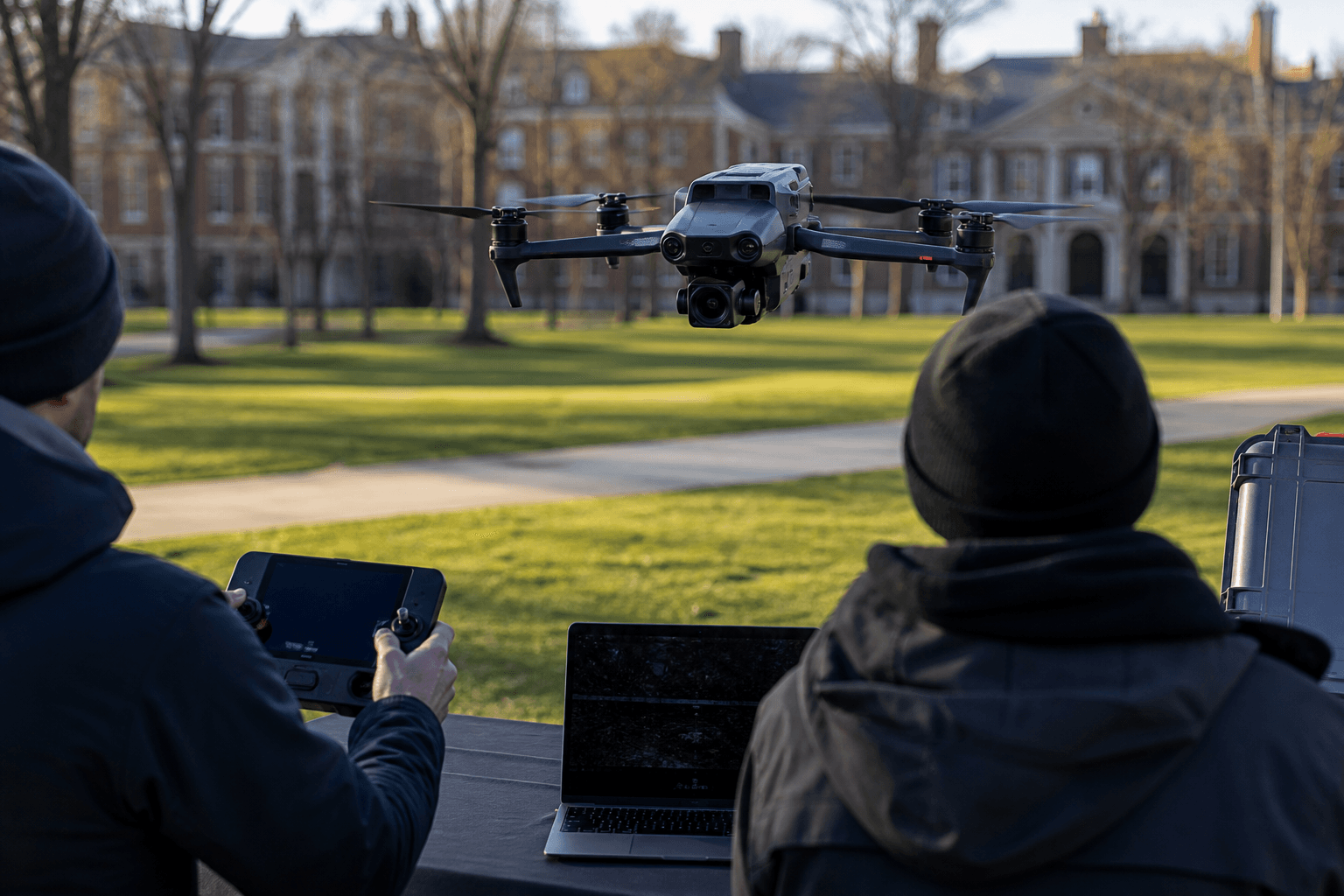
- High school ROTC. As Get The Coast reported, Choctaw High School's aerospace program produced five FAA-certified drone pilots and 15 additional safety certifications in what the school called a breakout year — teenagers walking out with a professional credential most working adults don't hold.
- University-backed youth pipelines. uasweekly.com covered a partnership between USI and the REC Foundation to expand Part 107 training aimed at future drone pilots, tying classroom instruction to a recognized certification path.
- Agricultural extension. The University of Kentucky offered an FAA certification workshop and exam built specifically for agricultural drone pilots, meeting an established industry where it already works rather than routing everyone through a generic course.
- Community college on-ramps. Chesapeake College launched a drone operator course with a path to FAA certification and scholarship opportunities — lowering the cost barrier that keeps some students out.
Ten years in, Part 107 has stopped being the finish line for a career pivot and started being the starting line for a first job.
Read together, these programs point to a shift in who arrives at the test and why. Instead of self-taught freelancers cramming for a career change, more candidates are coming through institutions that fold the certificate into a broader curriculum — safety training, hands-on flight, and in the ag and university cases, domain-specific application.
What This Means If You're Studying Now
The institutionalization of Part 107 cuts two ways for individual candidates, and both are worth planning around.
First, the baseline is rising. When high schoolers are earning the certificate alongside extra safety certifications, the credential alone signals less than it used to. Employers screening for pilots increasingly look past the card to what you can actually do — mission planning, airspace judgment, and documented flight experience. Passing the knowledge test is table stakes; the differentiators sit on top of it.
Second, the on-ramps are wider and cheaper. Scholarship-backed community college courses and extension workshops mean the study-and-test path no longer has to be a solitary, self-funded grind. If you're near one of these programs, the structured route can be worth it — not for the certificate itself, which you can earn independently, but for the flight time, instruction, and stackable certifications that come bundled with it.
A few practical moves:
- 1Treat the certificate as a floor, not a ceiling. Build a portfolio — mapping outputs, inspection deliverables, or logged operations — that proves competence beyond the test.
- 2Match your training to a use case. The UK ag workshop is a model: pilots who specialize in a vertical are harder to replace than generalists. Explore where the demand is in commercial and public safety work.
- 3Stack safety credentials. The Choctaw cohort's extra 15 safety certifications weren't decoration; they're the kind of documentation risk-averse employers and insurers reward.
The ten-year retrospectives are, rightly, a victory lap for a rule that worked. But the more useful signal for anyone entering now is what the anniversary reveals about the pipeline: Part 107 has become infrastructure. It's taught, funded, and expected. The pilots who stand out won't be the ones who cleared the test — everyone will have. They'll be the ones who treated the certificate as the day they started, not the day they arrived.
Key takeaways
- Part 107, ten years on, is now embedded in high schools, colleges, and extension programs — the certificate is a starting line, not a finish line.
- A rising baseline means employers look past the card; portfolios, flight experience, and stacked safety certifications are the differentiators.
- Scholarship-backed and vertical-specific programs (like ag drone workshops) offer cheaper, more targeted on-ramps than going it alone.
Ready to get Part 107 certified?
Study the exact material this article covers — narrated lessons and unlimited practice exams. Your $19/mo membership also includes preflight checks, fleet & currency tracking, and 20 drone maps a month.