Zipline Wants $20 Billion. Part 108 Still Isn't Signed.
Zipline is reportedly chasing a $20 billion valuation while the rule that would govern its core business remains unpublished. Here's what the gap means for pilots.
Drone Ready Editorial·UAS policy·September 22, 2026·5 min read
Share
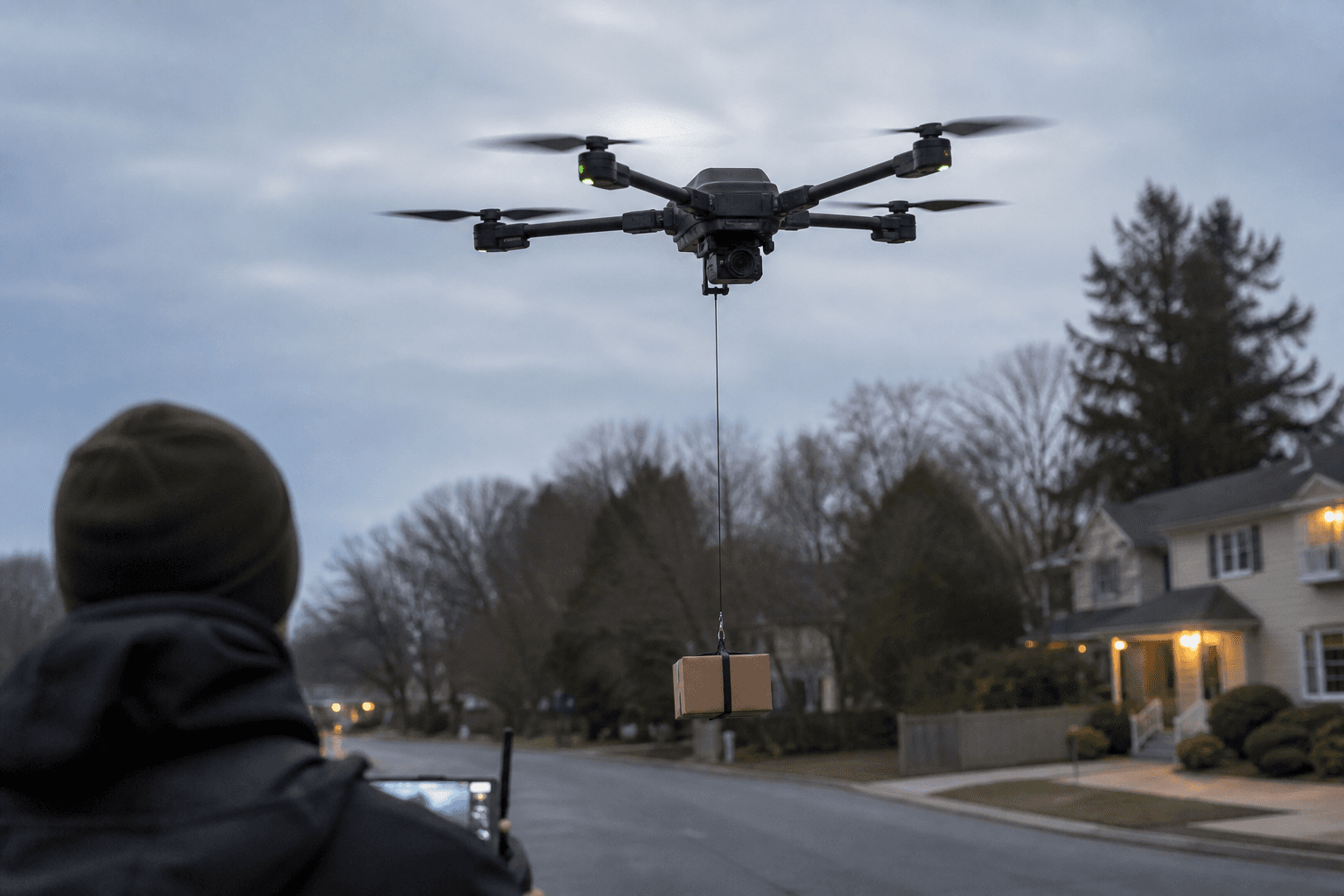
Zipline, one of the most-watched names in drone delivery, is reportedly raising money at a $20 billion valuation, according to dronexl.co. That number would put the company in rarefied air for the UAS sector. But there's a catch that should sound familiar to anyone tracking FAA policy: the federal rule that would actually let companies like Zipline scale routine beyond-visual-line-of-sight delivery — Part 108 — still isn't signed.
That gap between private capital and public rulemaking is the real story here, and it says a lot about where the industry is placing its bets.
$20B
Zipline's reported target valuation
65M+
Drone flights logged by AirData
2026–2034
Tactical UAV market forecast window
Betting billions on an unwritten rule
The striking thing about the reported Zipline round, as dronexl.co framed it, is the timing. Investors are being asked to value a delivery company at $20 billion while the regulatory foundation for large-scale, routine BVLOS operations in the U.S. remains unpublished. Part 108 is expected to be the framework that finally moves the industry past the current patchwork of individual waivers and exemptions — and it has repeatedly slipped its expected deadlines.
That means the valuation isn't purely a bet on Zipline's technology or its logistics execution. It's also a bet on Washington. A $20 billion price tag implicitly assumes the FAA will publish a workable rule, and that the rule will let a company operate at a scale the current permission structure simply doesn't allow.
Investors aren't just valuing Zipline's aircraft. They're valuing a rule that doesn't exist yet.
For working pilots, this is a useful reminder that the biggest players are effectively pre-positioning for Part 108. They are building fleets, hiring, and raising capital against a future regulatory state — not the one that governs your operations today.
The activity is real, even if the rule isn't
One reason investors may feel comfortable getting ahead of the rulemaking is that the operational data keeps climbing. AirData reported topping 65 million logged drone flights, a milestone uasweekly.com tied directly to an industry gearing up for the FAA's forthcoming BVLOS framework.
That figure matters for a few reasons:
It reflects genuine, sustained commercial and public-safety flight volume, not just hype.
It signals that the operational and data infrastructure — logging, maintenance tracking, fleet management — is maturing ahead of the rule.
It gives regulators a growing evidentiary base to reference when they finally publish.
In other words, the industry isn't waiting idly. As we've covered before, operators are building around the unpublished rule rather than pausing for it. The 65-million-flight mark is one more sign that the practical groundwork is well ahead of the paperwork.
Still, activity is not the same as authority. Every one of those flights happened under today's rules — Part 107, waivers, and exemptions — not under Part 108. The volume proves demand and capability. It does not prove the regulatory ceiling has moved.
Delivery is a precedent fight, not just a business
Commercial UAV News made a sharp point that reframes the whole delivery conversation: the FAA's decisions on drone delivery are really about precedent. Each approval, each exemption, and eventually the shape of Part 108 itself sets the terms not just for one company's packages, but for how autonomous, routine flight over people and property gets normalized nationwide.
That's why a Zipline funding round is worth a professional pilot's attention even if you never fly a delivery mission. The frameworks being negotiated now — how BVLOS is authorized, what detect-and-avoid standards apply, what operational limits attach — will ripple into inspection, mapping, public safety, and every other commercial specialty. The precedent set for the highest-profile use case tends to define the rulebook for everyone.
Where the money is actually flowing
Delivery grabs headlines, but it isn't the only place capital is moving. The tactical UAV market is projected to grow across a 2026–2034 window, per Fortune Business Insights, and Streetwise Reports noted a leveraged ETF launch tied to a drone parts maker — a sign that even the supply chain is drawing dedicated investment vehicles.
Read together, these items sketch a sector attracting money at multiple layers:
1Operators like Zipline, chasing scale against a future rule.
2The supply chain, now investable enough to warrant its own financial products.
3Defense and tactical demand, forecast to grow independently of the civilian delivery timeline.
For pilots, the practical takeaway is that the industry's financial momentum is broad-based and not dependent on any single approval. That's reassuring for career stability — but it also raises the stakes on Part 108, because so much capital is now leaning on a rule that hasn't landed.
If you're building a commercial drone career, the move is to keep your credentials and BVLOS-readiness current so you're positioned the moment the framework publishes. Staying sharp on the fundamentals through regular practice exams is cheap insurance against a fast-moving regulatory shift.
Key takeaways
Zipline's reported $20B valuation is partly a bet that Part 108 will be published and workable — the rule still isn't signed.
Flight volume is real (65M+ logged flights), but it all happened under today's Part 107 and waiver regime, not under a scaled BVLOS rule.
Delivery approvals set precedent for every commercial specialty, so watch the FAA's decisions even if you never fly packages.
Capital is flowing into operators, the supply chain, and tactical UAV — keep your credentials current to move fast when the rule lands.
Study the exact material this article covers — narrated lessons and unlimited practice exams. Your $19/mo membership also includes preflight checks, fleet & currency tracking, and 20 drone maps a month.