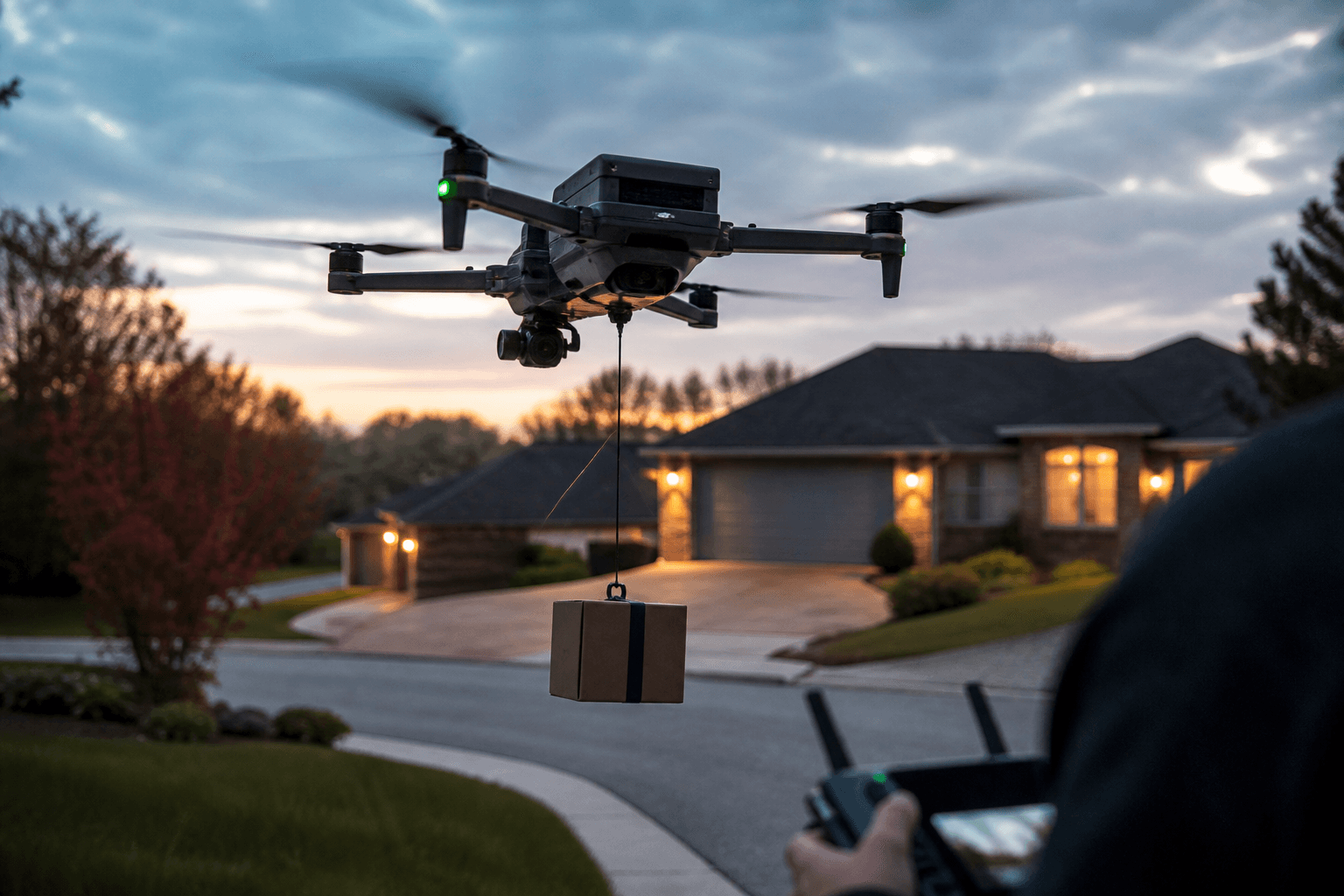
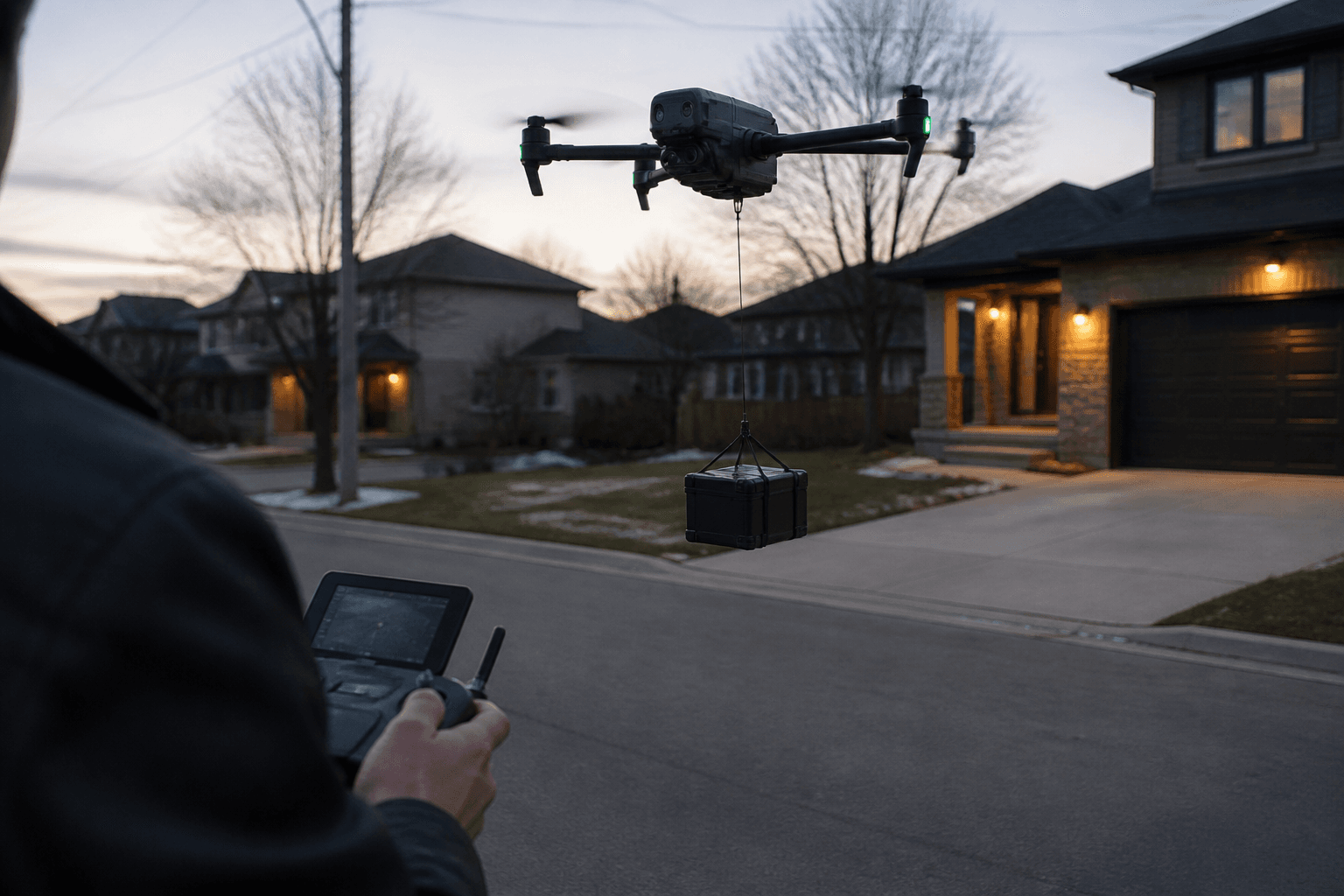
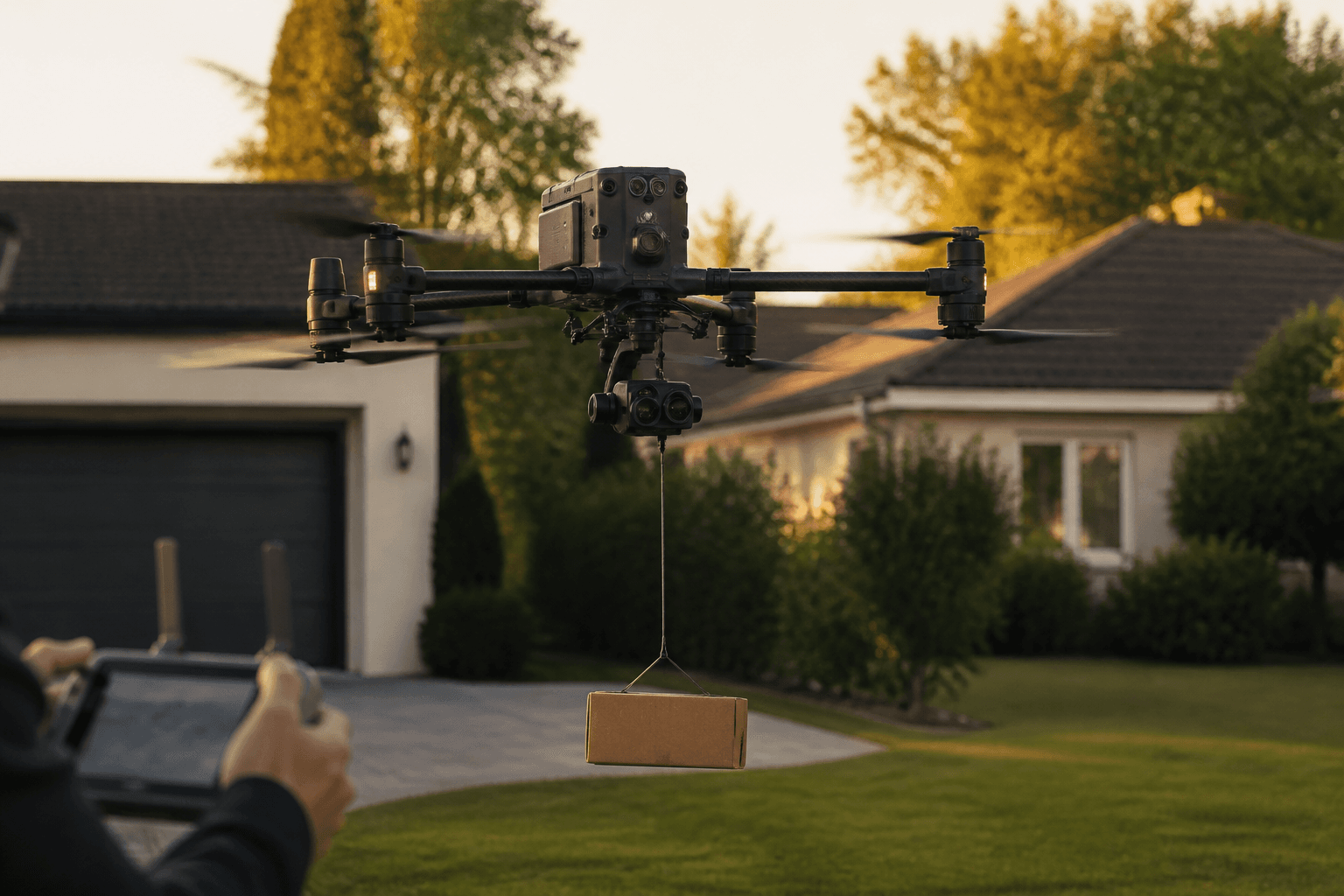
Within a single week in late September 2026, Amazon's Prime Air went live in the Cleveland suburbs, expanded its footprint around Dallas, signaled a move into Massachusetts, and started staffing up near Raleigh-Durham. That is not a pilot program inching forward. That is a company building a national delivery grid in real time — and doing it faster than the communities underneath the flight paths can react.
For commercial operators, the interesting story isn't that Amazon is scaling. It's how the scaling is landing on the ground: with launched service in some markets, job listings in others, and a growing chorus of noise complaints wherever the drones actually fly. The gap between operational momentum and public acceptance is widening, and everyone building a drone business is going to inherit that gap.
500
Locations Amazon plans to expand to
3 mi
Cleveland-area service from a drone pharmacy
2026
Year Prime Air went live in the Cleveland suburbs
A week of simultaneous fronts
The pace is what stands out. As Cleveland.com and WKYC both reported, Prime Air went live in the Cleveland area, with DroneXL noting the service now reaches suburbs roughly three miles from a drone pharmacy operation — a hint at how densely Amazon wants to layer delivery nodes. In Massachusetts, WBUR, Boston.com, and Spectrum News all reported that Amazon plans to base delivery drones at its Otis Street facility, with service potentially taking flight soon. And CBS17 reported that Amazon has posted several job listings near RDU, the classic tell that Raleigh is next on the map.
Meanwhile, Yahoo Finance framed the bigger ambition plainly: Amazon intends to expand to 500 locations. That is the number worth sitting with. A company doesn't spin up hundreds of sites the way it opens a handful of test markets. It builds repeatable infrastructure, standard procedures, and — critically — a template for dropping into a new suburb whether or not that suburb asked for it.
The noise complaint is following the drone
Here is the counterweight. CBS News reported that residents in Richardson, Texas, are filing noise complaints over Amazon's delivery drones, with one calling the service "just a nuisance." Yahoo Finance went further, describing an outright resident revolt in a Texas suburb even as the 500-location plan moves forward.
We've covered why this matters before, and the pattern is holding: the friction isn't primarily about airspace safety anymore. It's about livability.
When the objection shifts from "is this legal" to "is this tolerable," the fight moves from the FAA's desk to the city council's — and that's a venue where operators have far less control.
For anyone in the commercial drone space, that shift is the whole ballgame. A federal authorization gets you into the air. It does not get you welcomed in the neighborhood. Amazon has the legal clearances to fly in these markets, and it is still absorbing organized local pushback within days of launch. Smaller operators without Amazon's legal and PR resources should assume the community-relations bar is now higher, not lower, because residents primed to resent one company's drones will not carefully distinguish yours from theirs.
What the buildout signals for the rest of the market
There's a supply-side story riding underneath all this. IndexBox projected that commercial UAV fleet expansion is driving sustained growth in the drone battery market through 2035. That's the quiet infrastructure layer of a scaling delivery industry — more airframes in service means more batteries, more charging cycles, more maintenance, and more of the unglamorous logistics that keep fleets flying.
For operators, the read-through is threefold:
- 1The vendor and service ecosystem is growing with the fleets. Battery, maintenance, and ground-infrastructure demand is a real business adjacent to flying. If delivery is crowded, the picks-and-shovels layer around it is expanding on the same curve.
- 2Density is the strategy. Amazon placing service within a few miles of an existing drone pharmacy node — as DroneXL flagged — shows the model is about tight, overlapping coverage zones, not single hero routes. That has implications for how airspace over specific suburbs gets used up.
- 3Job postings are the leading indicator. The Raleigh listings CBS17 spotted arrived before any launch announcement. If you want to know where delivery volume is heading next, watch hiring, not press releases.
What commercial operators should actually do
The practical takeaway isn't to compete with Amazon on delivery. It's to read the environment Amazon is creating and position around it.
- Get ahead of the noise conversation. If your work — inspection, mapping, media — puts a drone over residential areas, have a community-facing answer ready before someone else forces the question. The Richardson complaints show how fast "nuisance" becomes the framing.
- Watch your local council, not just the FAA. Municipal drone rules are where the real constraints are forming. Track what your city does in response to delivery pressure, because those ordinances will apply to you too.
- Sharpen the fundamentals. A clean regulatory record and current certification are your cheapest insurance in a scrutinized market. If your credentials are dusty, our practice exams and course library are the fastest way to fix that.
Amazon's map doubled in a week. The acceptance layer didn't. That gap — between what's authorized and what's welcomed — is now the defining feature of the commercial airspace, and it belongs to all of us.
Key takeaways
- Amazon is scaling Prime Air toward 500 locations, with new markets launching or staffing up across Ohio, Texas, Massachusetts, and North Carolina in a single week.
- The binding constraint is shifting from federal authorization to local acceptance — noise complaints and resident revolts are trailing every launch.
- Watch hiring and municipal ordinances as leading indicators; both signal where delivery pressure, and new local rules, are heading next.
- Position around the buildout: the battery, maintenance, and infrastructure ecosystem is expanding on the same growth curve as the fleets.
Put your drone to work.
Get certified, then turn your flights into measurable, shareable maps — 20 a month included in your $19/mo membership. Everything a working operation needs in one account.