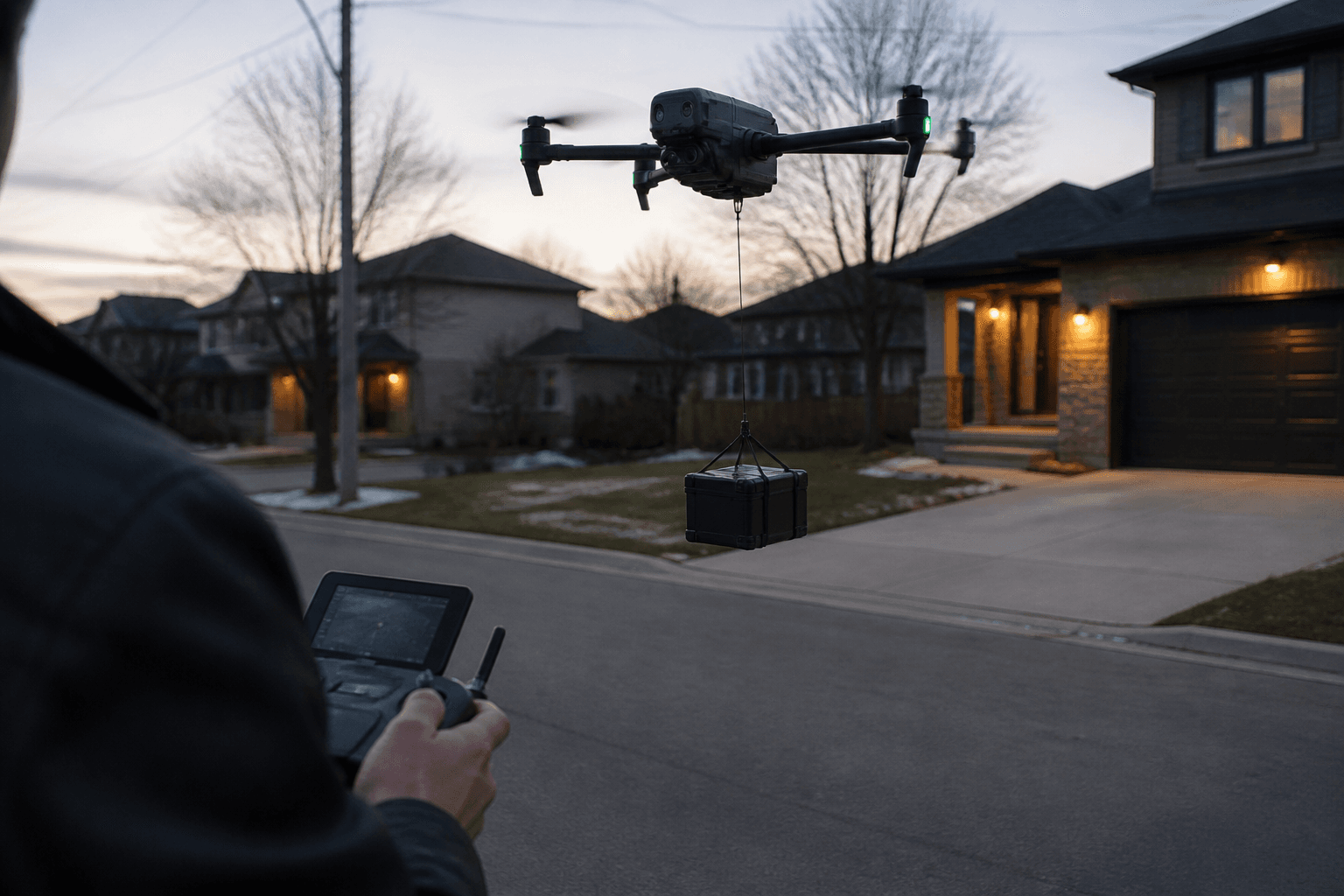
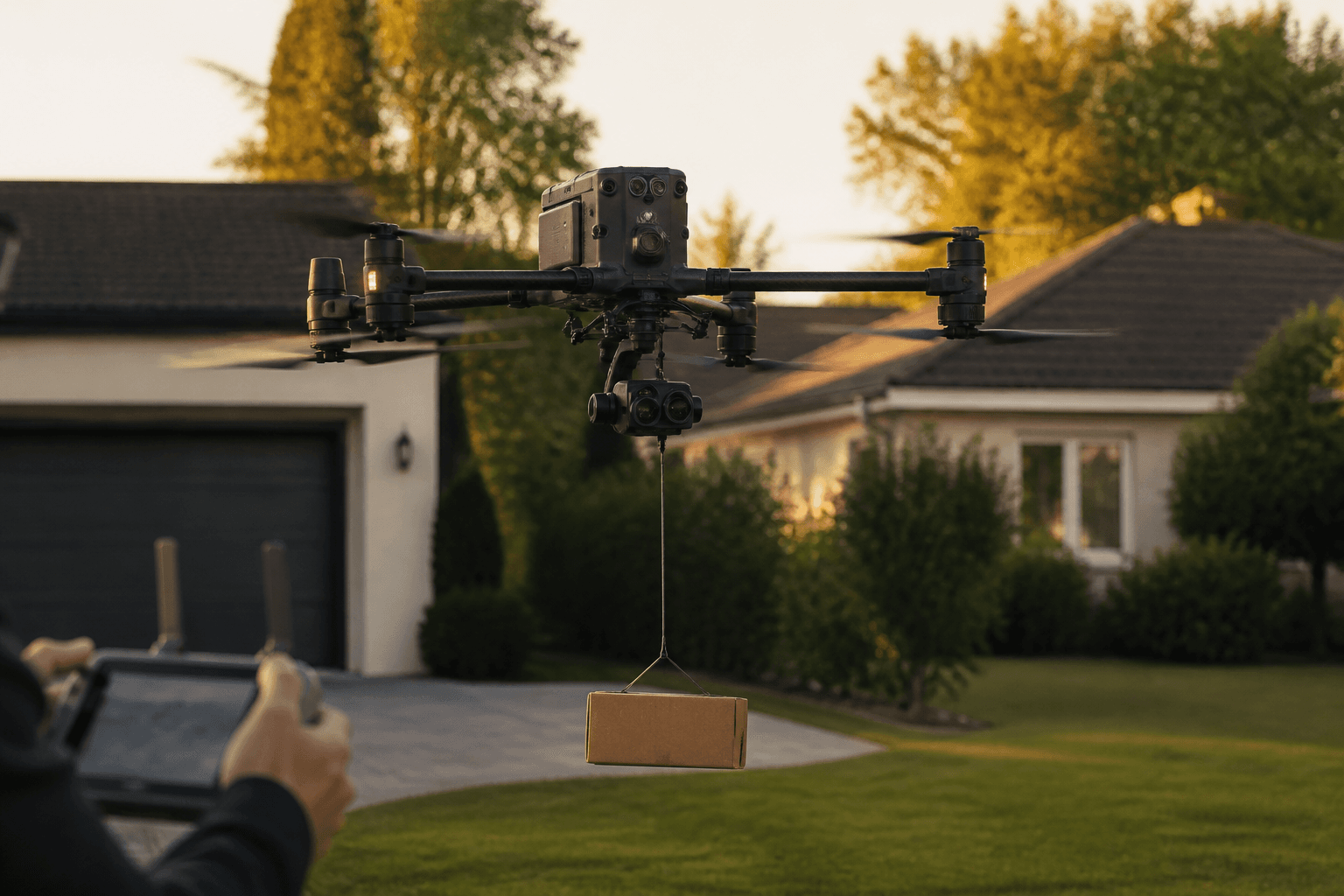
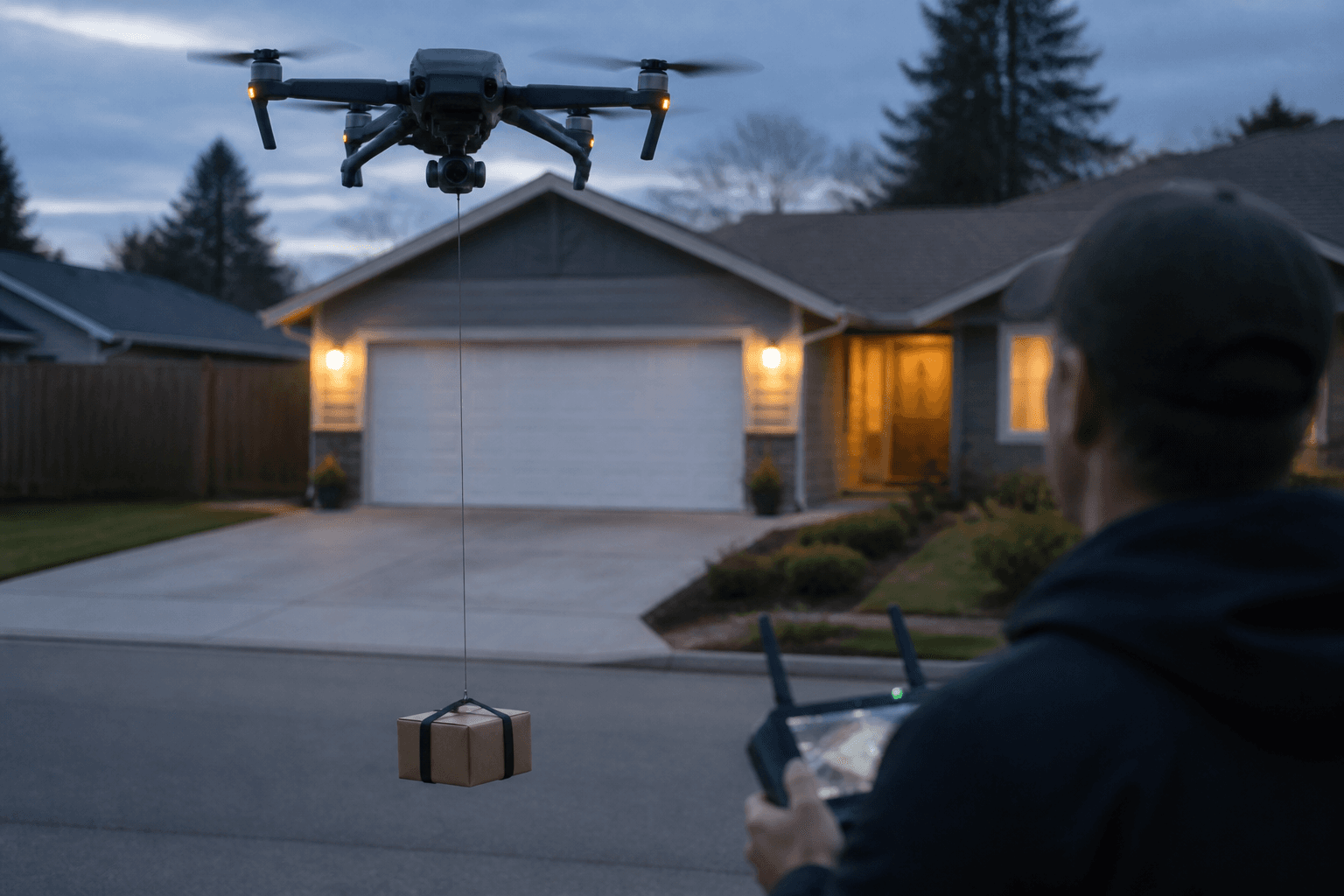
The technology finally works. The neighbors are the problem. In the same week that Flytrex unveiled a scheme to pre-position drones on rooftops before a customer even orders, residents in Baton Rouge, Louisiana and Sarpy County, Nebraska were telling local TV crews they can hear Amazon's Prime Air aircraft all day. For commercial operators watching the delivery segment mature, that contrast is the story: the hard engineering problems are getting solved, and the next bottleneck is community acceptance.
$127B
Ten-year drone market forecast revisited
60%
Cost cut Flytrex claims from pre-positioning
2
US metros with new public noise complaints this week
Two Cities, One Signal
According to WBRZ, residents in Baton Rouge raised both noise and safety concerns as Amazon drone flights ramped up in their area. KMTV in Omaha reported nearly identical frustration from Sarpy County residents, one of whom summed it up bluntly: "I can hear them all day." These are not isolated gripes from a single subdivision. They are the same complaint surfacing in two different states in the same news cycle, which suggests a structural issue rather than a local one.
This matters because delivery is expanding fast. The Lincoln County Journal profiled a Missouri native helping steer Walmart's suburban drone delivery push, and simplywall.st reported Amazon is preparing a wider UK rollout. The corporate momentum is real. But every new service area is also a new set of residents who did not sign up to be under a flight corridor — and who have city councils, HOAs, and local reporters on speed dial.
We have already seen where unmanaged community sentiment leads. Council-level resistance has stalled other drone programs, and public fear has repeatedly translated into political friction. Noise is simply the delivery-segment version of that same trust gap.
Flytrex's Bet Cuts Cost — and Cuts a Different Way
Into this environment comes Flytrex's rooftop pre-positioning concept, which DroneXL reported can cut costs by 60% by staging drones closer to demand before an order is placed. From a unit-economics standpoint, it is clever: shorter flight legs, faster delivery times, less idle transit.
But it is worth thinking through the second-order effects for community relations:
- Fewer long transits could mean less overall airtime over any single home — a potential noise win.
- More fixed launch points on rooftops could concentrate activity in specific spots, creating localized hotspots of takeoff-and-landing noise, which residents in Sarpy County specifically flagged as the most grating phase of flight.
- Denser staging implies more aircraft closer to more people, which cuts against the "they're barely noticeable" narrative operators prefer.
The lesson is not that pre-positioning is bad. It is that cost efficiency and community acceptance are separate optimization problems, and solving one does not automatically solve the other.
The engineering problem is nearly solved. The acceptance problem is barely started — and it is the one that gets you shut down by a city council, not the FAA.
The Market Was Right About Size, Wrong About Friction
Dronelife revisited a decade-old forecast that pegged the drone market at $127 billion, examining what that prediction got right and wrong ten years on. Market Research Future continues to publish bullish growth projections. The through-line: analysts were largely correct that the market would be big, and consistently underestimated how much of the delay would come from non-technical friction — regulation, airspace integration, and public sentiment.
Delivery is now living out that lesson in real time. The aircraft fly. The routes work. The FAA authorizations, however grinding, are being issued. What is not yet solved is whether a neighborhood will tolerate the buzz overhead for the convenience of a burrito on the doorstep.
Meanwhile, the rest of the commercial sector is quietly maturing without the same backlash. Dronelife's coverage of lidar expanding from power lines to mine shafts, and its INTERGEO 2026 preview, point to inspection and mapping work that generates revenue without flying over anyone's backyard. Superwake's Transport Canada BVLOS approval, reported by Unmanned Airspace, shows the beyond-visual-line-of-sight pathway advancing in industrial contexts where there are no annoyed homeowners to placate.
What Operators Should Actually Do
If you are building or buying into a delivery or any-low-altitude-over-residents operation, treat community relations as an operational discipline, not a PR afterthought:
- 1Log and map complaints like safety data. Noise reports clustered on a corridor are early warning of political risk. Track them.
- 2Design routes for acoustic exposure, not just distance. Vary approach paths and avoid concentrating takeoffs and landings over the same homes.
- 3Engage before you scale, not after. The Baton Rouge and Sarpy County stories broke because residents talked to reporters — not the company — first.
- 4Know which segment you're in. If your business can generate margin in commercial inspection or mapping, you may sidestep the residential noise fight entirely.
For pilots entering the field, understanding the airspace and operational rules is still the foundation — our course library covers the certification path. But the operators who win the delivery decade will be the ones who treat the neighbor as a stakeholder, not an obstacle.
Key takeaways
- Delivery's technical problems are largely solved; community acceptance is now the binding constraint.
- Cost-cutting moves like rooftop pre-positioning can concentrate noise, so weigh unit economics against local sentiment.
- Track noise complaints as operational risk data and engage residents before scaling into new service areas.
- Inspection and mapping segments offer revenue growth without the residential backlash.
Put your drone to work.
Get certified, then turn your flights into measurable, shareable maps — 20 a month included in your $19/mo membership. Everything a working operation needs in one account.