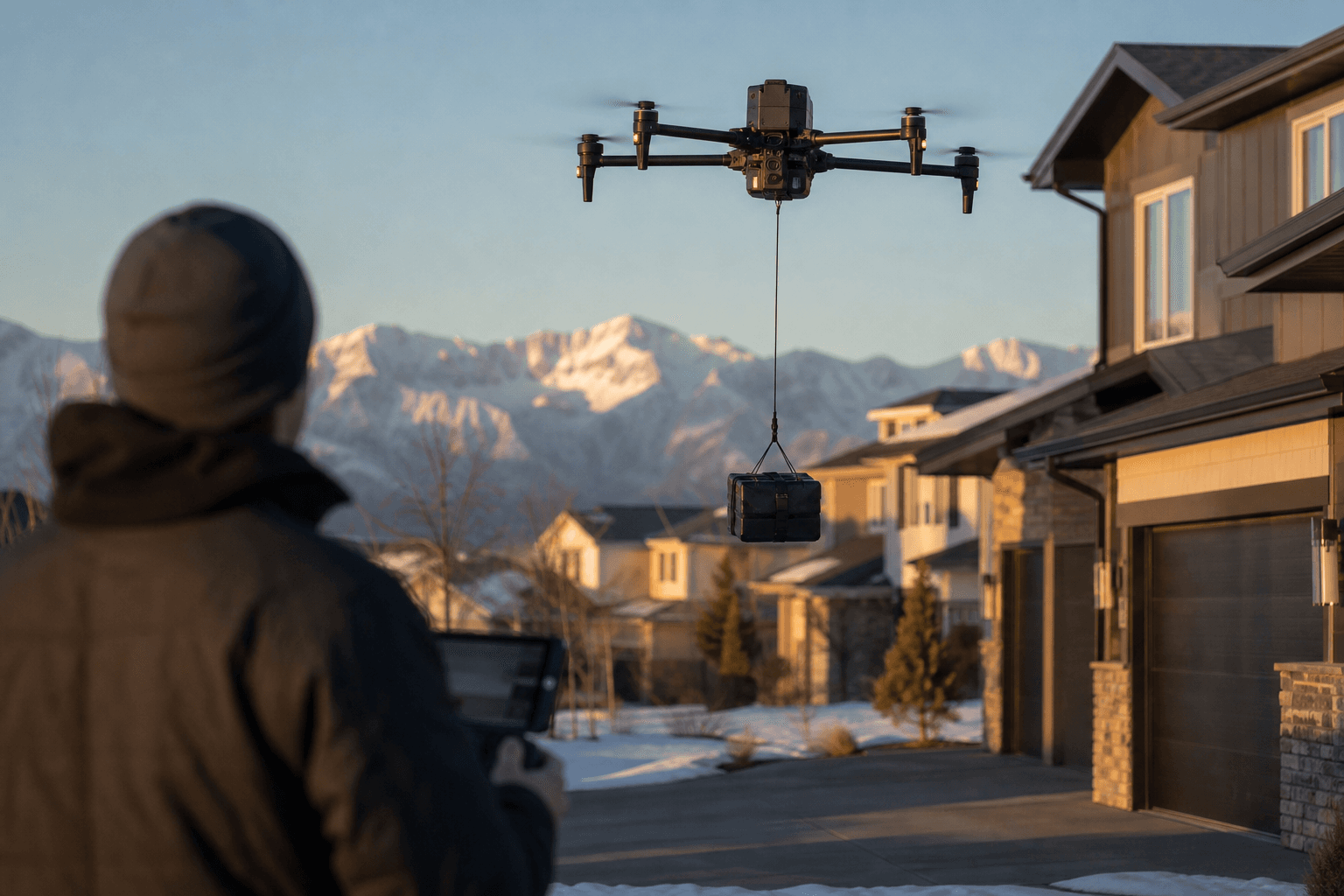
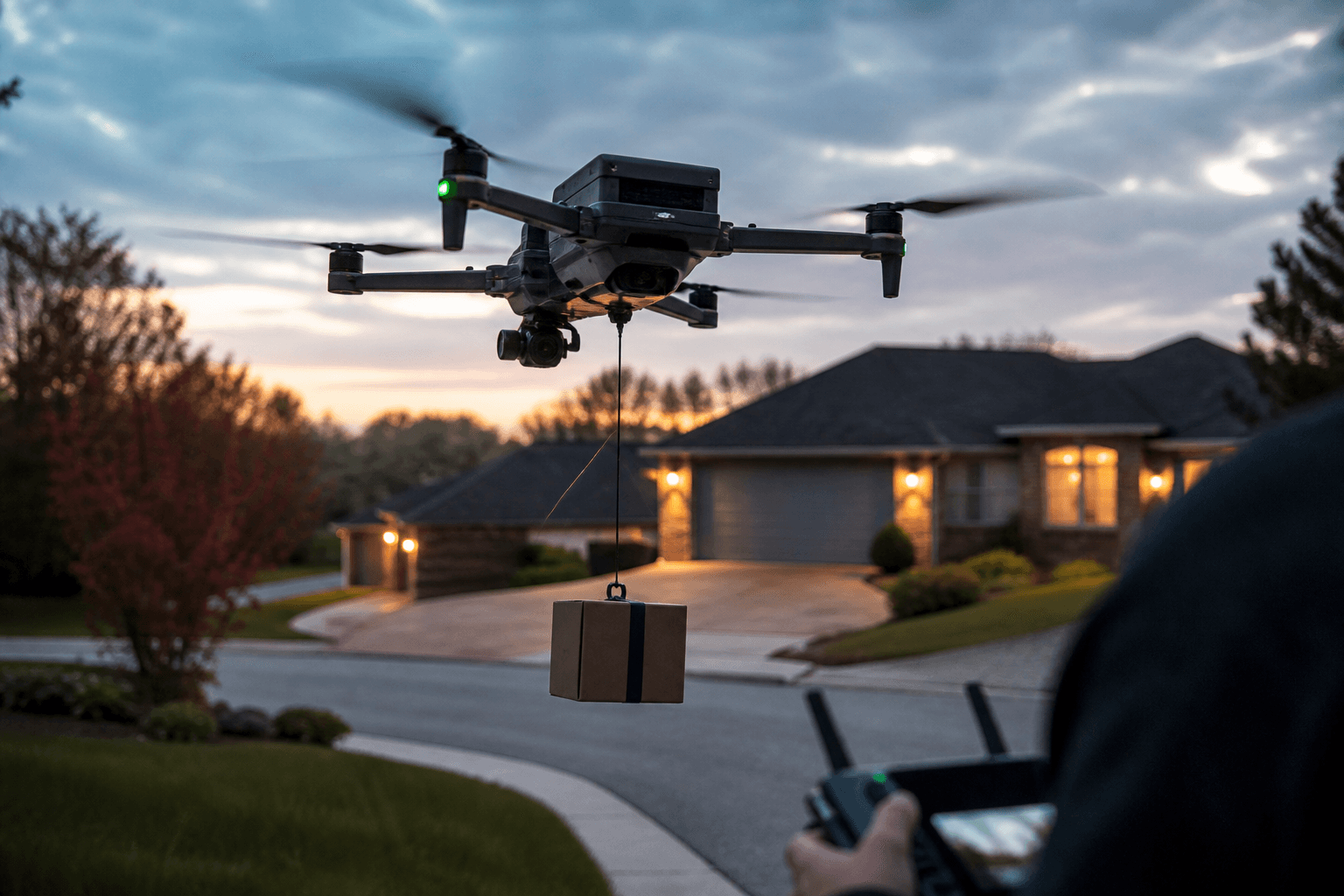
On October 5, Wing and Walmart named Denver and Seattle as their next drone-delivery metros, with service slated for 2027. Within a day, local coverage made clear that Denver wasn't getting one entrant — it was becoming a proving ground where multiple national players, overlapping expansion maps, and an unresolved regulatory structure all land in the same airspace at once.
For commercial operators watching the delivery segment mature, the Denver story is less about any single launch date and more about what happens when the market finally scales faster than the rules governing it.
2027
Target year for Wing–Walmart Denver and Seattle launch
2
Metros named in the latest Wing–Walmart expansion
13
Communities in Amazon's proposed Massachusetts delivery area
The Map Is Filling In Fast
The Wing–Walmart announcement, reported by Dronelife and gagadget, adds Denver and Seattle to a partnership that has already been expanding across US markets. CBS News, Axios, and 9News all covered the Denver side locally, with 9News framing it specifically as grocery delivery coming to the metro.
That's one partnership. Meanwhile, Amazon is running its own parallel buildout on the other side of the country. Spectrum News reported that Worcester is one of thirteen communities in Amazon's proposed delivery area, and both WTNH and NBC Connecticut covered Amazon's push into Connecticut — including a meeting between state lawmakers and the company over its delivery proposal, and pushback tied to a proposed North Haven site.
Put those threads together and a pattern emerges:
- Multiple operators, multiple metros. Wing–Walmart and Amazon are expanding on separate tracks, each naming new regions within the same news cycle.
- Grocery and retail are the anchor use cases. The Denver coverage centered on grocery; Amazon's model centers on retail parcels. Both are betting on routine, high-frequency consumer delivery rather than novelty.
- 2027 is the near-term horizon. The Wing–Walmart target gives operators, suppliers, and local officials a concrete runway to plan around.
For anyone building a commercial drone business, this is the clearest signal yet that delivery is no longer a pilot-project curiosity. It's a multi-metro rollout with named timelines.
The Question Nobody Fully Answered: Who Regulates This?
The most useful piece of the week's coverage came from Colorado Public Radio, which asked the question the press releases skip: delivery drones are coming to Denver — but who regulates them?
That question matters enormously, and the honest answer right now is layered and incomplete.
The technology arrived with a date attached. The regulatory clarity did not.
At the federal level, the FAA controls the airspace and the approvals that let these aircraft fly beyond visual line of sight. But as the Connecticut reporting from WTNH and NBC Connecticut makes clear, the friction isn't only federal. State lawmakers are meeting directly with Amazon. Local communities — like North Haven — are raising objections. The practical reality is that a delivery operation can clear its federal hurdles and still run into state legislators and municipal pushback over siting, noise, and privacy.
What's known:
- The FAA remains the authority for airspace and flight approvals.
- Operators are courting state and local officials well ahead of launch, which signals they expect those layers to matter.
What remains unclear:
- How much enforceable authority cities and states actually hold over operations the FAA has authorized.
- Whether communities that push back — as in Connecticut — can delay or reshape a proposed service area.
That ambiguity is the real story. The CPR framing underscores that even as launch dates get announced, the jurisdictional map is still being drawn in real time.
What Commercial Operators Should Take From This
If you operate or plan to operate in the delivery, mapping, or inspection space, the Denver–Connecticut split offers concrete lessons — even if you'll never compete head-to-head with Wing or Amazon.
- 1Local relationships are now part of the operation. The companies naming 2027 dates are simultaneously sitting down with state lawmakers and absorbing community pushback. Smaller operators should assume the same: securing federal authority is necessary but not sufficient. Expect to explain your operation to neighbors and local officials.
- 2Watch the pushback, not just the launches. The North Haven objection reported by NBC Connecticut is a preview of the social-license fights ahead. Noise and siting concerns can stall a project that is otherwise technically and legally ready.
- 3The incumbents are setting the public's baseline expectations. Once Walmart grocery drones are routine in Denver, customers in adjacent markets will expect similar reliability and professionalism from any operator overhead. That raises the bar for everyone.
- 4Credentialing still starts with the fundamentals. Whatever the delivery-specific framework becomes, the operators building these businesses are drawing from the same certified-pilot talent pool. Staying sharp on the basics — airspace, authorizations, operational limits — remains the entry point. Our practice exams are built for exactly that.
The convergence on Denver is a genuine milestone: two of the biggest names in the space, multiple metros, and firm timelines. But the week's most important reporting wasn't the launch announcement. It was the reminder that the airspace over these neighborhoods is governed by a stack of authorities that haven't fully sorted out who holds the final say.
Key takeaways
- Wing–Walmart named Denver and Seattle for 2027, while Amazon expands separately across Massachusetts and Connecticut — delivery is now a multi-metro, multi-operator reality.
- Federal approval isn't the whole picture; state lawmakers and local communities are actively shaping where and whether operations happen.
- Expect social-license fights over noise and siting to delay otherwise-ready projects — build local engagement into your operational plan.
Put your drone to work.
Get certified, then turn your flights into measurable, shareable maps — 20 a month included in your $19/mo membership. Everything a working operation needs in one account.