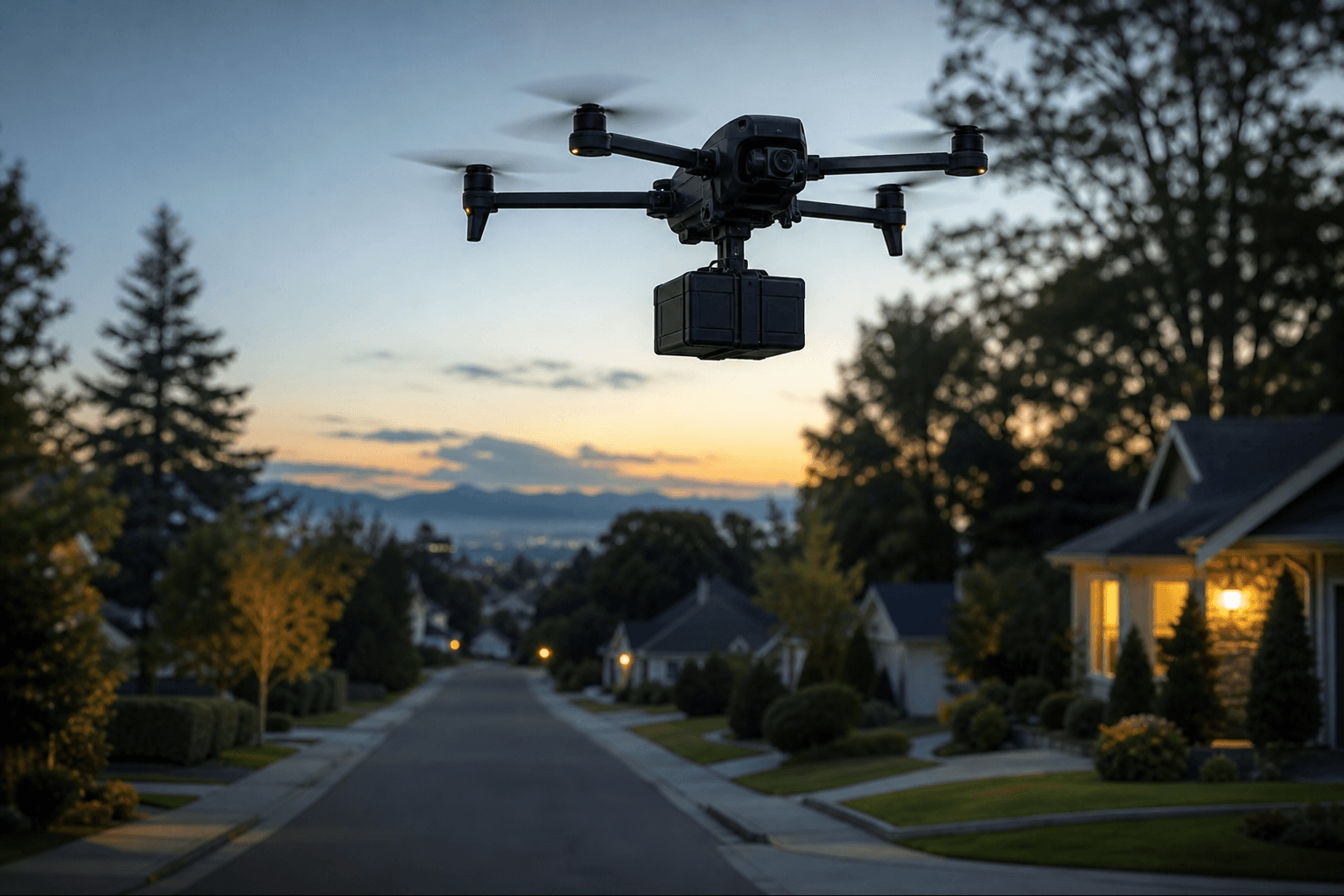
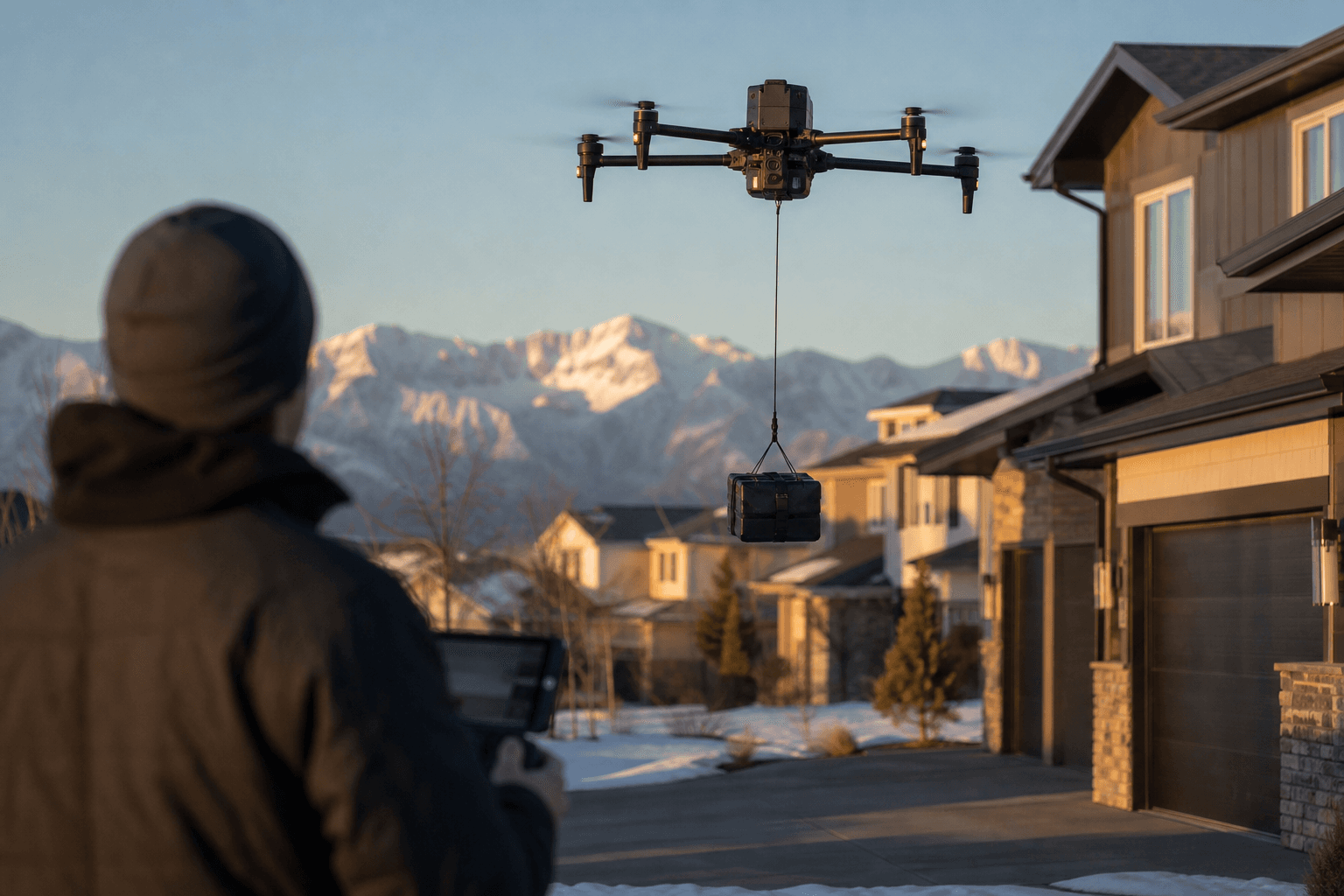
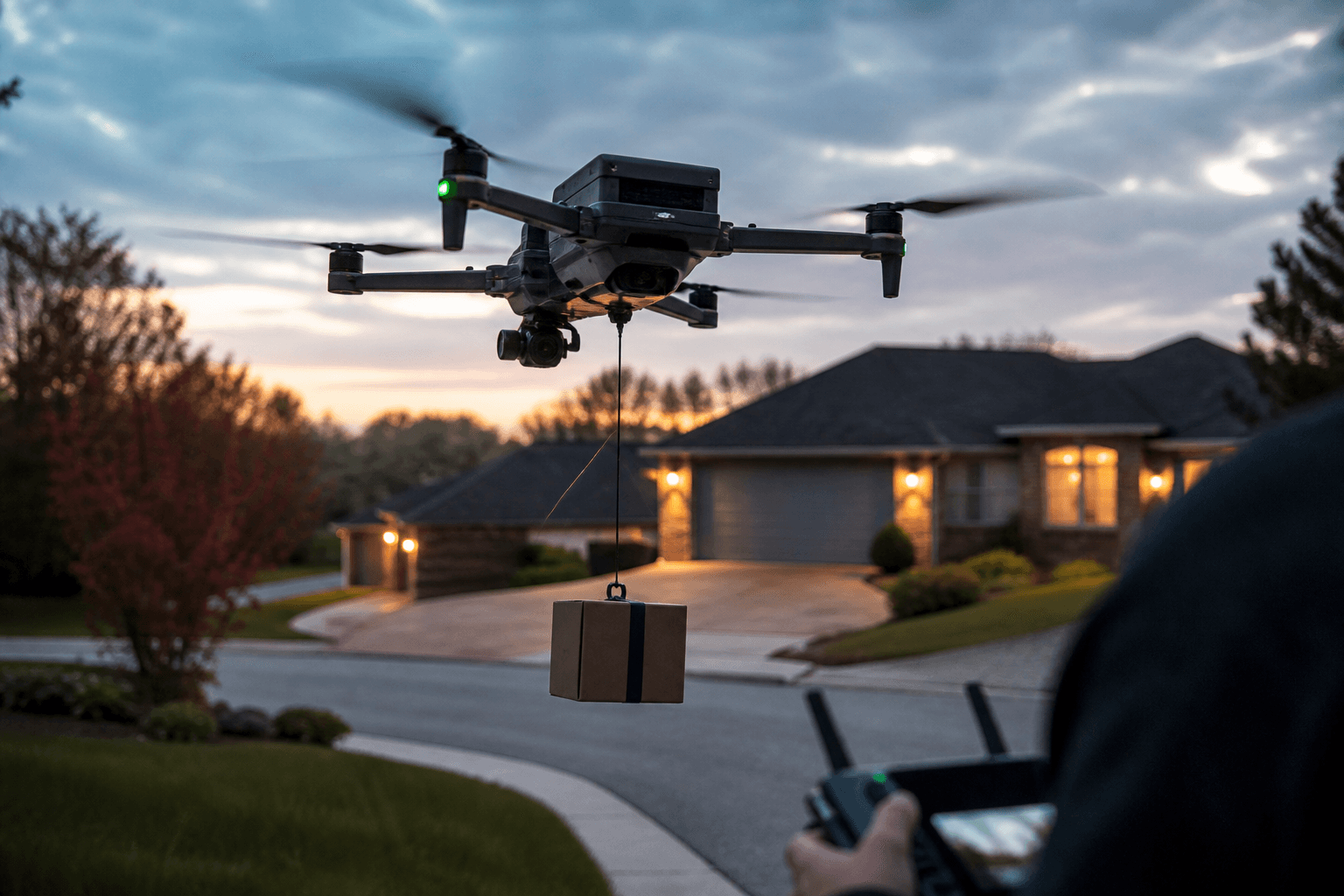
In a single mid-October week, drone delivery ran into a wall of city halls. Portland's City Council voted unanimously toward a pause on new drone hubs. A St. Louis suburb killed a Walmart delivery proposal outright. A Massachusetts town drafted its own rulebook for Amazon. And in Chicago's south suburbs, Prime Air's arrival drew the kind of "mixed reactions" that increasingly precede a council agenda item. For operators who read the FAA's rules as the only rules that matter, this is the week to reconsider.
11-0
Portland Council vote toward a drone-hub pause
4
US communities that moved to slow or block delivery in one week
2
Oregon and Massachusetts towns drafting local drone ordinances
Four cities, one message
The cluster is the story. Each case is local, but together they read as a pattern rather than a coincidence.
- Portland, Oregon. The City Council advanced a moratorium on new drone delivery sites by an 11-0 vote, as DroneXL reported, with coverage from OPB, OregonLive, and KPTV all tracking the same proposal. Notably, DroneXL noted that Amazon canceled a scheduled meeting as the pause gained momentum — a signal of how fluid the company's relationship with reluctant jurisdictions has become.
- Kirkwood, Missouri. STLtoday reported that the St. Louis suburb shot down a Walmart drone delivery proposal after resident pushback. This wasn't a study or a delay; it was a no.
- Westborough, Massachusetts. Rather than block Amazon, Boston 25 News reported, the town proposed its own rules targeting privacy and noise concerns — an attempt to regulate the operation locally rather than ban it.
- South suburban Chicago. CBS News reported that Prime Air deliveries are now live, with residents split. Live service plus mixed reactions is often how the Portland and Kirkwood stories started.
Dronelife framed the broader trend directly: as delivery expands, community pushback is becoming a growing challenge. That's the throughline connecting four separate council chambers.
Why local control is the real battleground
Airspace is federal. The FAA controls who flies, where, and under what certificate. But the ground — launch sites, hubs, zoning, noise ordinances, nuisance law — is where cities have leverage, and that's exactly where this fight is landing.
Notice what the four cities are not arguing. None is claiming authority over the national airspace. They're regulating the physical footprint of delivery: where a hub can sit, how loud it can be, what it can photograph on the way down. Westborough's privacy-and-noise framing is the template. A town can't ground an aircraft, but it can make the real estate and the decibels so contentious that the economics stop working.
The FAA can clear your flight. A city council can still deny your hub, your zoning variance, and your social license to operate.
For the delivery giants, that's a slower, messier fight than a federal rulemaking. There's no single approval to win — there are hundreds of councils, each with its own residents, its own election cycle, and its own tolerance for a buzzing rotor over the backyard.
What it means for commercial operators
If you fly inspection, mapping, or media work, you might assume the delivery backlash doesn't touch you. It does — in two ways.
First, the political climate around any drone operating over residential neighborhoods is hardening. The noise and privacy complaints aimed at delivery don't neatly distinguish a Prime Air hexacopter from your mapping quad. Second, these ordinances are being drafted fast and broadly. A "drone nuisance" or launch-site rule written to slow Amazon can sweep in a commercial operator trying to stage a rooftop launch downtown.
Practical steps worth taking now:
- 1Know the local layer. Before a job in a new jurisdiction, check for drone-specific ordinances, not just FAA airspace. Westborough and Portland show these can appear quickly.
- 2Lead with noise and privacy answers. Those two words drove every pushback this week. Be ready to explain altitude, flight paths, and what your camera is and isn't capturing.
- 3Build the community case before you need it. The operators who struggle are the ones who show up after a council has already heard from angry residents.
- 4Document everything. Clean logs and a defensible compliance record are your best argument when scrutiny arrives.
The contrast that should guide your strategy
The same week delivery stalled, the enterprise side of the industry quietly advanced. Dronelife reported automated BVLOS surveys taking on a major infrastructure project in Australia, and Unmanned Systems Technology detailed how PG&E uses AirData to automate BVLOS compliance. The pattern is instructive: operations over industrial corridors, utility rights-of-way, and infrastructure draw far less heat than drones over someone's roofline.
That's the strategic read. Residential airspace is becoming the contested zone; industrial and infrastructure work is where growth meets the least friction. If you're deciding where to point your business, the market is telling you something. Solid credentials and a BVLOS-ready skill set — the kind of preparation our course library is built around — position you for the work that isn't fighting a city council every week.
None of this is settled. Portland's vote was a step, not a final ordinance; Westborough's rules are a proposal; and Chicago's reception is still mixed, not decided. But the direction is clear enough to plan around.
Key takeaways
- Four communities moved to slow or block drone delivery in one week — local control, not FAA rules, is the new battleground.
- Cities regulate the ground: hubs, zoning, noise, and privacy. FAA clearance alone no longer guarantees you can operate.
- Check for local drone ordinances before every new-jurisdiction job, and lead with concrete noise and privacy answers.
- Infrastructure and utility work draws far less pushback than residential flight — a signal worth weighing in your business strategy.
Put your drone to work.
Get certified, then turn your flights into measurable, shareable maps — 20 a month included in your $19/mo membership. Everything a working operation needs in one account.