The Delivery Land Grab: Zipline, Amazon, and Matternet Scale Up
Three delivery operators are racing to build national networks and hire from Tesla, Waymo, and Uber. Here's what the buildout signals for commercial drone businesses.
Drone Ready Editorial·Commercial UAS·July 18, 2026·5 min read
Share
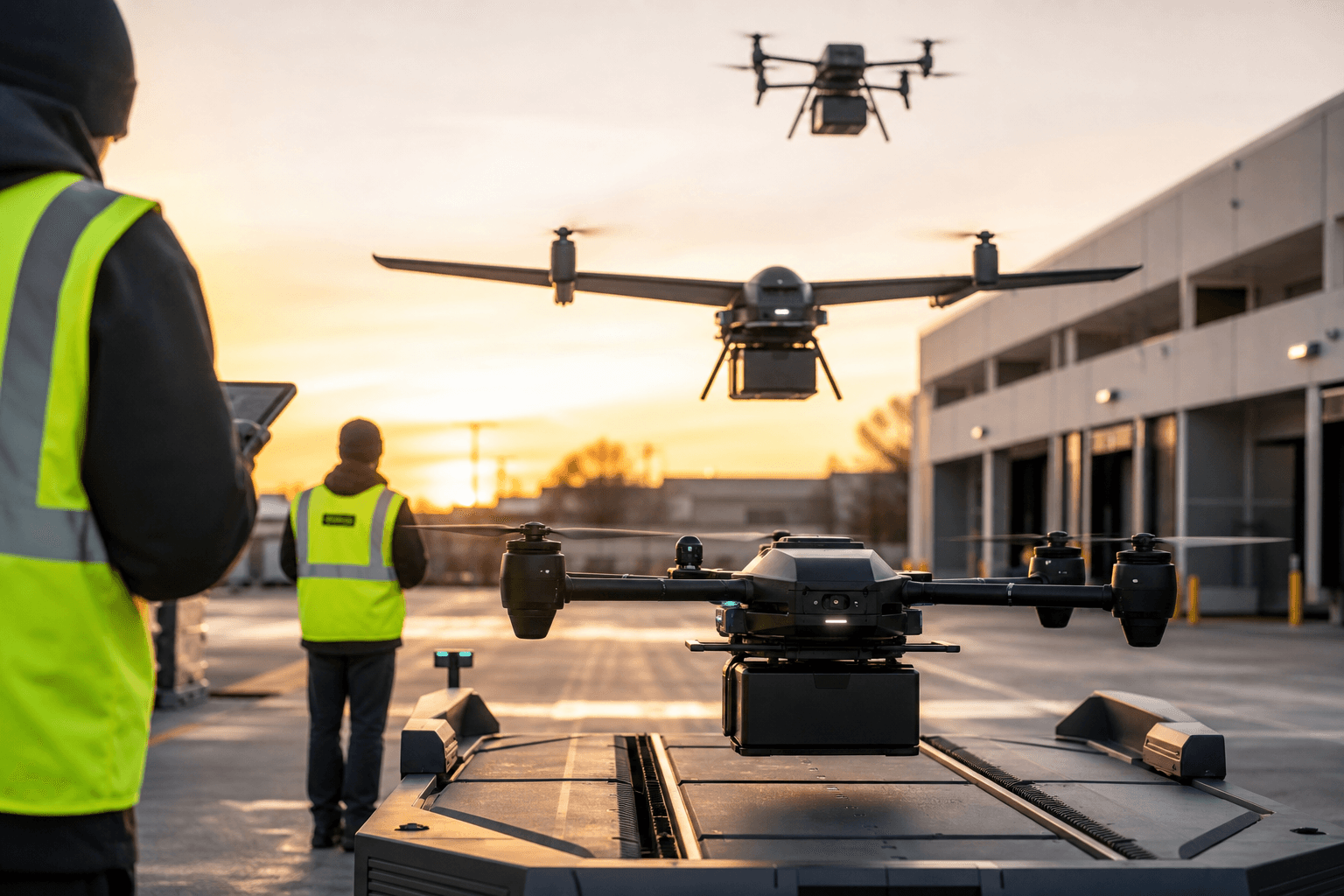
In a single mid-July week, drone delivery stopped looking like a series of one-off pilots and started looking like an industry with a hiring plan, a map, and a payroll. Zipline announced a Cleveland Clinic home-delivery program and an Austin launch while stacking its leadership with veterans of Tesla, Waymo, and Uber, as CNBC and DroneDJ both reported. Matternet said it was expanding its FAA Part 135 delivery network across the United States, per uasweekly.com. And Amazon showed off the delivery drone it plans to fly out of a North Randall, Ohio fulfillment center, according to Cleveland 19 News, days after WBRZ reported Baton Rouge had become the first Louisiana city to get Amazon's system.
For commercial operators, the pattern matters more than any one deal. The companies that have spent years grinding through regulatory approvals are now optimizing for scale — and that changes the competitive terrain for everyone building an inspection, mapping, media, or delivery business.
Part 135
FAA certification Matternet is expanding under
Cleveland + Austin
New Zipline metros announced this month
Tesla, Waymo, Uber
Companies Zipline is recruiting execs from
Why the executive hires are the real story
It is easy to skim past a leadership announcement, but Zipline's recruiting tells you where the company thinks the hard problems now live. As CNBC and DroneDJ reported, Zipline is pulling talent from Tesla, Waymo, and Uber — companies defined not by aviation, but by manufacturing at volume, autonomous operations, and consumer logistics.
That hiring profile is a tell. The bottleneck is no longer proving a drone can carry a burrito or a prescription across town. It is doing that thousands of times a day, reliably, across many markets, at a unit cost that beats a car and a driver. Building fleets, managing autonomy at scale, and running a two-sided delivery marketplace are exactly the skills those companies developed.
When a drone company starts hiring like a car company, it's telling you the experiment is over and the industrialization has begun.
For smaller operators, the implication is blunt: the delivery segment is consolidating around a few well-capitalized players who intend to own the infrastructure. Competing head-to-head on residential parcel delivery is becoming a capital game most independent operators will not win.
Healthcare and retail are the wedge
The most instructive detail in Zipline's news, per Dronelife, is the Cleveland Clinic home-delivery partnership. Healthcare has been drone delivery's most durable use case because the economics work: prescriptions and medical supplies are high-value, time-sensitive, and low-weight — the ideal payload profile.
Retail is following the same logic. In Israel, calcalistech.com reported that supermarket magnate Rami Levy is adding drones to his public market empire, signaling that established grocers, not just tech companies, now see aerial delivery as a competitive lever. Amazon's Baton Rouge and North Randall launches, reported by WBRZ and Cleveland 19 News, tie delivery directly to existing fulfillment real estate.
The throughline for commercial operators:
The winning payloads are narrow. Pharmacy, medical logistics, and small retail goods, not general-purpose cargo.
The winning partners are institutions. Hospital systems and large retailers bring the volume and the trust that make routes economical.
Real estate is a moat. Delivery is increasingly anchored to fulfillment centers and clinics you cannot easily replicate.
What this means if you're not building a delivery network
Most readers of this space run inspection, mapping, or media operations — not parcel fleets. The delivery buildout still reshapes your world in three ways.
First, regulatory momentum spills over. Matternet's expansion under Part 135 and the broader push toward routine beyond-visual-line-of-sight operations pressure the FAA to standardize the waivers and approvals that every advanced commercial operation depends on. When the big players clear a path, the rest of the industry tends to walk through it.
Second, the talent market tightens. As Zipline and Amazon absorb autonomy and operations engineers, experienced remote pilots and program managers become scarcer and more valuable. If you employ certified pilots, expect wage pressure — and expect that a strong training pedigree becomes a real hiring advantage. Building depth through structured study, whether via practice exams or ongoing coursework, is a retention and recruiting tool, not just a compliance box.
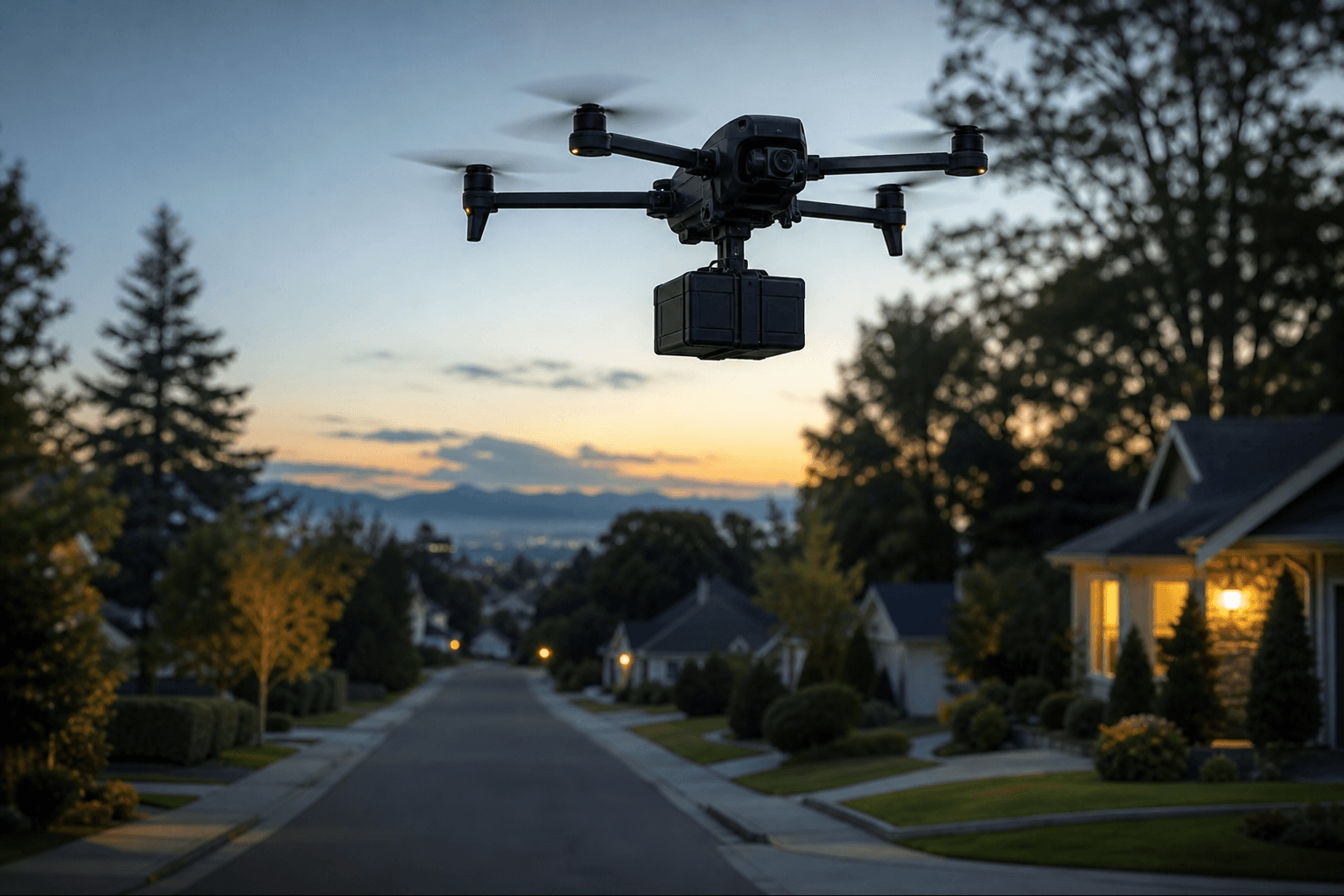
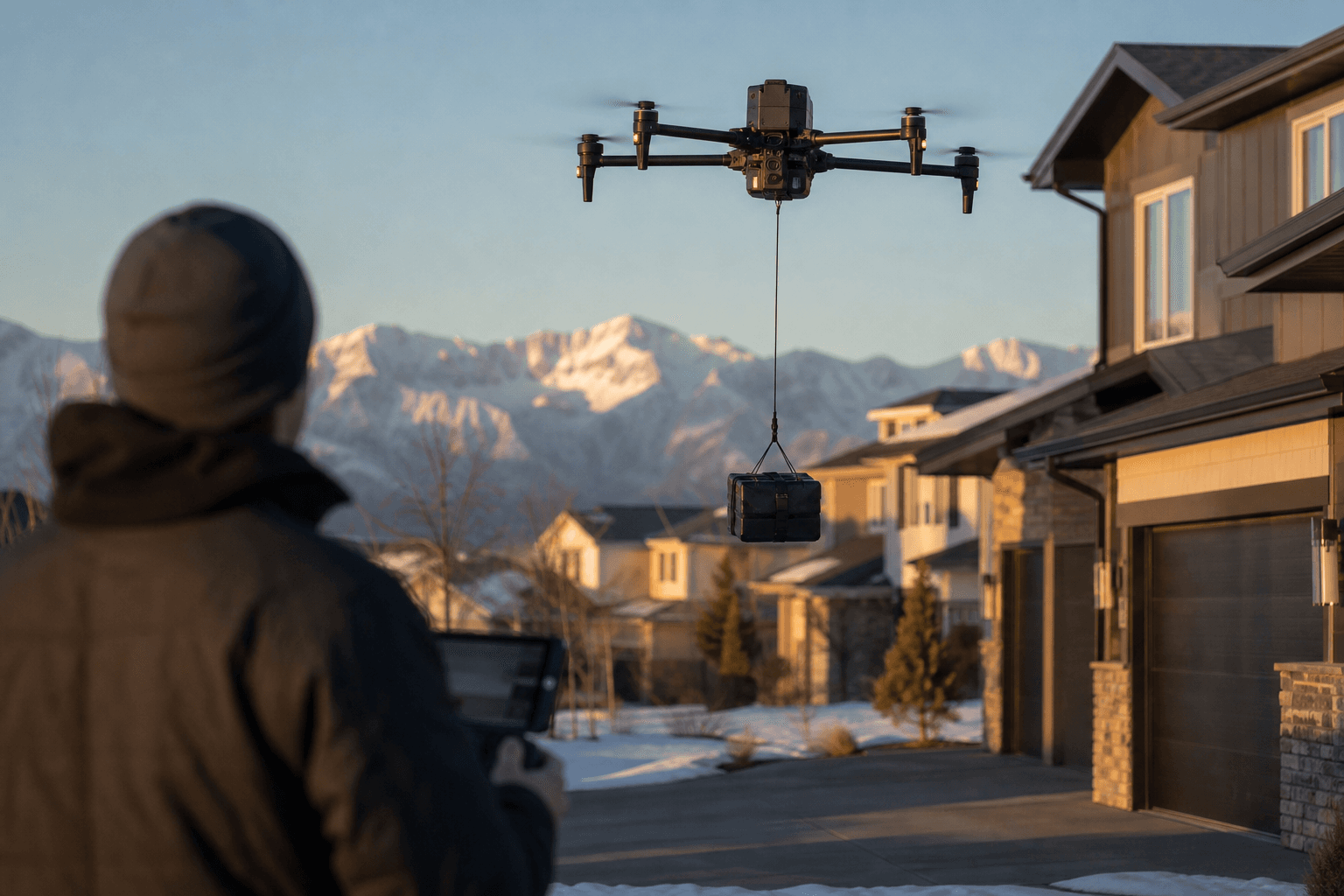
Third, market expectations shift. Once residents in Austin, Baton Rouge, or suburban Cleveland see drones overhead as normal, the public-acceptance friction that has slowed commercial work in some cities eases. Familiarity is an underrated asset for any operator selling to skittish clients or municipalities.
The picture beyond the U.S.
The buildout is not just American. MarketsandMarkets projects continued growth in Brazil's UAV market through 2030, and the Rami Levy news shows commercial appetite in Israel. The exact figures in those forecasts should be treated cautiously — market-research projections are directional, not gospel — but the direction is consistent across geographies. Meanwhile, sobering reporting from The Boston Globe on a deadly drone attack across Russian regions is a reminder that the same core technology carries very different meanings depending on who wields it, and that public perception of "drones" is shaped by more than commerce.
For operators, the takeaway is to build a business that survives whichever way regulation and sentiment break: diversified revenue, defensible niches, and clients who value reliability over novelty.
Key takeaways
Delivery is industrializing — the executive hires signal a shift from pilots to scaled operations dominated by well-funded players.
Healthcare and retail, anchored to existing real estate, are the segments with proven economics; general-purpose cargo is not.
Non-delivery operators benefit from regulatory momentum and rising public acceptance, but face a tighter market for experienced, well-trained pilots.
Get certified, then turn your flights into measurable, shareable maps — 20 a month included in your $19/mo membership. Everything a working operation needs in one account.