Same Week, Two Directions: Why Minneapolis Stalled While Others Launched
A deadlocked Minneapolis council rejected a police drone pilot the same week agencies from Honolulu to Montgomery County pushed programs forward. The gap is governance, not gear.
Drone Ready Editorial·Public safety UAS·July 17, 2026·5 min read
Share
On July 16, the Minneapolis City Council failed to pass a police drone pilot program. According to the Star Tribune, the vote deadlocked, and MPR News reported that a central sticking point was a proposed contract with Skydio, a manufacturer the outlet described as controversial. The same day, three other agencies across the country were moving in the opposite direction: Honolulu's new police chief announced plans to stand up a drone program, two more Orange County cities began weighing police drones, and Montgomery County, Maryland, revamped and expanded a program it already runs.
That contrast is the story. The technology is no longer the bottleneck for public safety UAS. Governance is.
1
City council that stalled its drone pilot (Minneapolis)
5
Other agencies moving forward the same week
2
Drone-aided arrests cited in a single week
A Split-Screen Week for Public Safety UAS
Line up the week's reporting and a pattern appears. Agencies that already have political and procedural buy-in are scaling. Agencies that don't are stuck at the starting line.
Minneapolis couldn't get a pilot off the ground, with the council split and vendor choice under scrutiny (Star Tribune, MPR News).
Montgomery County, Maryland did the opposite, expanding its program and, per Montgomery Community Media, launching newer, more efficient video drones. Bethesda Magazine framed it as a revamp, not a first step.
Honolulu is at the announcement stage, with a new chief signaling intent to use drones to help catch crime (Hawaii News Now).
Two Orange County cities are in the exploratory phase (Voice of OC), and a Massachusetts council committee in Watertown discussed a possible drone purchase alongside guidelines for its use (watertownmanews.com).
Meanwhile, the operational payoff was on display elsewhere. Action News 5 reported a police drone helped track down two teens wanted in a string of robberies, and WSMV reported a Nashville drone captured video of a suspect brandishing a box cutter during a robbery. Those are exactly the outcomes program advocates cite when asking a council for approval.
The hardware works and the missions are real. What separates the agencies launching from the ones stalling is whether they solved the trust problem before the procurement problem.
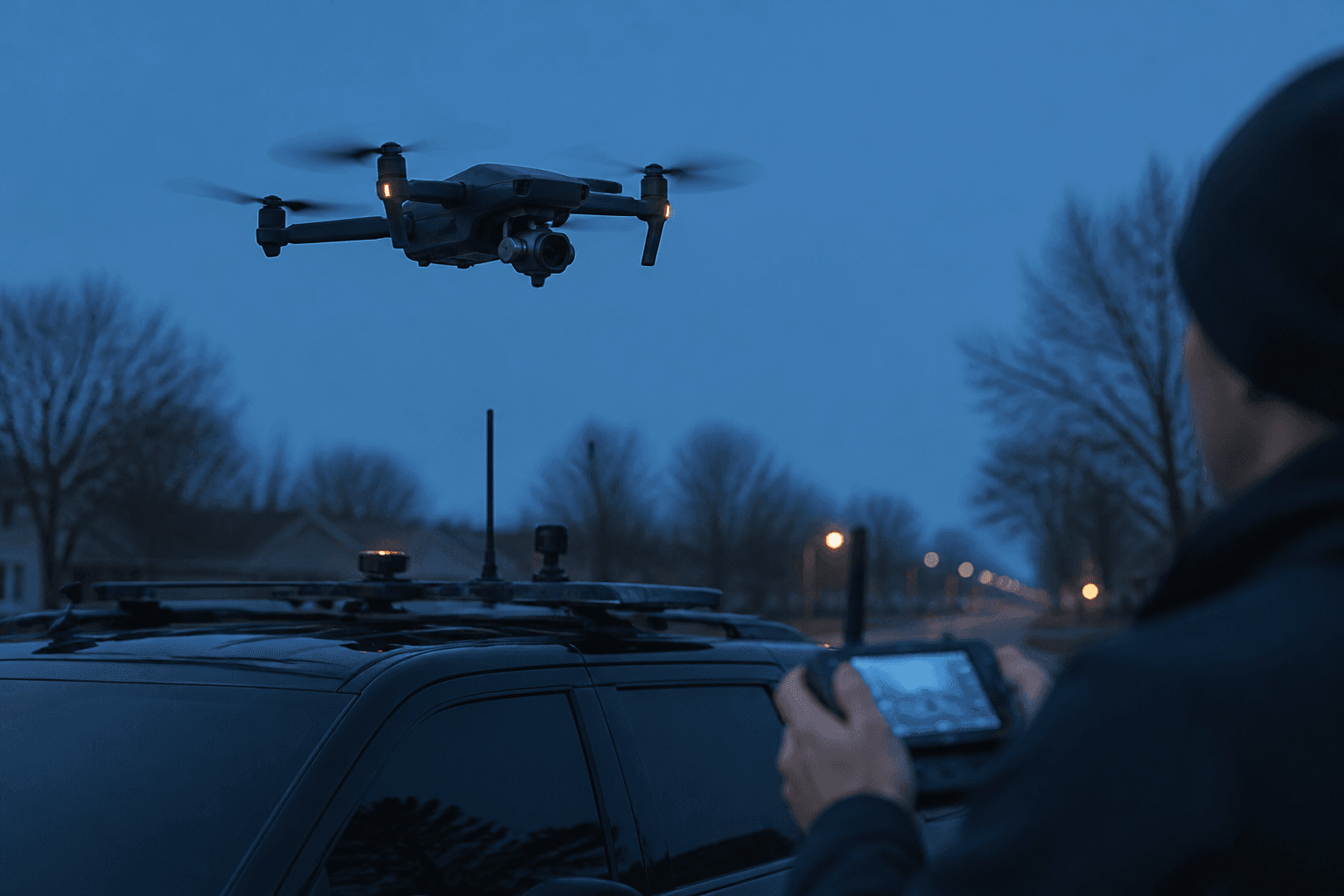
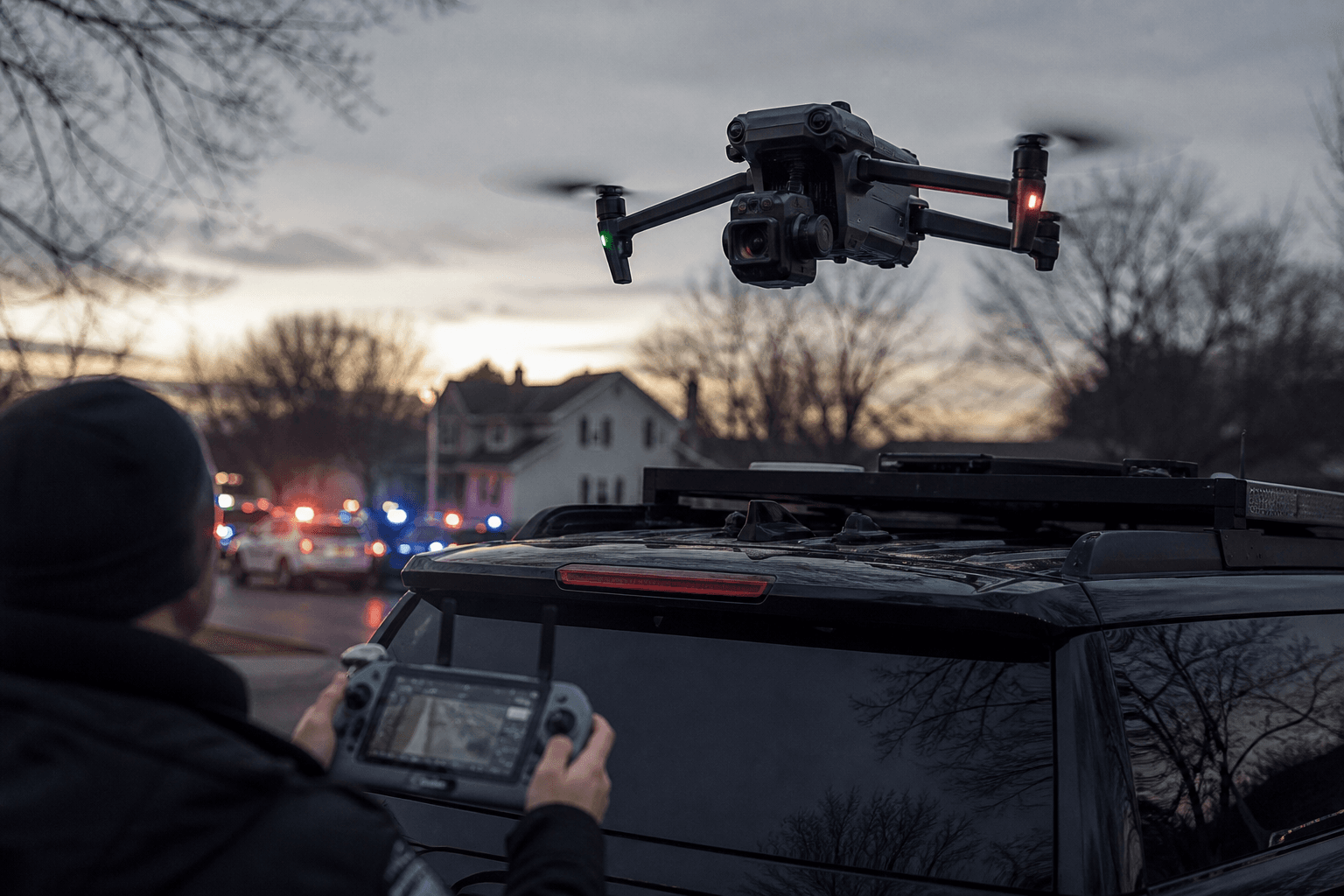
A public-safety drone on an active deployment — the hardware is no longer the hard part.
Vendor Choice Is Now a Political Decision
The Minneapolis vote is a warning worth studying closely. MPR News tied the rejection to the specific vendor on the contract, not to drones as a concept. For program managers, that reframes procurement. Choosing a manufacturer is no longer just a spec-and-price exercise handled by a purchasing department; it can become the flashpoint that sinks an otherwise sound proposal.
What's known from the reporting is that the council deadlocked and that Skydio's presence in the deal drew objections. What remains unclear from these items is the full substance of those objections and whether an alternative vendor would have changed the outcome. That ambiguity is itself the lesson: if a vendor's reputation can carry enough political weight to stall a program, that reputation belongs in your risk assessment early, not after you've drafted a contract.
Practical steps for agencies still in the planning phase:
1Surface the vendor conversation before the council meeting, not during it. Identify what oversight bodies and community groups already believe about your candidate manufacturers.
2Document why you chose a platform in operational terms your council can defend to constituents.
3Keep a credible alternative in reserve so a single vendor objection doesn't reset the entire program.
Governance Is the Product Now
The agencies moving forward share a quieter common thread: they are pairing capability with rules. Watertown's committee discussed a purchase and use guidelines in the same breath. Montgomery County's expansion follows an existing framework rather than starting cold. That sequencing matters.
For Drone as First Responder programs specifically, the accountability questions are sharper because the aircraft launches routinely and proactively, not just for a single warrant or search. Councils and community members will ask about retention of footage, flight logging, geographic limits, and who can authorize a launch. A program that can answer those questions in writing before the vote is far harder to deadlock.
This is also where crew credentialing helps your case. A council is more comfortable approving flights when the people conducting them hold current FAA Part 107 certificates and the agency can show a training pipeline. If your team needs to build or refresh that foundation, our Part 107 course library and practice exams are built for exactly that. Broader program-building resources live on our public safety page.
What Program Managers Should Do This Quarter
The week's reporting doesn't tell us drones are winning or losing in public safety. It tells us the outcome now depends almost entirely on preparation off the flight line.
Lead with policy, not the aircraft. Draft use guidelines, retention rules, and authorization procedures before you request funding, following the Watertown model of discussing purchase and guidelines together.
Treat vendor selection as a public-facing decision. The Minneapolis deadlock shows a manufacturer's reputation can override otherwise sound justification.
Bank your success stories. The Memphis-area and Nashville recoveries are the kind of concrete outcomes that move undecided council members.
Watch the expanders, not just the launchers. Montgomery County's revamp shows the real work continues after approval, as fleets get refreshed and workflows change.
The agencies that treated governance as the actual deliverable moved forward this week. The one that treated it as a formality did not. For any leader still building a case, that's the difference between a program and a stalled vote.
Train and certify your team, track every pilot's Part 107 currency, manage the fleet, and keep audit-ready records — one platform built for public safety and DFR.