
If you have been putting off the Part 107 knowledge test, your deadline just got sharper. The FAA is rolling out changes to the aeronautical knowledge test on October 26, and anyone sitting the exam after that date should expect a different experience than the one described in older study guides and prep courses. At nearly the same moment, the agency announced it is committing $12 million to beyond-visual-line-of-sight research at its drone test sites. On the surface these are two unrelated bureaucratic updates. Read together, they tell you where the FAA thinks the industry is heading — and what tomorrow's certificated pilot will be expected to know.

News
On October 26, the Part 107 Test Changes — and $12M Hints at What's Next
The FAA is updating the Part 107 knowledge test on October 26 and pouring $12 million into BVLOS research — two signals that the airspace new pilots are studying for is about to shift.
What Actually Changes on October 26
Dronelife reported that the FAA is updating the Part 107 remote pilot knowledge test effective October 26, and that applicants need to be aware of the shift before they schedule a testing appointment. The core certificate — the authority to fly a small drone commercially under Part 107 — is not going away, and the fundamentals of the exam remain recognizable: airspace classification, weather, loading and performance, operating rules, and airport operations.
What matters for applicants is timing and preparation. A knowledge-test refresh typically means question banks are rewritten, emphasis shifts, and some study materials fall out of date before publishers catch up. For anyone studying right now, that creates a simple decision:
- Test before October 26 if you are already prepared and want to sit the version of the exam your current materials were built for.
- Test after October 26 only if your prep provider has confirmed its content reflects the updated test — not a repackaged old version.
The risk is subtle. A candidate who crammed from a six-month-old PDF may walk in expecting one weighting of topics and find another. If you are working through practice exams or a structured course library, the question to ask your provider is direct: has this been reviewed against the October 26 changes?
A test refresh is rarely just cosmetic. It is the clearest public signal of what the FAA wants new pilots to actually understand.
The $12 Million Tells You Where the Syllabus Is Headed
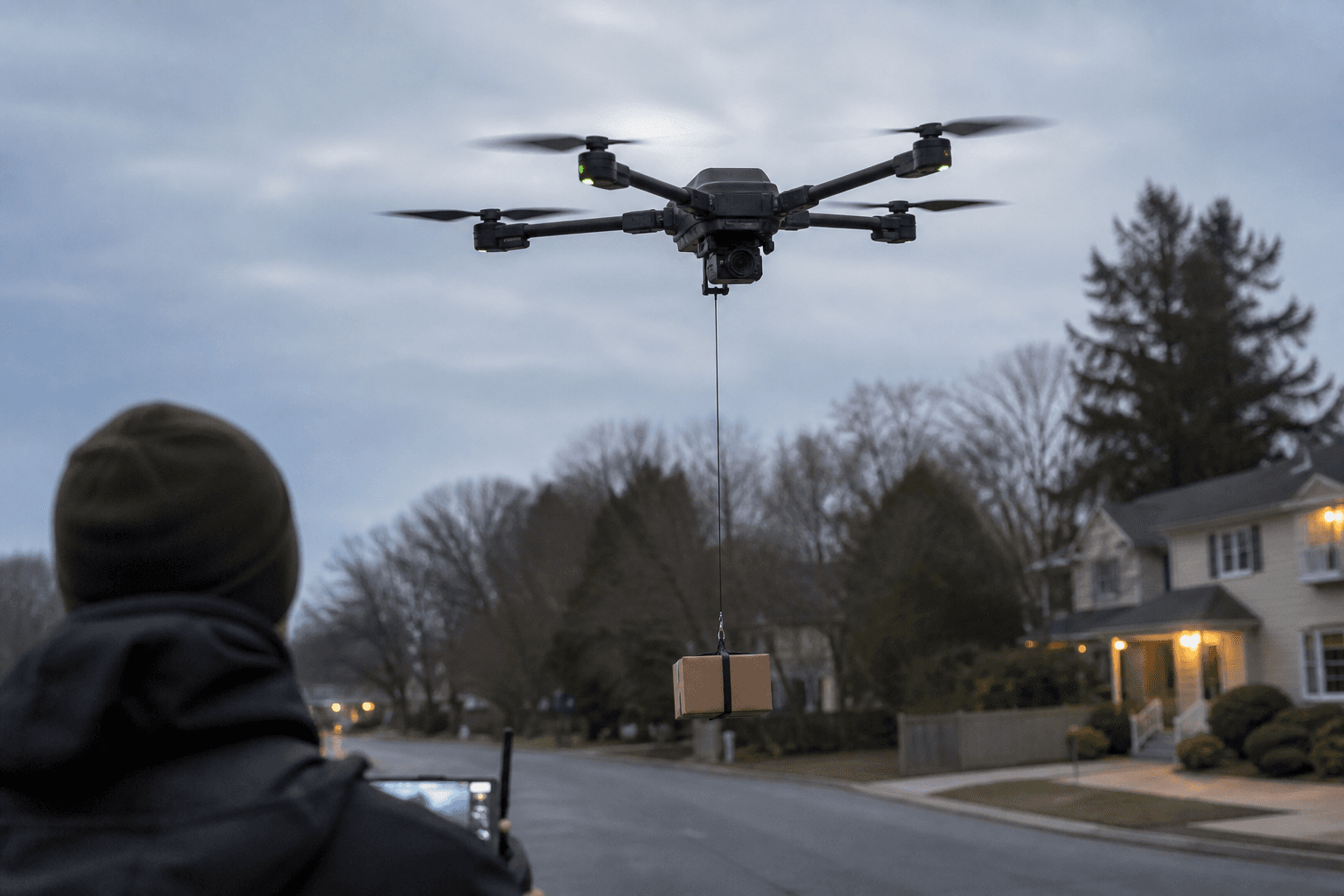
On October 5, both AVweb and DroneXL reported that the FAA awarded roughly $12 million for beyond-visual-line-of-sight research, directed toward the agency's designated drone test sites. BVLOS — flying a drone past the point where the operator can see it with their own eyes — is the capability that unlocks the commercial applications everyone talks about: long-range inspection, delivery, mapping over large areas, and public-safety response at scale.
DroneXL framed the award pointedly, noting that the money is going into test sites while Part 108 — the long-anticipated rulemaking expected to establish a routine, scalable framework for BVLOS operations — remains unsigned. That framing matters. The FAA is funding the technical groundwork for a future it has not yet codified in rule.
$12M
FAA award for BVLOS research
Oct 26
Part 107 knowledge test changes take effect
Part 108
BVLOS rule still unsigned
For working pilots, the signal is twofold. First, the money confirms that detect-and-avoid, airspace integration, and the data needed to justify routine BVLOS are still active research problems — not settled engineering. Second, it tells you the regulatory and training content around BVLOS is going to keep evolving. The certificate you earn today is the floor, not the ceiling.
What Pilots Should Do With This
The practical read for our audience is less about panic and more about sequencing.
- 1Lock in your certificate on the version you studied for. If you are exam-ready now, schedule before the 26th. If you are not, treat the changeover as a reason to use current materials, not stale ones.
- 2Verify your prep is post-change. After October 26, "updated for 2026" is not enough — ask specifically about the test revision.
- 3Watch Part 108, not just Part 107. The $12 million award is a reminder that BVLOS is where commercial growth is concentrated. The operators who will benefit first are the ones already fluent in the fundamentals the FAA keeps reinforcing.
- 4Expect airspace knowledge to deepen, not shrink. As the agency funds integration research, the bar for understanding how drones share airspace is far more likely to rise than fall.
The Honest Caveats
It is worth being precise about what we do and do not know. The reporting confirms the test changes take effect October 26 and that a $12 million BVLOS research award was announced in early October. What the sources do not spell out in granular detail is exactly which questions or topic weightings change on the exam, or a firm signing date for Part 108 — DroneXL's point is precisely that the rule remains unsigned. Treat any claim of a specific Part 108 timeline with skepticism until the FAA publishes it.
For pilots in public safety and commercial roles alike, the throughline is consistent: the FAA is simultaneously refreshing the entry exam and investing in the capabilities that will define the next certificate tier. The smartest move is to get credentialed cleanly now and stay oriented toward what the research dollars are pointing at.
Key takeaways
- Part 107's knowledge test changes October 26 — confirm your prep reflects it, or test before the switch.
- The FAA's $12M BVLOS research award signals where training and rules are heading, even with Part 108 unsigned.
- Treat your certificate as a starting point; airspace and BVLOS knowledge expectations are more likely to grow than shrink.
Sources
Ready to get Part 107 certified?
Study the exact material this article covers — narrated lessons and unlimited practice exams. Your $19/mo membership also includes preflight checks, fleet & currency tracking, and 20 drone maps a month.


Don't miss the next one
Part 107 rule changes and study guidance, straight to your inbox.