The SAFER SKIES Rules Are Here: What Counter-Drone Authority Means for State and Local Law Enforcement
A DOJ–DHS interim final rule effective July 1 lets state and local police and corrections agencies detect — and in defined cases disable — threatening drones. The authority is real, and so is the compliance framework around it.
Drone Ready Editorial·Public safety UAS policy·August 2, 2026·6 min read
Share
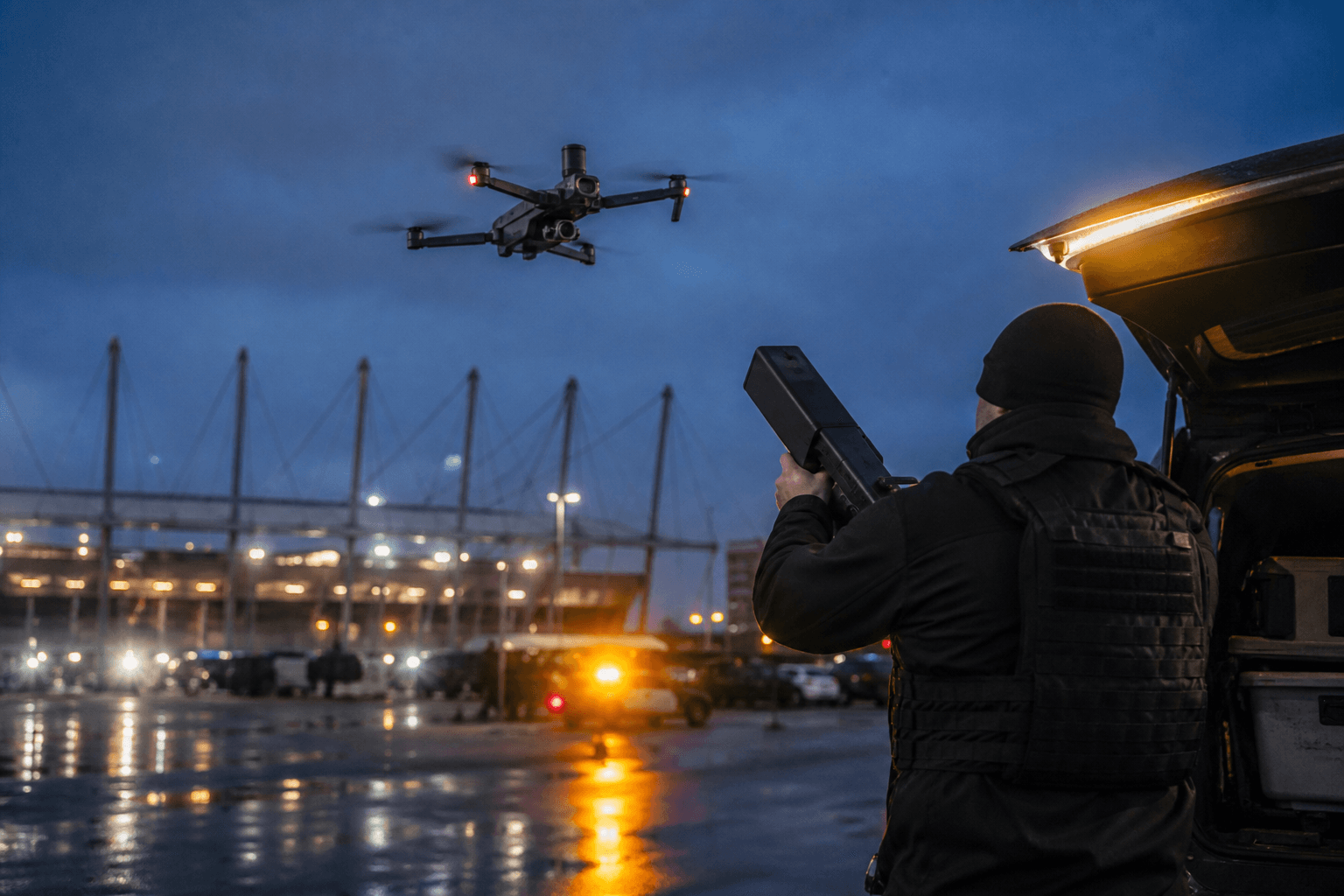
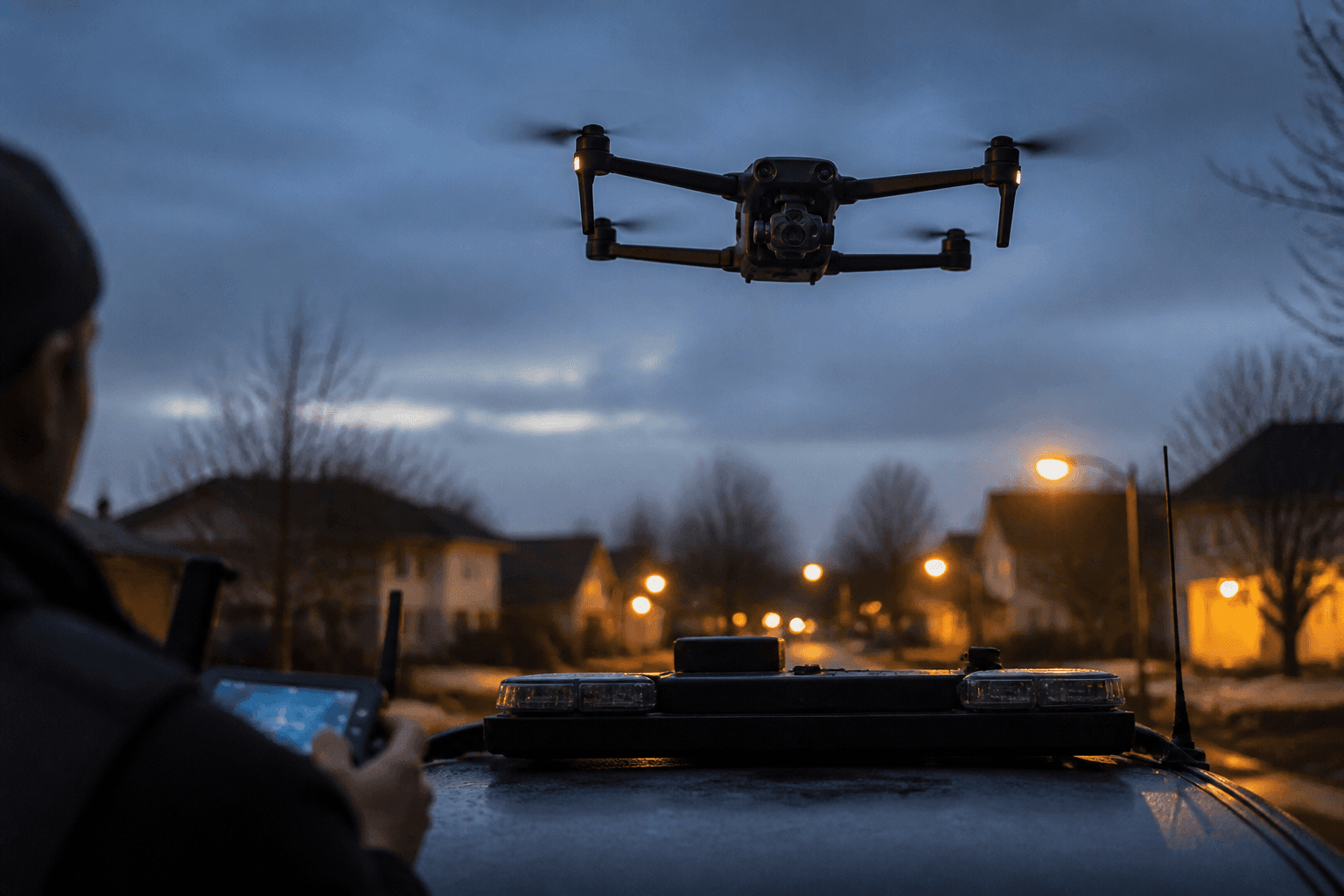
For years, the answer to "can our department take down a dangerous drone?" was simple and frustrating: no. Counter-UAS mitigation authority belonged to a short list of federal agencies, and a police department watching a drone hover over its jail yard or stadium had little legal recourse beyond finding the pilot. That changed on July 1. A joint DOJ–DHS interim final rule implementing the SAFER SKIES Act — passed by Congress in December 2025 as part of the FY2026 defense authorization — now lets state, local, tribal, and territorial law enforcement and correctional agencies detect, track, and in defined circumstances disable or seize drones that pose a credible threat.
The authority is real, but it comes wrapped in the most process-heavy framework the counter-drone world has seen. For agency leaders, the rule is less a green light than a checklist. Here's what it actually says, based on the rule text and analyses from Crowell & Moring, Davis Wright Tremaine, and DRONELIFE.
2
Certification tiers — detection vs. mitigation
$100,000
Maximum fine per violation for skipped coordination
Sept 4
Public comment deadline on the interim rule
What the rule actually authorizes
The interim final rule — formally, Counter-UAS Authority for State, Local, Tribal, and Territorial Law Enforcement and Correctional Agencies — lets qualifying agencies act against drones that pose a credible threat to people, facilities, assets, major public events, critical infrastructure, or correctional institutions. That threat list matters: this is not general-purpose authority to act against any drone an officer finds suspicious. Operations outside those categories remain off the table, and the underlying statutory authority sunsets in December 2031 unless Congress extends it.
Two tiers, one training center
The framework splits counter-UAS work into two certifications, and the line between them is bright.
Tier 1 — detection and warning. Detecting, identifying, monitoring, and tracking drones, and warning their operators. Certification is comparatively light: an online course with an assessment, granted automatically on passing. For most departments, Tier 1 is the realistic near-term step — it covers the drone-detection work many agencies already want to formalize around jails, stadiums, and large events.
Tier 2 — mitigation. Disrupting, seizing control of, disabling, or using reasonable force against a drone. This requires hands-on, in-person training at the FBI's National Counter-UAS Training Center (NCUTC), which the rule makes the sole certifying body. The rule is explicit on the boundary: personnel holding only Tier 1 certification cannot take mitigation action — even in an emergency. If your agency expects to ever need Tier 2, that training pipeline is the long pole, and it starts with getting in line at NCUTC.
Only listed equipment counts
Agencies can't simply buy a counter-drone product and switch it on. The rule establishes two federal lists, maintained through the FBI's Law Enforcement Enterprise Portal (LEEP): an Authorized Technologies List of approved technology categories, and an Authorized Systems List of specific make-and-model products vetted by DOJ, DHS, DoD, FAA, FCC, and NTIA. Once the Systems List covers a category, agencies must use only listed products in that category.
The FCC moved unusually fast on its piece. Within a day of the rule, it granted a 180-day blanket Special Temporary Authority letting qualifying agencies operate RF-based counter-UAS systems nationwide, and waived equipment-authorization requirements for listed systems sold to eligible agencies. RF-emitting systems still require FCC authorization before deployment — one more box that has to be checked before day one.
The paperwork is the program
The operational requirements are where the rule will make or break agency programs:
Every operation runs under a signed C-UAS Operations Plan certified by the agency's legal counsel.
Mitigation operations require 30-day advance notice through the FBI portal, with the operations plan submitted at least 7 days ahead.
When a mitigation system is activated, air traffic control must be notified within five minutes — and again when the operation concludes.
A post-operation report is due within 48 hours.
Skip a required step knowingly and the penalties bite: civil fines up to $100,000 per violation, or suspension of the agency's mitigation authority. The rule does include an on-ramp for honest mistakes — a good-faith first procedural violation, self-reported, avoids penalty. But the message is unmistakable: the coordination requirements are the deal Congress struck for handing this authority down, and the departments intend to enforce them.
Privacy rules with teeth
Because drone detection often means intercepting drone communications, the rule builds in data-handling requirements that will feel familiar to agencies that have implemented body-camera or ALPR policies — and stricter than many. Intercepted communications must be deleted within 180 days unless a documented exception applies; data retained under an exception gets re-reviewed every 90 days; systems must be configured to avoid capturing non-drone communications; and agencies must keep searchable audit trails for at least six years. Expect these provisions to be a focus of oversight, and of the public-comment fight.
What your agency should do now
The rule is in effect today, but it's an interim final rule — public comments are open through September 4, and the final version could shift details. That's not a reason to wait. Practical first moves:
1Decide your tier honestly. Most agencies need Tier 1 detection formalized long before they need Tier 2 force. Start the online certification for the personnel who watch your facilities and events.
2Get in the NCUTC queue early if mitigation is genuinely in your mission — training capacity, not appetite, will pace Tier 2 nationally.
3Buy from the lists only. Any counter-UAS procurement that isn't on (or headed for) the Authorized Systems List is a liability, and RF systems need FCC authorization on top.
4Draft the operations plan now with your legal counsel, and stand up the record-keeping — the 48-hour reports, the audit trail, the retention clocks — before the first activation, not after.
5File a comment by September 4 if the tiering, timelines, or equipment process doesn't fit how your agency actually operates. This is the window to shape the final rule.
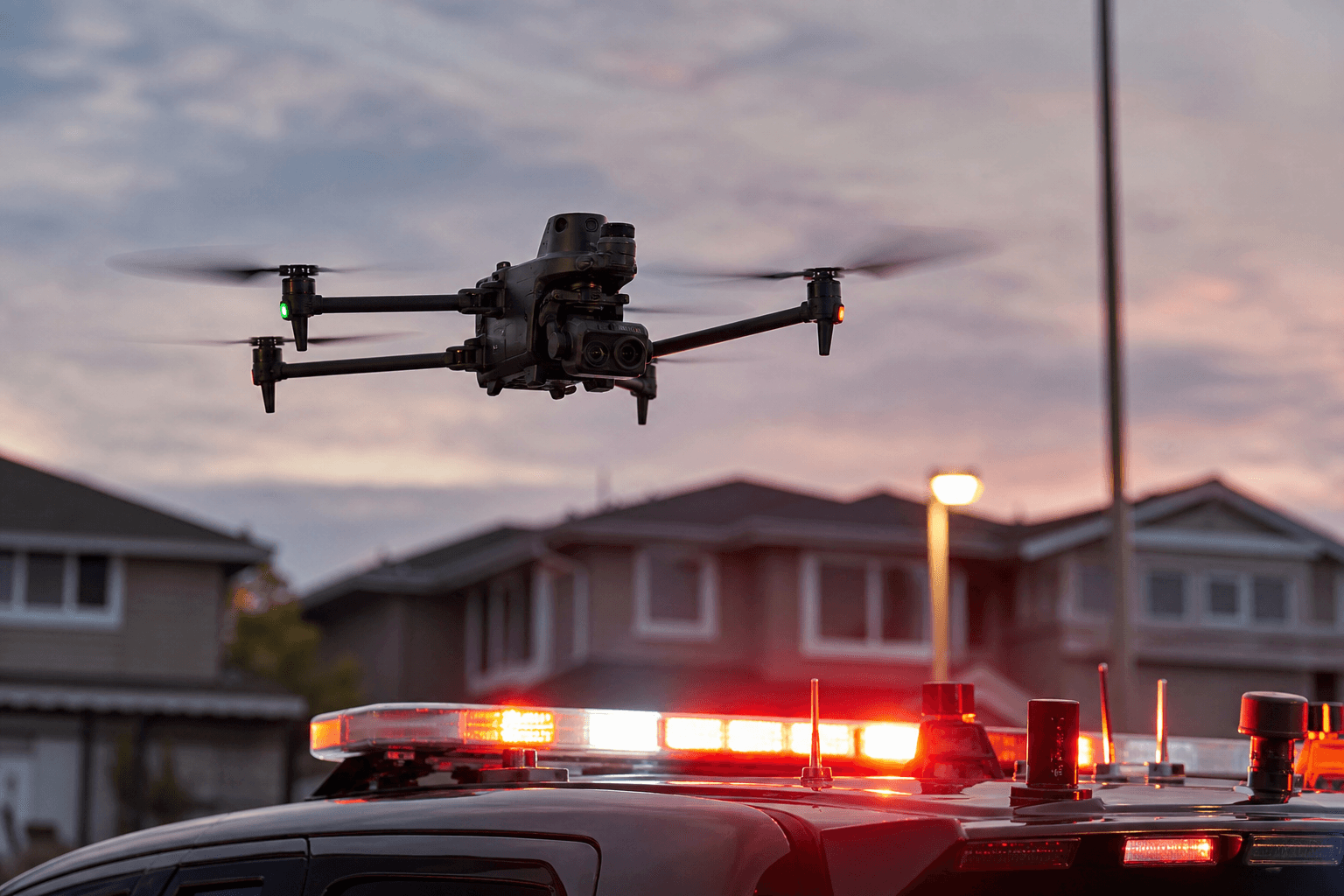
One more note for the pilots on your roster: none of this changes Part 107. Flying the department's drones still runs on the same certificates, waivers, and airspace rules as before — this rule is about what your agency can do to other people's drones. But program managers now own both sides of that airspace, and the agencies that treat the compliance framework as the program — not as paperwork bolted onto it — will be the ones that keep the authority when the sunset debate arrives in 2031.
This article is general information, not legal advice. Agencies should review the interim final rule with counsel before beginning counter-UAS operations.
Train and certify your team, track every pilot's Part 107 currency, manage the fleet, and keep audit-ready records — one platform built for public safety and DFR.